Enviro News Asia, Houston — Indonesia is strengthening its energy security by increasing domestic oil production, diversifying energy sources and expanding renewable energy while pursuing a just energy transition toward net-zero emissions by 2060 or earlier.
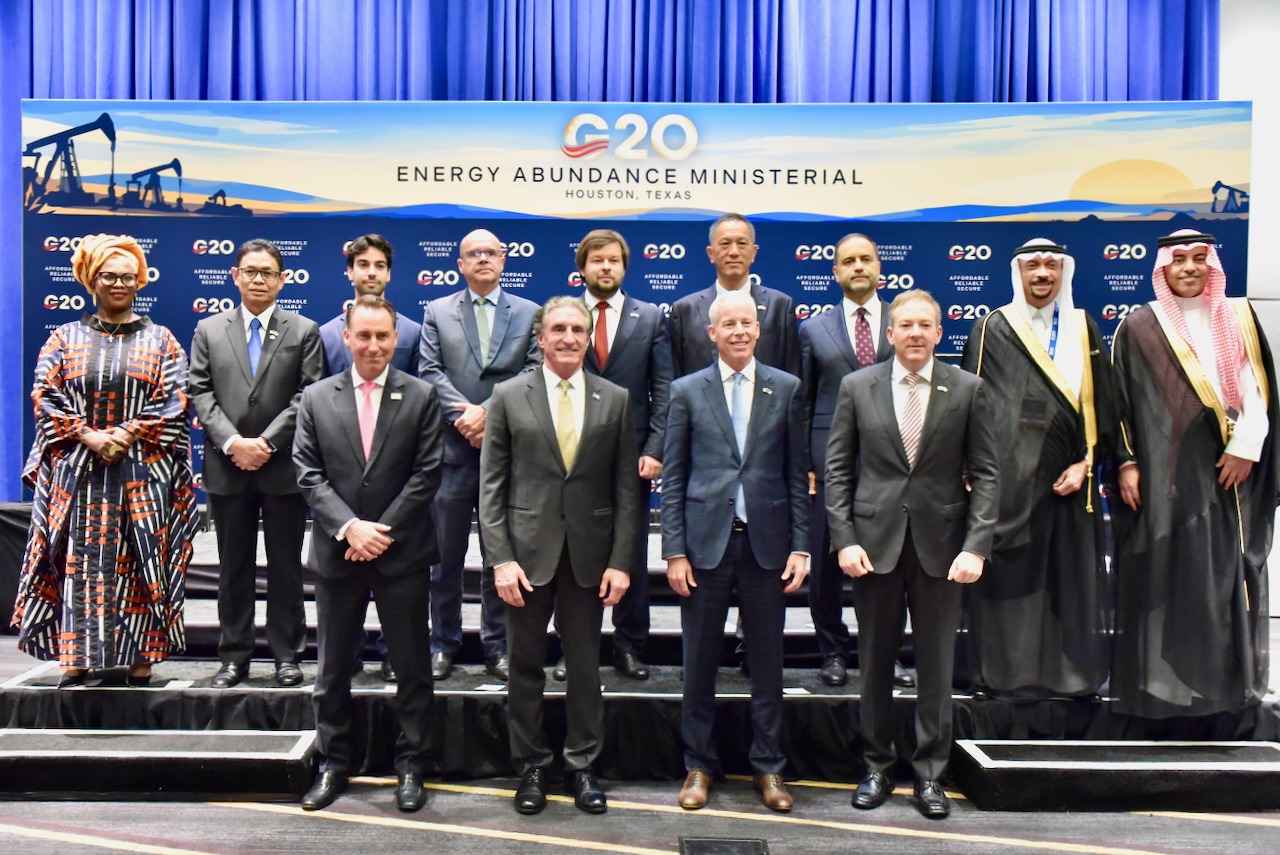
Vice Minister of Energy and Mineral Resources Yuliot Tanjung outlined Indonesia’s approach during the G20 Energy Abundance Ministerial Meeting in Houston, Texas, United States, held from September 14 to 16, 2026.
The meeting took place amid disruptions to global oil supplies caused by geopolitical conflicts. Risks to energy distribution routes and infrastructure have increased uncertainty over supply and contributed to pressure on energy commodity prices.
Yuliot said Indonesia supports each country’s sovereign right to determine its energy pathway according to national conditions and priorities.
“Indonesia supports the sovereign right of every country to determine its energy pathway based on its national circumstances. We continue to strengthen national energy security while promoting a just energy transition toward net-zero emissions by 2060 or earlier,” Yuliot said on September 15.
To strengthen domestic supply, Indonesia is targeting higher oil production. Domestic fuel consumption currently stands at approximately 1.6 million barrels per day, while domestic oil production is around 600,000 barrels per day.
The government aims to raise oil production to 1 million barrels per day and is opening investment opportunities in 118 oil and gas working areas under what it describes as attractive fiscal terms.
Indonesia is also pursuing energy diversification through renewable energy development and greater use of domestic resources. One of the key programs is B50, which involves blending biodiesel with conventional diesel at a ratio of up to 50 percent.
The government projects that B50 could substitute around 310,000 barrels per day of imported diesel, generate annual savings of nearly US$10 billion and create more than 2 million jobs.
“Indonesia is the first country in the world to implement the B50 program,” Yuliot said.
In the electricity sector, Indonesia expects electricity demand to grow by approximately 5.3 percent annually. The country’s 2025–2034 Electricity Supply Business Plan (RUPTL) targets an additional 69.5 gigawatts of generation capacity, with 76 percent coming from renewable energy sources.
The planned expansion is expected to require approximately US$180 billion in investment, while independent power producers are expected to account for around 73 percent of the new capacity.
Indonesia is also promoting the development of 100 gigawatt-peak (GWp) of solar power capacity to replace diesel-fired power plants in major electricity systems and reduce fossil fuel use.
Coal, however, remains a major source of electricity supply in Indonesia’s national power system.
Yuliot said the government was also working to improve the domestic investment climate by simplifying business procedures.
“We have improved the investment climate in the country and simplified business procedures,” he said.
Indonesia also emphasized that energy policies should reflect different national circumstances rather than applying a uniform approach to all countries.
Yuliot highlighted this principle in discussions on clean cooking, saying countries should be able to select technologies based on local conditions, affordability and national development priorities.
“Indonesia welcomes the recognition that there is no one-size-fits-all solution for clean cooking. Each country should be able to choose technologies that reflect local conditions and affordability,” he said.
He added that clean cooking policies should remain technology-neutral and be supported by financing mechanisms aligned with national priorities.
Indonesia also called for continued G20 attention to energy transition and sustainable energy development. The government said meeting current energy needs should go hand in hand with developing cleaner and more sustainable energy systems.
“G20 should promote a balanced approach that advances energy security, affordability, accessibility and sustainability. Indonesia is ready to work with all members to build an inclusive, sustainable and secure global energy future,” Yuliot said.
The G20 is a major international forum for economic cooperation, bringing together economies that account for a large share of global gross domestic product and trade. In 2026, the United States holds the G20 presidency, with energy discussions organized under the Energy Abundance Working Group (EAWG). (*)