

Enviro News Asia, Washington DC — Every nation, without exception, builds four core institutions that serve as the pillars of its civilization: the National Library, the National Museum, the National Gallery, and the National Archives. These four institutions are not merely storage buildings, but the centers of a nation’s collective memory—where history, knowledge, art, and national identity are preserved for future generations.
In Indonesia, these four institutions occupy highly revered positions. Three of them surround the National Monument (Monas) in the heart of Jakarta: the National Museum or “Gedung Gajah” on West Medan Merdeka Street, the National Library on South Medan Merdeka Street, and the National Gallery on East Medan Merdeka Street. Meanwhile, the National Archives of the Republic of Indonesia is located in South Jakarta. This arrangement reflects the vital role these institutions play in safeguarding the continuity of the nation’s civilization.
A similar pattern is evident in the United States. In Washington, D.C., four equivalent institutions—the Smithsonian Institution (museums), the Library of Congress (library), the National Gallery of Art (art gallery), and the National Archives (national archives)—are situated along the strategic corridor known as The National Mall. Located near the White House, the US Capitol, and iconic monuments such as the Washington Monument, Jefferson Memorial, and Lincoln Memorial, this area serves not only as the seat of government but also as a hub of knowledge and culture.
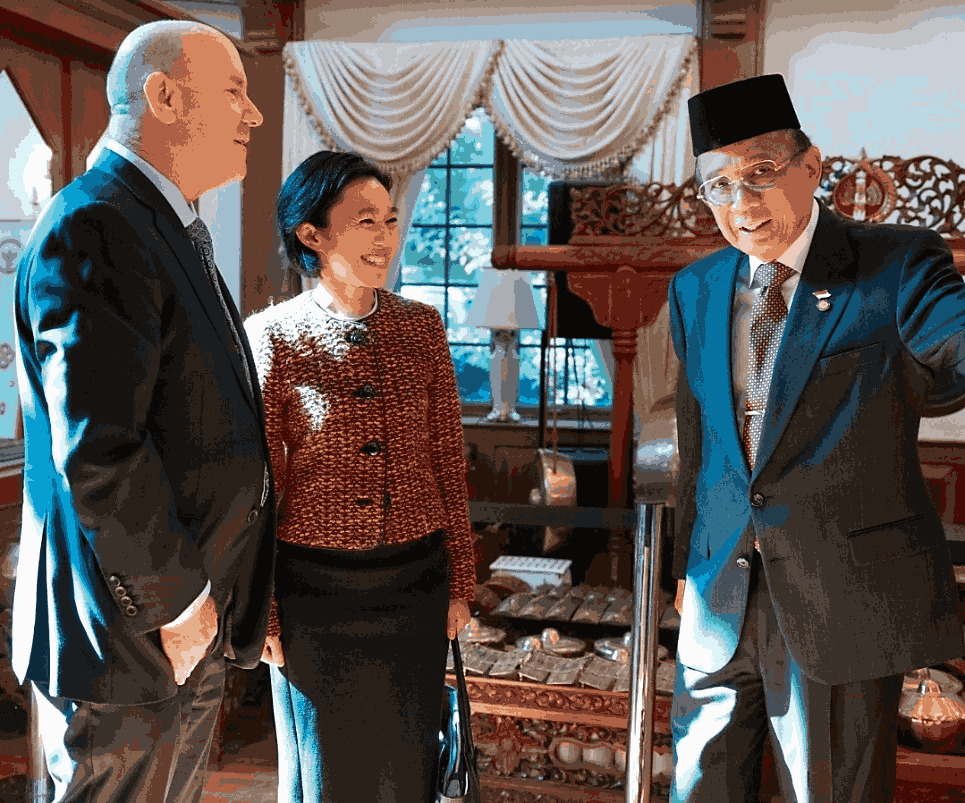
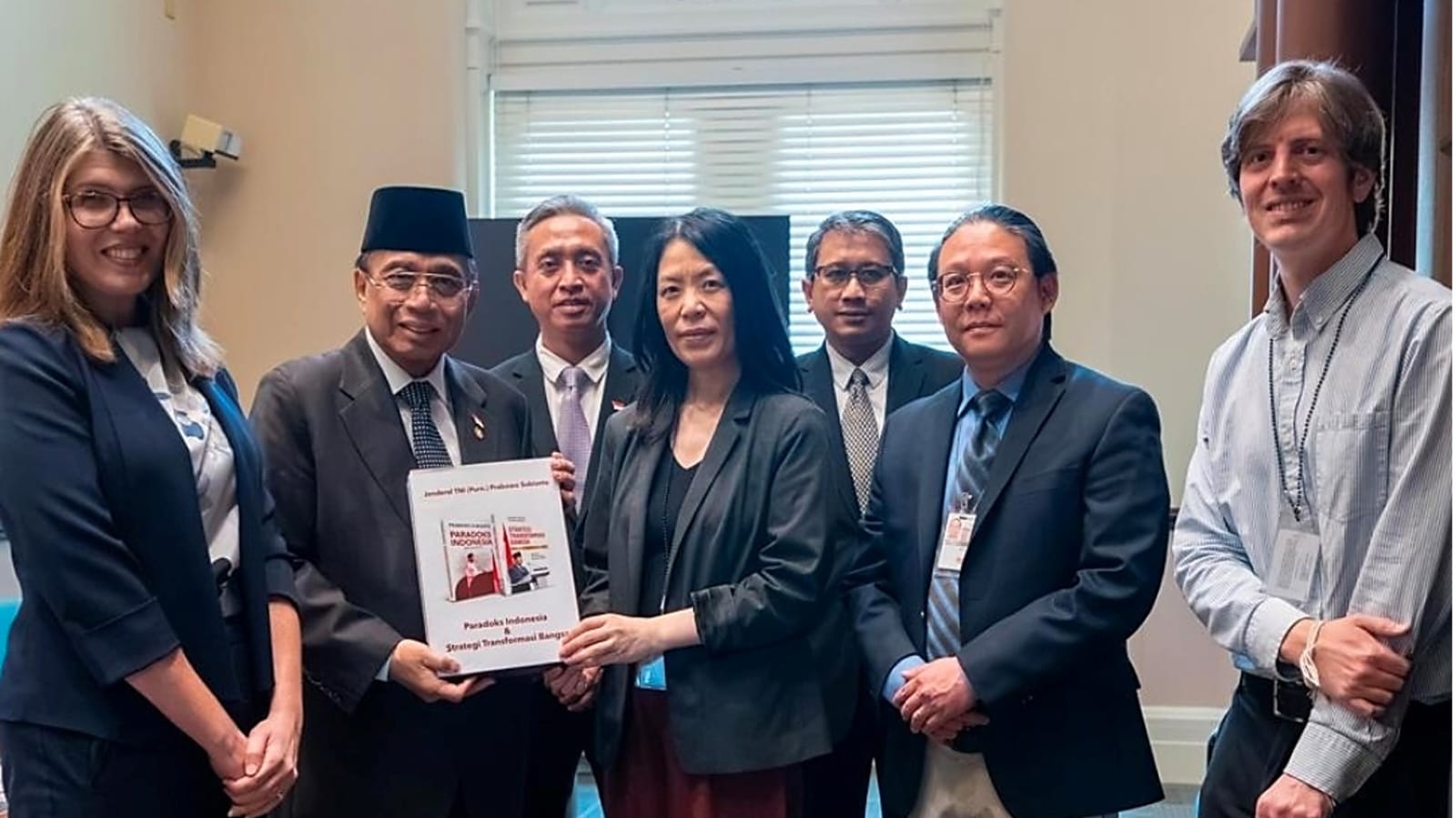
On Friday, October 9, 2026, the Ambassador of the Republic of Indonesia to the United States, Indroyono Soesilo, visited the US Library of Congress. Accompanied by the Education and Cultural Attaché alongside officials from the Indonesian Embassy in Washington, D.C., the Ambassador was received by Dr. Kay Qui, Chief of the Asian Division at the US Library of Congress, Dr. Sarah Rhodes from the Congressional and Intergovernmental Office, and librarian Mr. Joshua.
The US Library of Congress is renowned as the largest library in the world, housing more than 170 million items. Its collection includes approximately 39 million books and printed materials in 470 languages, 73 million manuscripts, millions of photographs, maps, music recordings, and audio archives. Its shelving spans nearly 1,380 kilometers, growing by about 2 million items each year. Beyond its sheer scale, the building is recognized as one of the most beautiful in the world, featuring grand marble structures and artistic ornamentation created by prominent American artists.
Remarkably, among its hundreds of millions of items, 183,568 originate from Indonesia. This holdings portfolio encompasses ancient manuscripts, 749 rare books, audio-visual recordings, and historical sound recording artifacts. Data from 2021 indicates that over 117,000 Indonesian items have been cataloged within the Asian Division, covering diverse fields such as economics, politics, history, science, and children’s literature.
Indonesia’s imprint is also visible in works centered on its national leaders. The library holds over 1,100 books about President Soekarno, 918 books about President Soeharto, as well as dozens of works concerning President B.J. Habibie. Furthermore, the American Folklife Center preserves various Indonesian sound recordings and documentation dating from 1893 to 2009.
Among the most valuable treasures is an illuminated Javanese manuscript from 1862 titled “Pangkat-pangkat caritanipun serat babad ing Tanah Jawi sedhaya.” This text chronicles Javanese history and the spread of Islam, adorned with artistic illustrations that enhance its historical and aesthetic significance.
During the visit, Ambassador Indroyono Soesilo presented five books authored by President Prabowo Subianto, including works titled “Kepemimpinan Militer” (Military Leadership) and “Paradoks Indonesia” (Indonesia Paradox). With this addition, a total of 90 book titles authored by and written about President Prabowo Subianto are now preserved at the US Library of Congress in Washington, D.C. On the same occasion, books authored by Fadli Zon, Nyoman Nuarta, Purnomo Yusgiantoro, Nining Sri Astuti, Havas Oegroseno, and Indroyono Soesilo were also handed over.
The presence of Indonesian collections at the US Library of Congress extends far beyond mere numbers; it reflects the nation’s footprint within the global landscape of knowledge. Amidst millions of shelves and pages of global history, Indonesia contributes to the dialogue—through its books, manuscripts, and intellectual heritage.
Herein lies the true significance of these four civilizational institutions. They act not only as custodians of the past, but as bridges to the future—spaces where a nation’s identity is nurtured, studied, and introduced to the world. (*)