

Enviro News Asia, Jakarta — Indonesia’s planned 100-gigawatt (GW) solar power programme could accelerate the country’s energy transition while strengthening its domestic renewable energy industry, but its success will depend on policy certainty, infrastructure readiness, financing and the development of local supply chains, the Institute for Essential Services Reform (IESR) said.
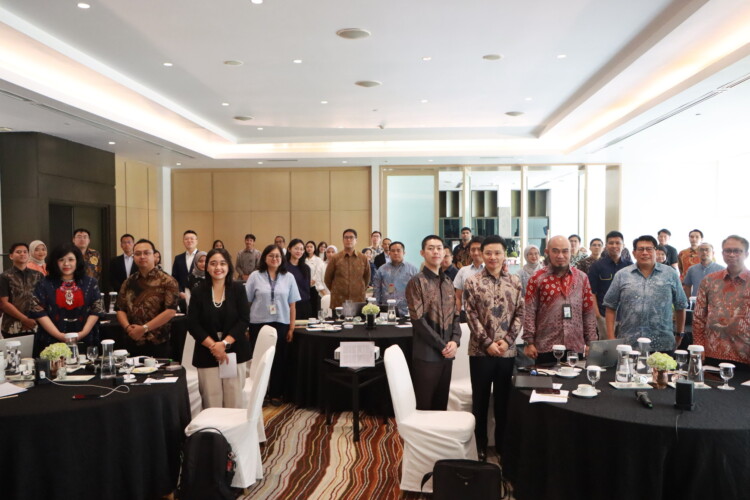
The issue was discussed at a focus group discussion titled “Assessing the Potential for Indonesia-China Cooperation in Implementing the 100 GW Solar Power Programme,” organised by IESR in Jakarta on Oct. 14, 2026.
Launched by President Prabowo Subianto on Aug. 25, 2026, in Gilimanuk, Bali, the programme targets implementation within three years. Its initial phase covers the construction of 14 solar power plants across six provinces, with a combined capacity of 5.3 gigawatt-peak (GWp).
With estimated investment requirements of US$73 billion, cooperation between Indonesia and China could help accelerate development through financing, technology transfer and domestic manufacturing, participants said.
IESR Chief Executive Officer Fabby Tumiwa stressed that the programme should serve as a catalyst for national industrialisation rather than simply increase electricity generation capacity.
He said the government needed to ensure projects were financially viable, procurement processes transparent, electricity networks ready and skilled workers available.
“We need investment, but at the same time we also need added value,” Fabby said, emphasising that cooperation with China should strengthen Indonesia’s industrial capabilities rather than focus solely on securing competitively priced technology.
Edi Prio Pambudi, Deputy for Economic Cooperation and Investment Coordination at the Coordinating Ministry for Economic Affairs, highlighted the role of clean energy in maintaining industrial competitiveness as global markets increasingly adopt environmental standards and carbon-emission requirements.
He said the 100 GW programme could help Indonesia strengthen its position in international trade by supporting access to markets with increasingly stringent green requirements.
IESR Energy Modelling and System Analysis Research Manager Abraham Octama Halim said implementation would require multiple approaches, including grid-connected and off-grid solar installations, alongside efforts to increase electricity demand through electrification.
Potential applications include expanding electricity access in remote areas, replacing diesel-fired power plants and meeting the energy needs of commercial and industrial sectors.
However, he said investment would depend on market certainty and adjustments to electricity sector planning.
Delfinur Rizky Novihamzah, Director of Bilateral Cooperation at the Ministry of Investment and Downstream Industry, said identifying project requirements, providing market certainty and offering investment incentives would be essential to attracting foreign investors.
These measures could encourage investors to establish manufacturing facilities and form partnerships with domestic companies, generating longer-term economic benefits.
Jonathan Zhao of POWERCHINA highlighted regulatory certainty, electricity grid readiness and land availability as key factors determining project implementation.
Meanwhile, Ardhitya Eduard Yeremia, a senior researcher at the Centre for International Relations Studies (CIReS), Faculty of Social and Political Sciences, University of Indonesia, stressed that cooperation with China should deliver knowledge transfer and strengthen local industrial capacity, including through the gradual implementation of domestic content requirements (TKDN).
“Indonesia’s domestic solar industry must not be limited to assembly processes,” he said, adding that social and environmental impacts should also be considered from the earliest stages of project planning.
IESR said the programme’s long-term success would depend on whether international partnerships could generate lasting domestic economic value while supporting Indonesia’s transition to a cleaner and more sustainable energy system. (*)