

Enviro News Asia, South Tangerang — Indonesia’s National Research and Innovation Agency (BRIN) is strengthening cross-sector collaboration to develop reliable environmental analysis technologies, as pollution, waste, microplastics and potential drought linked to El Niño increase the need for accurate and timely data to support environmental policymaking.
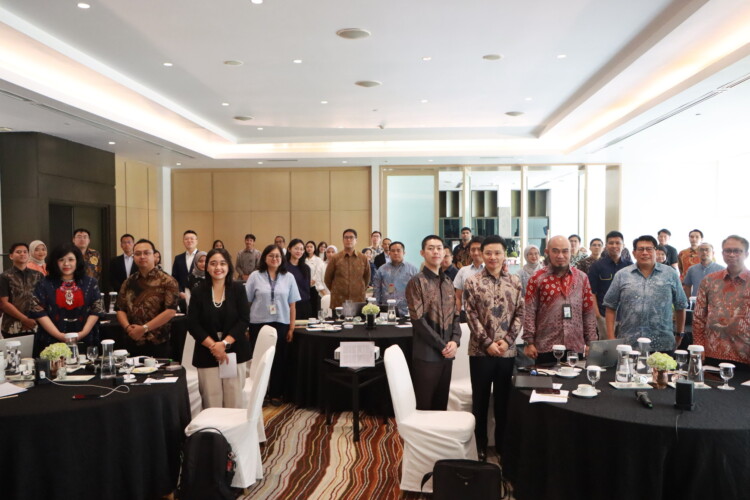
The initiative was highlighted at the Workshop on Advanced Environmental Analysis 2026, held at the Auditorium of Building 720, B.J. Habibie Science and Technology Area in Serpong, South Tangerang, on Oct. 28.
Cuk Supriyadi Ali Nandar, head of BRIN’s Research Organization for Energy and Manufacturing, said collaboration among stakeholders was essential to developing trustworthy analytical methods to address environmental challenges.
He said the effort would support responses to pollution and emerging contaminants while advancing sustainable environmental management.
Ario Betha Juanssilfero, head of BRIN’s Research Center for Environmental and Clean Technology, said environmental research focused on clean water management, wastewater treatment, solid waste and pollution control. Clean technology research, meanwhile, aimed to improve production efficiency and reduce waste.
He emphasized that accurate, data-based analysis was needed to evaluate technology performance, measure environmental and economic impacts, and ensure regulatory compliance. Assessing environmental footprints across every stage of the value chain was also important to implementing sustainability principles.
One major challenge is the growing presence of emerging contaminants that are not yet fully covered by existing regulations and monitoring systems.
Miranti Ariyani, a junior researcher at BRIN’s Research Center for Environmental and Clean Technology, said these substances include pharmaceutical residues, pesticides, metals, microplastics and antibiotic-resistant bacteria, all of which could threaten aquatic ecosystems.
Research conducted in the Citarum River Basin identified various contaminants, including antibiotics, pesticides, plastic additives and endocrine-disrupting compounds.
Analysis of approximately 85 types of antibiotics detected sulfonamide compounds at every monitoring location, she said.
The research also found increasing resistance of Escherichia coli to several antibiotics from upstream to downstream areas. However, conventional treatment at the Bojongsoang Wastewater Treatment Plant (WWTP) was able to reduce certain contaminants by up to 98%.
The findings highlight the need for regular monitoring that accounts for location and seasonal variations, alongside improvements in wastewater treatment technologies.
Miranti proposed establishing a priority list of emerging contaminants based on detection frequency, concentration and potential risks. She said this effort required clear regulations, sensitive and environmentally friendly analytical methods, and interdisciplinary research into impacts on aquatic ecosystems.
Irene Batara Batoarung, head of the Programme, Information Systems and Cooperation Working Group at the Environment Ministry’s Directorate of Water Quality Protection and Management, also stressed the importance of sustainable water and waste management.
Water quality monitoring in 2025 showed that 52.9% of river basins recorded improvements in the Water Quality Index, while the remaining 47.1% experienced declines.
She said climate change, the conversion of water catchment areas and pollution required integrated responses involving stronger research, monitoring, wastewater treatment and reuse technologies. Regulatory enforcement, supervision and coordination among government institutions were also necessary.
On analytical technology, Dewi Wiulandhani, product and application specialist at PT Wiralab Analitika Solusindo, explained that pyrolysis-gas chromatography-mass spectrometry (Py-GC-MS) could be used to identify polymer types and measure microplastic and nanoplastic concentrations in environmental samples.
Hazardous chemical compounds can also be analysed using liquid chromatography-tandem mass spectrometry (LC-MS/MS). However, accurate results depend on sample preparation, extraction methods and appropriate instrument selection.
She noted that limited reference standards and difficulties in detecting extremely small particles remained significant technical challenges.
Yuli Purwanto, senior manager of the Chemical Laboratory at PT Sucofindo’s Laboratory Business Unit, said the company provided testing, inspection and certification services across several sectors, including environmental, oil and gas, and chemical industries.
He emphasized that verification of standard methods and validation of methods that have not yet been standardised were essential to ensuring reliable test results, maintaining quality assurance and protecting the environment.
Through the workshop, BRIN aims to strengthen partnerships among researchers, regulators, testing laboratories, universities and industry to accelerate innovation and the development of environmental analysis technologies.
The event also marked an initial step towards building a collaborative network for the Infusion of Value Chain 2027 international symposium. (*)