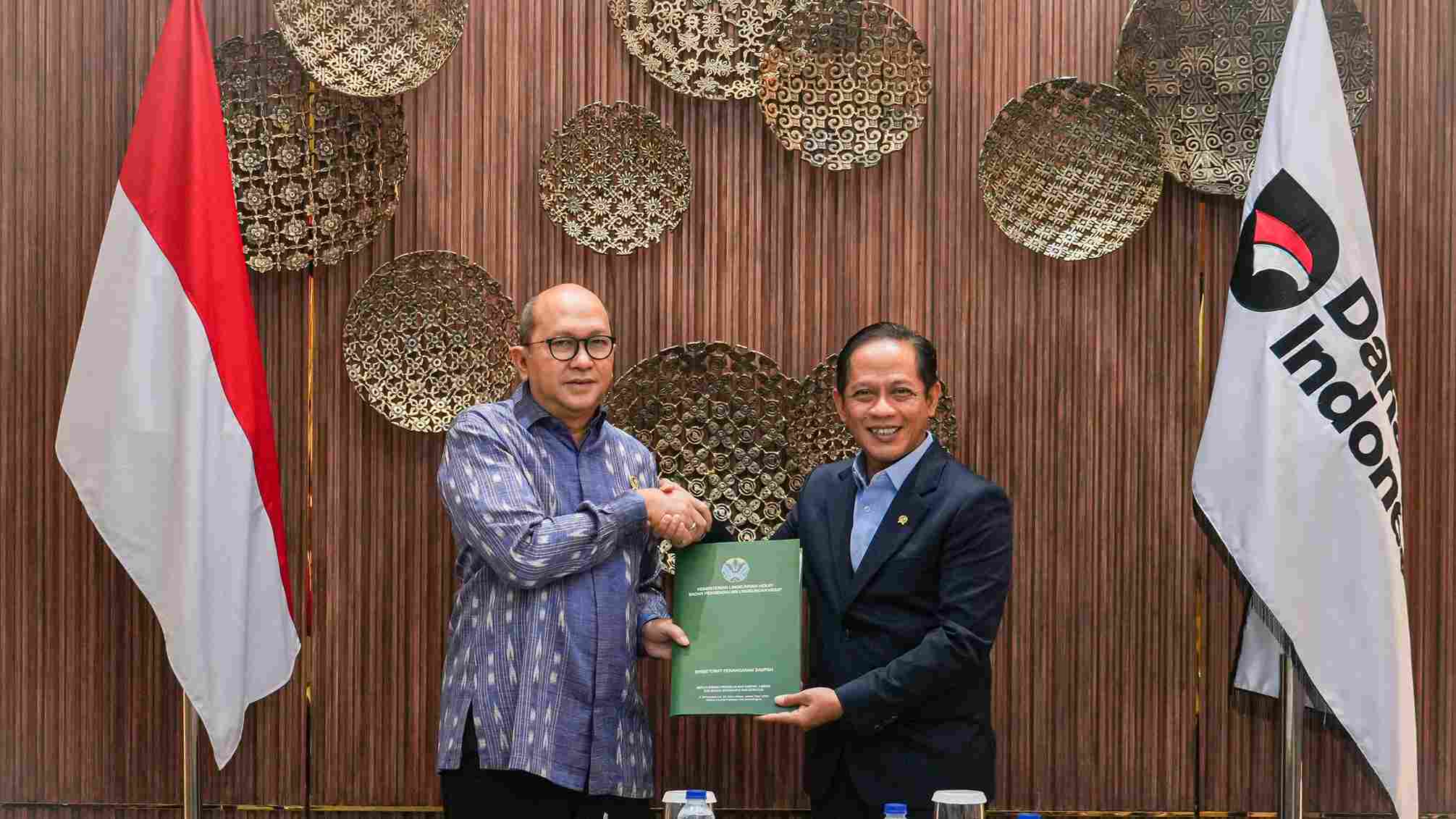
Enviro News Asia, Jakarta — The Ministry of Environment/Environmental Control Agency (KLH/BPLH) has accelerated the development of Waste-to-Energy (PSEL) facilities by submitting regional readiness documents to Daya Anagata Nusantara for further implementation, marking a major step in addressing Indonesia’s growing waste problem.
The initiative forms part of a national strategy to transform conventional waste management into a modern, technology-based system that converts waste into renewable energy. The acceleration follows directives from Prabowo Subianto to prioritize waste handling in urban areas generating more than 1,000 tons of waste per day.
Minister of Environment Hanif Faisol Nurofiq stated that waste management can no longer be delayed and must be addressed through integrated national policies. The ministry has facilitated the preparation of regional requirements, including inter-regional cooperation agreements to ensure a minimum waste supply of 1,000 tons per day for each PSEL facility.
The government has identified 31 agglomeration areas covering 86 regencies and cities for PSEL development. Of these, 20 locations have met regulatory requirements and are ready to proceed to the partner selection stage following feasibility assessments, while the remaining areas are still undergoing verification.
Chief Executive Officer of Danantara, Rosan Roeslani, emphasized that the project will prioritize proven and reliable technologies widely used in other countries to ensure efficiency and public acceptance.
The PSEL program is expected to process approximately 40,000 tons of waste per day across all planned facilities. However, the government acknowledges that an additional 100,000 tons of daily waste nationwide will require alternative technologies such as refuse-derived fuel (RDF), biogas, pyrolysis, and modular incineration.
During the transition period before full PSEL operation, local governments remain responsible for implementing waste management in accordance with national regulations, including waste sorting at the source, particularly for organic waste which accounts for around 50 percent of household waste.
The initiative reflects a coordinated effort between central and regional governments, as well as investment institutions, to achieve the national target of 100 percent waste management by 2029 while supporting renewable energy development and environmental sustainability. (*)