Enviro News Asia, Jakarta — The Government of Indonesia is accelerating the operationalization of its ‘nesting’ framework for forest carbon markets to unlock large-scale private sector investment and ensure high-integrity carbon transactions.
The ‘nesting’ approach integrates project-level carbon activities—often led by private actors—into national or jurisdictional accounting systems. This mechanism is designed to prevent double counting, enhance transparency, and maintain environmental integrity in line with international standards.
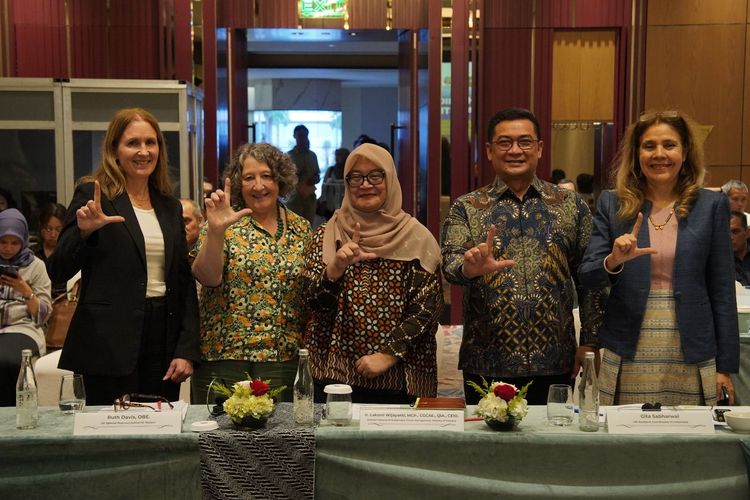
Director General of Sustainable Forest Management at the Kementerian Kehutanan, Laksmi Wijayanti, emphasized that clear regulatory frameworks are essential to create predictable financing pathways for forest-dependent communities and land managers.
She stated that Indonesia aims to position itself as a global leader in forest carbon by implementing a credible nesting system that provides certainty for investors while delivering tangible benefits to local communities.
This initiative aligns with Indonesia’s FOLU Net Sink 2030 target, which projects a net carbon absorption of 140 million tons of CO₂ equivalent by 2030 through reduced deforestation, mangrove restoration, and sustainable peatland management.
Riau has emerged as a key pilot region, with approximately 3.5 million hectares of peatland carbon reserves. Through the GREEN for Riau initiative, supported by the UN-REDD Programme and funding from the United Kingdom, jurisdictional REDD+ schemes are being tested.
Ruth Davis expressed the United Kingdom’s support, highlighting Indonesia’s significant potential in the global forest carbon market and the importance of building high-integrity systems to attract sustainable private investment.
Similarly, Norway’s Ambassador to Indonesia, Rut Krüger Giverin, stressed that clarifying the nesting framework is critical to building long-term trust in Indonesia’s carbon market.
Despite a strong regulatory foundation, challenges remain in implementation. Private sector actors are still awaiting clear and predictable operational guidelines before committing to long-term investments.
Gita Sabharwal noted that the next phase will depend on consistent policy execution, adding that Indonesia’s progress will be closely monitored by global stakeholders seeking credible forest carbon credits.
Meanwhile, Director of Forest Utilization Business Development, Ilham, underlined that effective implementation of the nesting framework will be crucial in supporting Indonesia’s pathway toward its net-zero emissions target by 2060.
With the successful rollout of this system, Indonesia has the opportunity to set a global benchmark for jurisdictional forest carbon actions grounded in integrity, equity, and national ownership. (*)