

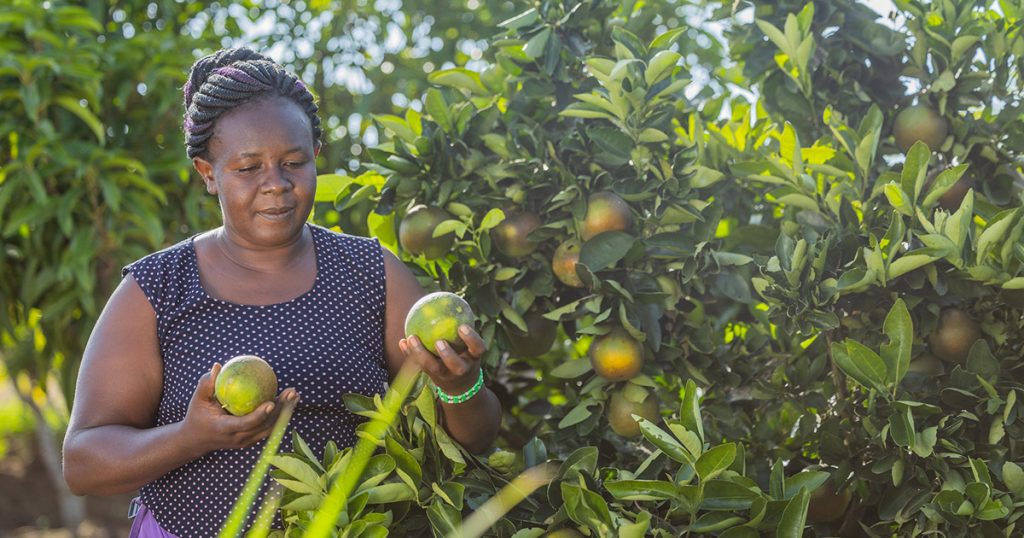
Enviro News Asia, Nairobi — Center for International Forestry Research and World Agroforestry is strengthening climate resilience, food security, and rural livelihoods across Africa through the conservation and distribution of resilient fruit-tree species adapted to changing climatic conditions.
As climate change intensifies droughts, floods, pests, erratic rainfall, and biodiversity loss across the continent, farming communities are increasingly facing declining crop yields and worsening food insecurity. In response, CIFOR-ICRAF, with support from the Australian Centre for International Agricultural Research, is expanding the role of fruit-tree genebanks to help farmers access species and varieties that can survive under increasingly harsh environmental conditions.
The initiative focuses on conserving both indigenous and exotic fruit-tree species through in-house and field genebanks located across several African countries.
Indigenous species preserved include baobab, marula, tamarind, wild loquat, and wild mango, which are rich in vitamins and minerals essential for improving nutrition and combating malnutrition in vulnerable communities. Exotic fruit trees such as mango, avocado, citrus, and papaya are also conserved to support household nutrition and generate income for farming families.
Alice Muchugi, Theme Leader for Tree Diversity and Productivity at CIFOR-ICRAF, described genebanks as a vital safeguard for Africa’s future food systems.
“Genebanks are the living insurance policy for Africa’s food and nutrition security. They safeguard the fruit-tree diversity that farmers depend on for resilient crops, nutritious diets, and sustainable incomes,” she said.
Through the program, seeds and planting materials are distributed to nurseries following quality-control processes to ensure healthy and disease-free seedlings. CIFOR-ICRAF has also been training nursery operators in seedling propagation, grafting, nursery management, and pest control.
One beneficiary is Stephen Ndung’u from Murang’a County, Kenya, who now operates his own fruit-tree nursery producing citrus, apples, mandarins, and grape seedlings.
“The training equipped me with practical knowledge and skills in nursery management and fruit farming,” Ndung’u explained, adding that demand for high-quality seedlings has significantly expanded his business.
In Malawi, CIFOR-ICRAF established a field genebank in Chitedze to conserve indigenous fruit trees such as marula and wild medlar, which play an important role in household food security during drought periods.
Local nursery operator Henry Tembo, who received training through the initiative, now supplies seedlings to farmers and has shared his expertise with more than 200 farmers who have established their own nurseries.
“The practice I appreciate most in fruit-tree farming is grafting. Seeing trees begin to produce fruit in less than three years makes me very happy,” Tembo said.
In Cameroon, CIFOR-ICRAF and local partners established Rural Resource Centres to train communities in nursery development, tree propagation, and post-harvest management. One women’s group successfully developed a wild mango nursery and a two-hectare agroforest that generates income while supporting environmental conservation.
Meanwhile, restoration efforts are underway in Zimbabwe’s Domboshawa field genebank after severe fire damage and tree poaching threatened decades-old collections of indigenous fruit trees. Supported by ACIAR funding, recovery measures include coppicing techniques and improved fire-protection systems.
Beyond Kenya, Malawi, Zimbabwe, and Cameroon, CIFOR-ICRAF is also supporting mother blocks and high-quality planting material development in Niger, Mali, and Burkina Faso.
The organization emphasized that sustained funding for genebanks remains essential to preserving valuable genetic resources and ensuring farmers across Africa continue receiving climate-resilient planting materials capable of strengthening food security, nutrition, and livelihoods. (*)