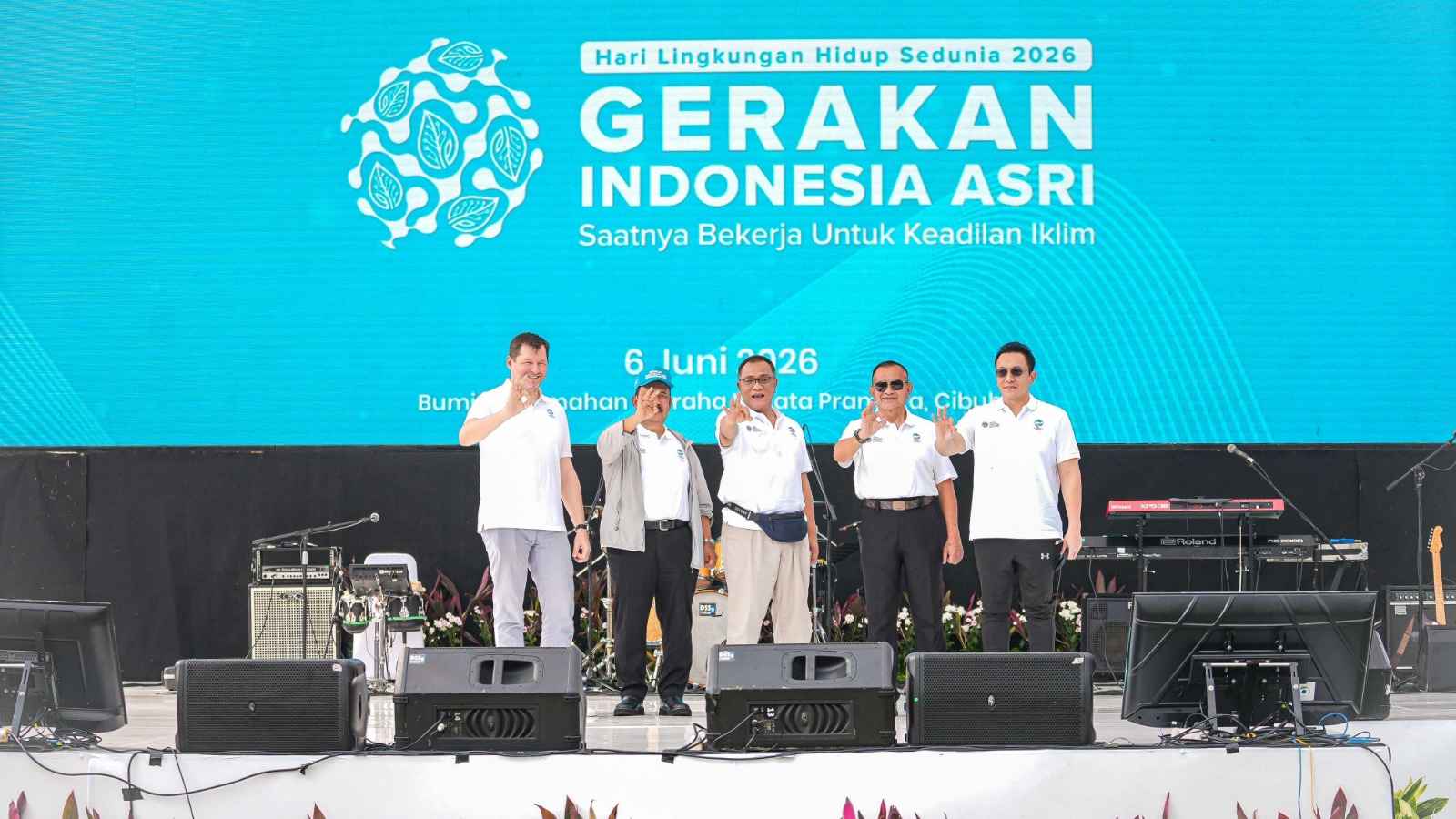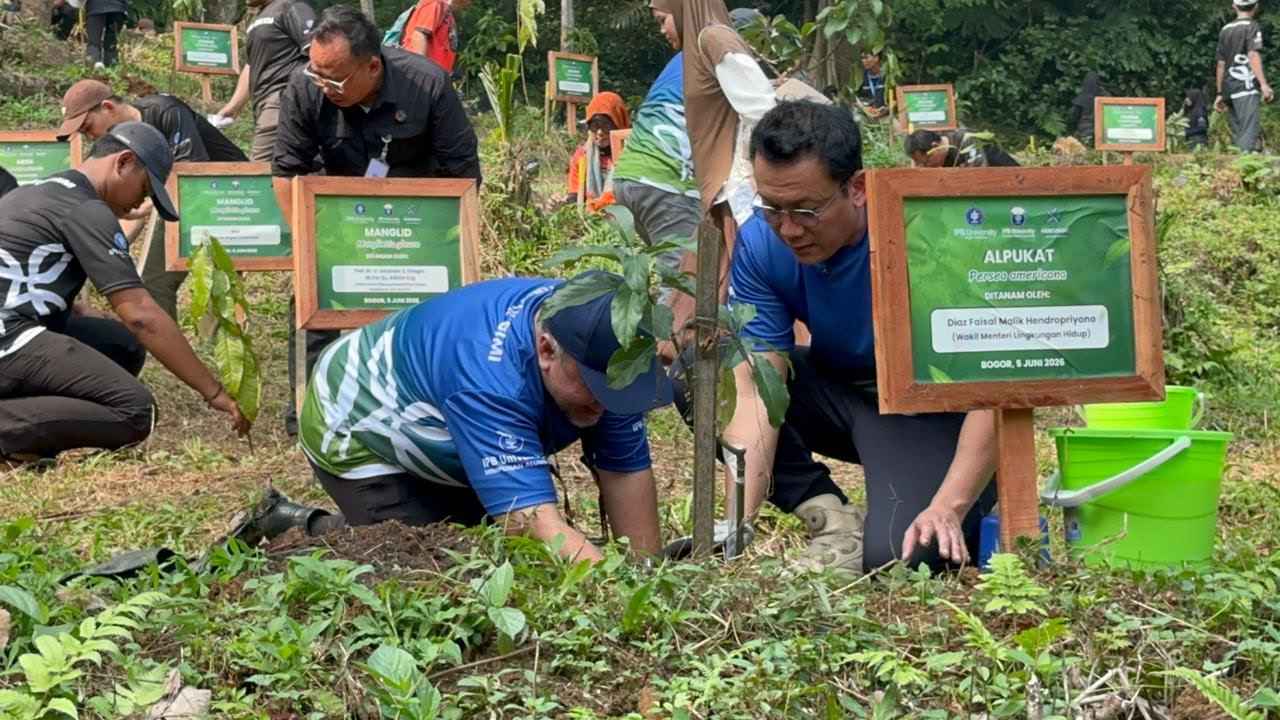
Enviro News Asia, Jakarta — Indonesia’s Minister of Environment and Head of the Environmental Control Agency, Moh Jumhur Hidayat, has called on society to embrace “ecological conversion” as a collective response to the worsening environmental crisis, urging individuals and institutions alike to rethink their relationship with nature and take meaningful action to safeguard the planet.
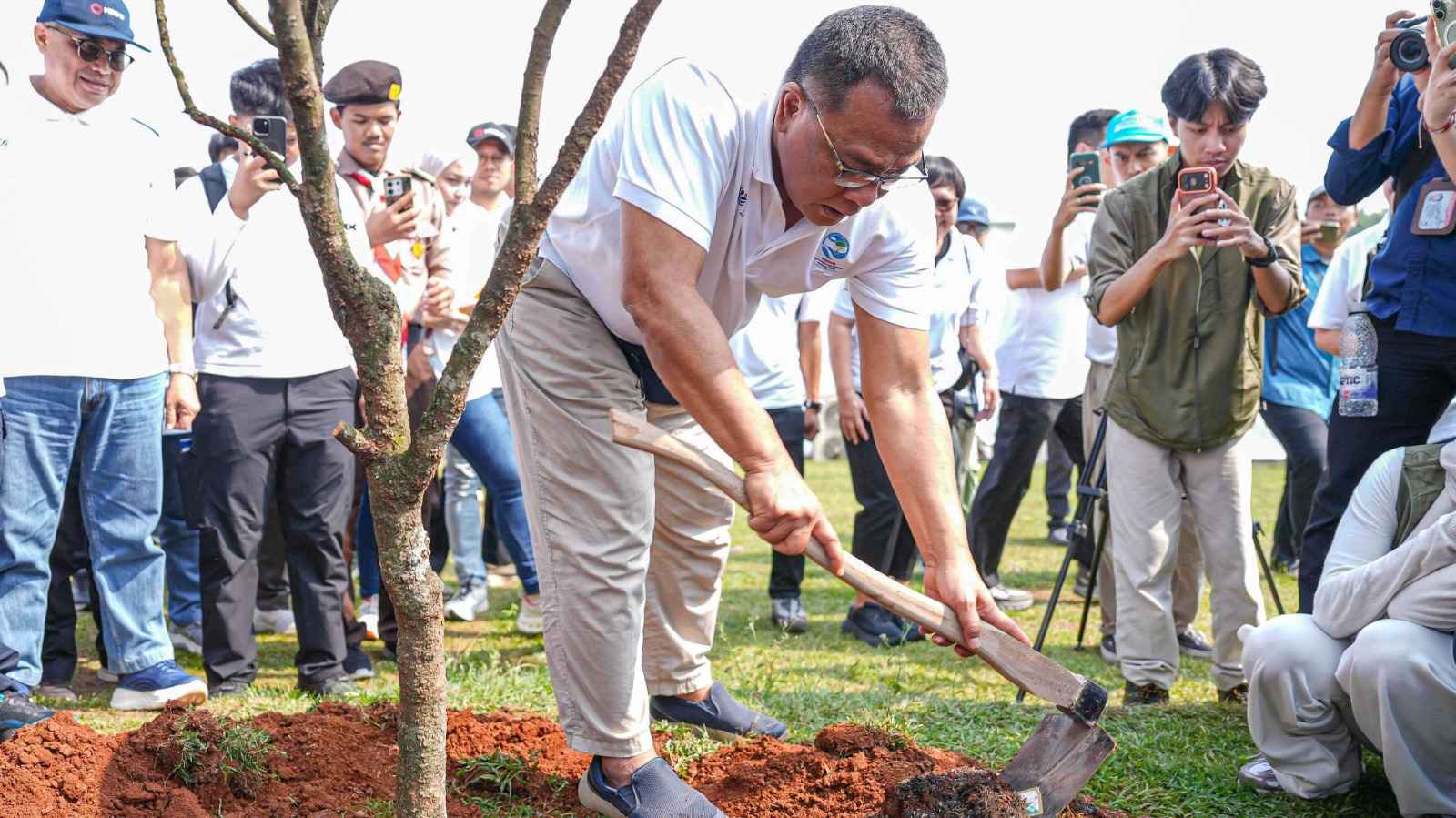
Speaking at the national commemoration of World Environment Day 2026 at the Cibubur Scout Camping and Recreation Grounds in Jakarta, Jumhur described the occasion as an important opportunity for reflection and transformation.
“This is an important moment for all of us to undertake ecological conversion—to reflect, recognize our mistakes, and take action to repair our relationship with nature. Through ecological conversion, we not only protect the environment but also build a culture of care and responsibility that will become a legacy for future generations,” he said.
According to the minister, the world is currently facing a “triple planetary crisis” consisting of climate change, biodiversity loss, and environmental pollution. These interconnected challenges threaten ecological stability, economic resilience, and social well-being on a global scale.
“The reality is that our planet is not in good condition. Therefore, we must work together to undertake ecological conversion,” Jumhur stated.
He emphasized that ecological conversion should not be viewed merely as a moral appeal, but as a fundamental shift in how people perceive and interact with the natural world. The concept calls for greater awareness that everyday actions carry environmental consequences and that sustainable living begins with individual choices.
“We are invited to honor nature, reflect on behaviors and habits that affect the environment, understand the consequences of our daily actions, and take concrete measures to protect the Earth that we all share,” he said.
Jumhur further stressed that environmental stewardship is no longer optional but has become a shared moral and social responsibility. He argued that ecological conversion requires a collective understanding that humans are part of nature and have an obligation to maintain ecological balance for present and future generations.
“Ecological conversion is not merely a slogan; it is a call to reflect and transform the way we interact with nature,” he added.
The minister noted that this vision aligns with Indonesia’s climate commitments under its Enhanced Nationally Determined Contribution (Enhanced NDC), which targets a 31.89 percent reduction in greenhouse gas emissions through domestic efforts and up to 43.20 percent with international support by 2030. Indonesia has also adopted the Long-Term Strategy for Low Carbon and Climate Resilience 2050 (LTS-LCCR 2050) as a framework for sustainable development and climate resilience.
However, Jumhur emphasized that policy targets alone will not be sufficient without corresponding changes in public behavior and environmental awareness.
The Ministry of Environment encouraged citizens to integrate environmental responsibility into their daily lives, arguing that large-scale environmental improvements begin with individual commitment and action.
“We must all reflect, recognize our mistakes, and move forward to restore our relationship with nature,” Jumhur concluded.
The observance of World Environment Day 2026 served as a reminder that environmental protection cannot be postponed. Through the spirit of ecological conversion, Indonesians are being encouraged to transform concern into action and make environmental stewardship an integral part of everyday life for the benefit of current and future generations. (*)