

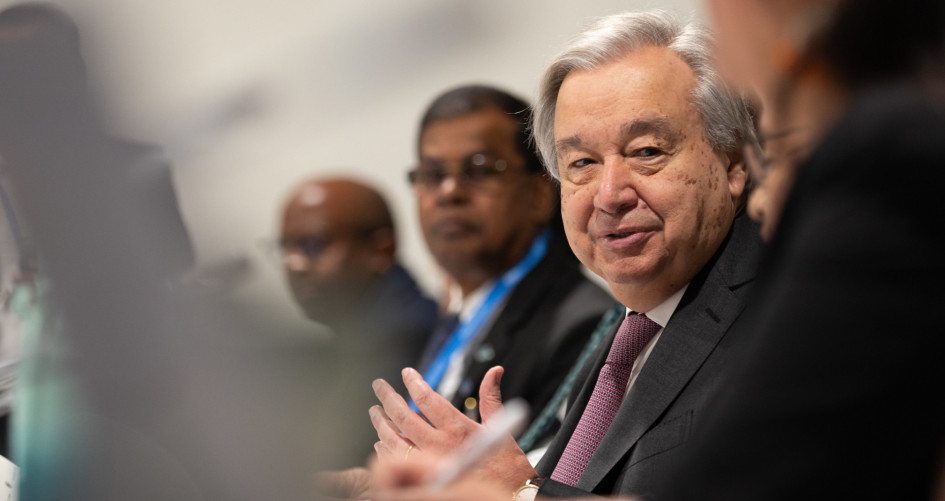
Enviro News Asia, London – United Nations Secretary-General António Guterres delivered a sweeping call to action at London Climate Action Week, warning that the world is facing what he described as a tale of two crises, a worsening climate emergency and a deepening energy crisis, both rooted in the same cause: fossil fuels.
Addressing a gathering of world leaders, CEOs, and climate advocates, Guterres said the eleven hottest years on record have just been lived through, and that accelerating climate disasters are becoming more frequent, more destructive, and costlier. He warned that average annual temperatures are on track to exceed the 1.5 degrees Celsius threshold agreed in Paris, stressing that every fraction of a degree and every moment counts to prevent irreversible tipping points, including the potential collapse of coral reefs, accelerating ice sheet loss, weakening ocean circulation systems, and parts of the Amazon shifting toward savanna conditions.
On the energy front, Guterres said conflict in the Middle East has unleashed what he called a severe energy shock rivaling the oil upheavals of the 1970s and the turmoil following the Russian invasion of Ukraine combined, pushing developing countries into simultaneous debt, food, and development shocks.
The Secretary-General laid out seven urgent steps to address both crises. He called for immediate emissions peaking and a steep fall this decade toward global net zero by 2050, noting that current national climate plans would reduce emissions by only 10 percent by 2035, far short of the 60 percent scientists say is needed. He also launched a global Call to Action on Methane, targeting the waste, agriculture, and fossil fuel sectors, urging producer and consumer governments to set a near-zero methane standard across oil and gas value chains.
Guterres firmly rejected calls for new coal mines, oil fields, and gas expansion, warning that entire economies risk becoming stranded alongside fossil fuel assets. He pointed to the plunging costs of renewables, noting that solar costs have fallen nearly 90 percent since 2010, with existing renewable capacity having saved the global economy US$480 billion in avoided fossil fuel costs in 2025 alone.
He also announced an AI Environmental Transparency Initiative, calling on major AI companies to publicly disclose the full carbon, water, and land footprint of their data centres and commit to powering them entirely with renewable energy by 2030.
On climate finance, Guterres urged developed countries to deliver on pledges to mobilize US$1.3 trillion a year by 2035, calling on multilateral development banks to deploy their expanded lending capacity aggressively and align all financial operations with the Paris Agreement. He called adaptation finance a strategic necessity rather than charity, and urged governments to build climate resilience into all national planning.
Guterres also warned against the spread of climate disinformation, calling on governments to protect scientific independence and ensure public access to credible, evidence-based information.
“The transition will be inevitable,” Guterres said, framing the choice ahead as one between a managed or chaotic, fair or unequal transition, and calling on leaders gathering ahead of COP31 in Türkiye to help drive the work forward. (*)