Enviro News Asia, Dar es Salaam – Digital technology is helping strengthen community-led forest governance in Tanzania, where forests play a crucial role in supporting livelihoods, biodiversity, and climate resilience.
Forests in the country provide essential resources such as fuelwood, timber, traditional medicines, and grazing areas, while also protecting water sources and supporting wildlife habitats. However, these ecosystems face increasing threats from unsustainable activities including charcoal production, illegal logging, agricultural expansion, and overgrazing.
According to the Food and Agriculture Organization of the United Nations through its Global Forest Resources Assessment 2020 and Tanzania’s National Forest Resources Monitoring and Assessment (NAFORMA), forests cover about 48.1 million hectares, representing roughly 54 percent of the country’s land area. Despite their importance, Tanzania loses an estimated 469,000 hectares of forest annually.
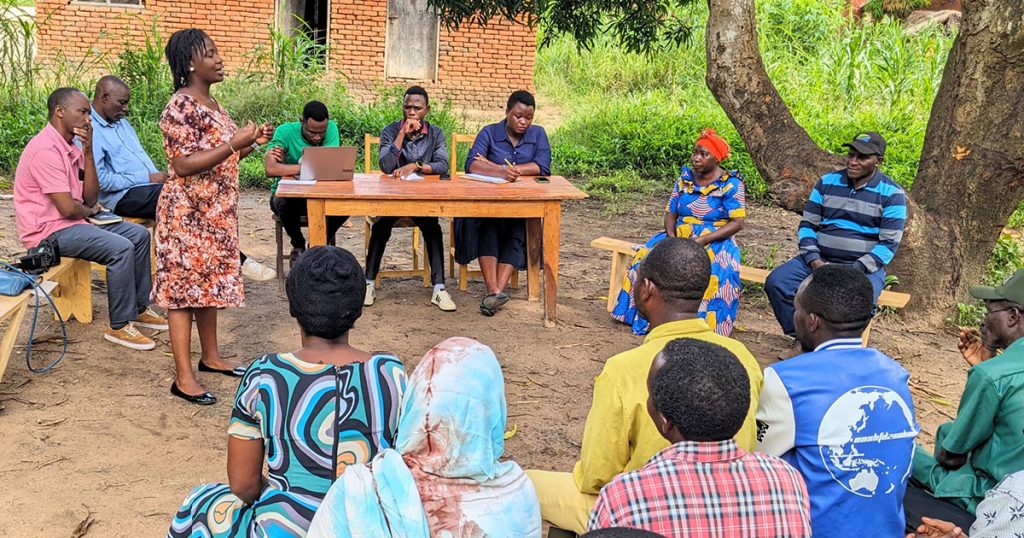
To address these challenges, a national network of community organizations, Mtandao wa Jamii wa Usimamizi wa Misitu Tanzania (MJUMITA), is working to sustainably manage more than 1.8 million hectares of forests through Community-Based Forest Management (CBFM). The initiative is supported by Center for International Forestry Research and World Agroforestry through the Regional Centre of Excellence for Biodiversity, Forests and Seascape Ecosystems Management in Eastern and Southern Africa project, funded by the European Union.
CBFM empowers local communities to manage forest resources responsibly while benefiting economically from them. Experts emphasize that when communities gain formal rights to manage forests, they often become the most effective protectors against illegal logging, poaching, and environmental degradation.
Previously, MJUMITA relied on paper-based governance monitoring systems, including village governance dashboards, financial auditing tools, and forest patrol tracking forms. However, manual reporting limited efficiency and delayed decision-making.
To improve monitoring and accountability, CIFOR-ICRAF and MJUMITA have developed digital forest governance tools that integrate technologies such as Open Data Kit, KoboCollect, and Mergin Maps. These systems enable mobile data collection, geospatial mapping, and real-time monitoring of forest patrols.
According to Douglas Bwire, project manager of the RCOE-ESA initiative at Center for International Forestry Research and World Agroforestry, the digital platform includes features such as GIS navigation, real-time patrol tracking, and interactive governance dashboards, improving the effectiveness of forest monitoring.
The system records patrol routes, times, and observations while documenting forest crimes such as illegal logging, charcoal burning, agricultural encroachment, and poaching. It also tracks enforcement actions including investigations, fines, and case resolutions.
The digital tools also enhance governance transparency by digitizing village financial records and meeting decisions related to forest management.
Currently, the system is being implemented in eight community-based forest management villages in the Rufiji District and Mvomero District, covering about 24,710 hectares of village forest reserves. In five villages in Mvomero alone, patrol teams have conducted 49 targeted patrols, recording 10 forest crime cases through the digital platform.
Following these early successes, MJUMITA plans to expand the digital monitoring system to more villages across Tanzania.
Experts believe the shift from paper-based reporting to digital and satellite-supported monitoring demonstrates how community-driven digital innovation can significantly improve forest protection, strengthen local governance, and support national forest restoration goals. (*)