Enviro News Asia, Jakarta — Conservation experts have stressed that any plan to establish a second population of the critically endangered Javan rhinoceros (Rhinoceros sondaicus) must be guided by scientific research, a cautious approach and long-term planning, with Ujung Kulon National Park remaining the species’ primary habitat.
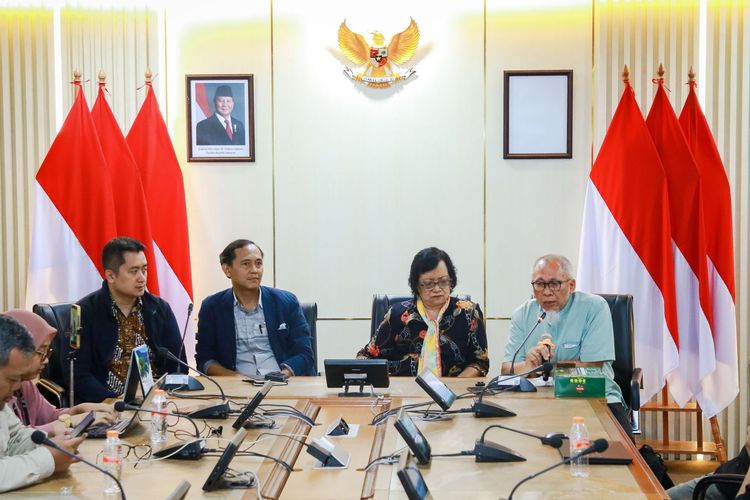
The issue was discussed during a media briefing involving four rhino conservation experts in Jakarta on Nov. 19, 2026. Their views are in line with Forestry Minister Raja Juli Antoni’s policy that Ujung Kulon will remain the main habitat and that no translocation will proceed without scientific assessment and recommendations.
Harini Muntasib, a conservation expert from IPB University, explained that the Javan rhino historically ranged across Java, particularly in West Java and Banten, with records extending as far east as areas near the borders of Central and East Java. Today, its principal habitat in Ujung Kulon National Park is concentrated on the peninsula. Nearby islands, including Panaitan, Peucang and Handeuleum, do not support rhino populations.
Harini said proposals for a second habitat and translocation were neither new nor decisions made hastily. The idea of establishing a second habitat had emerged as early as 1986 and had been pursued by Indonesian experts since 1993, in line with international conservation frameworks developed by the International Union for Conservation of Nature (IUCN) and the ASEAN Rhino Specialist Group.
She emphasised the distinction between translocation, which refers to moving wildlife, and relocation, a term generally associated with moving people. The proposed translocation would involve moving rhinos from the peninsula to the 5,100-hectare Javan Rhino Study and Conservation Area (JRSCA), where intensive or semi-intensive managed breeding could take place.
The second-habitat proposal, she added, should be treated as a long-term strategy rather than an immediate intervention. Offspring produced through management at JRSCA could provide the basis for considering the gradual and carefully assessed establishment of another habitat.
Muhammad Agil, a researcher at IPB University’s School of Veterinary Medicine and Biomedical Sciences, said the establishment of a second population had been included in Indonesia’s first Javan Rhino Conservation Strategy and Action Plan in 1993. The proposal continued in the second plan, covering 2007–2017, and remains part of the current third strategy.
The main concerns include the long-term carrying capacity of Ujung Kulon and the risk of genetic decline in a small, isolated population. Agil said maintaining a second population could help reduce the risks associated with relying on a single habitat.
Addressing public discussion surrounding the death of a rhino named Mushofa, Agil cautioned against incorrectly linking the animal’s death to the translocation process. Intensive examinations at the boma, a temporary holding area following capture, identified a gum infection that made eating difficult and led to chronic malnutrition. He attributed the condition to intrinsic health factors rather than translocation.
Indonesia, he said, had accumulated extensive experience in wildlife translocation and developed established standard operating procedures. Health assessments would continue to be improved to ensure that each animal was thoroughly examined before any decision to move it or release it back into the wild.
Agil also said future research could use assistive technologies and historical specimens preserved in European museums to help broaden the genetic diversity of the surviving population. He clarified that the objective was to improve genetic diversity, not to revive extinct species through de-extinction.
Wanda Kuswanda, a researcher at the National Research and Innovation Agency (BRIN), said protecting rhinos in their natural habitat must remain the immediate priority. Translocation could become necessary as part of a long-term conservation strategy if population growth approaches the habitat’s carrying capacity, but it must not be rushed.
“Moving a rhino is not like moving livestock between pens,” Wanda said, stressing that selecting a second habitat requires extensive research. Assessments must cover food and water availability, suitable home ranges, protection against poaching and disease risks, as well as the long-term security of the proposed site.
Sandy Nurvianto, an academic from Gadjah Mada University who works on terrestrial wildlife and biodiversity conservation, also rejected the notion that translocation would involve moving the entire population at once. He said scientific literature placed Ujung Kulon’s maximum carrying capacity at around 100 rhinos.
For an initial founder group, the number of animals moved would be carefully limited to a maximum of 10, with about eight considered optimal. The proposed composition would be three males and five females, he said, to avoid disrupting the stability of both the original and newly established populations.
Sandy stressed that the proposal remained at an early stage of discussion and would require years of research. He called for cooperation among the government, academics, researchers and media to improve public understanding of the conservation challenges facing the protected species.
The Forestry Ministry said it would continue to protect the Javan rhino through science-based decisions, transparent assessments and firm safeguards for conservation areas, ensuring that any future population management measures are careful, measurable and sustainable. (*)