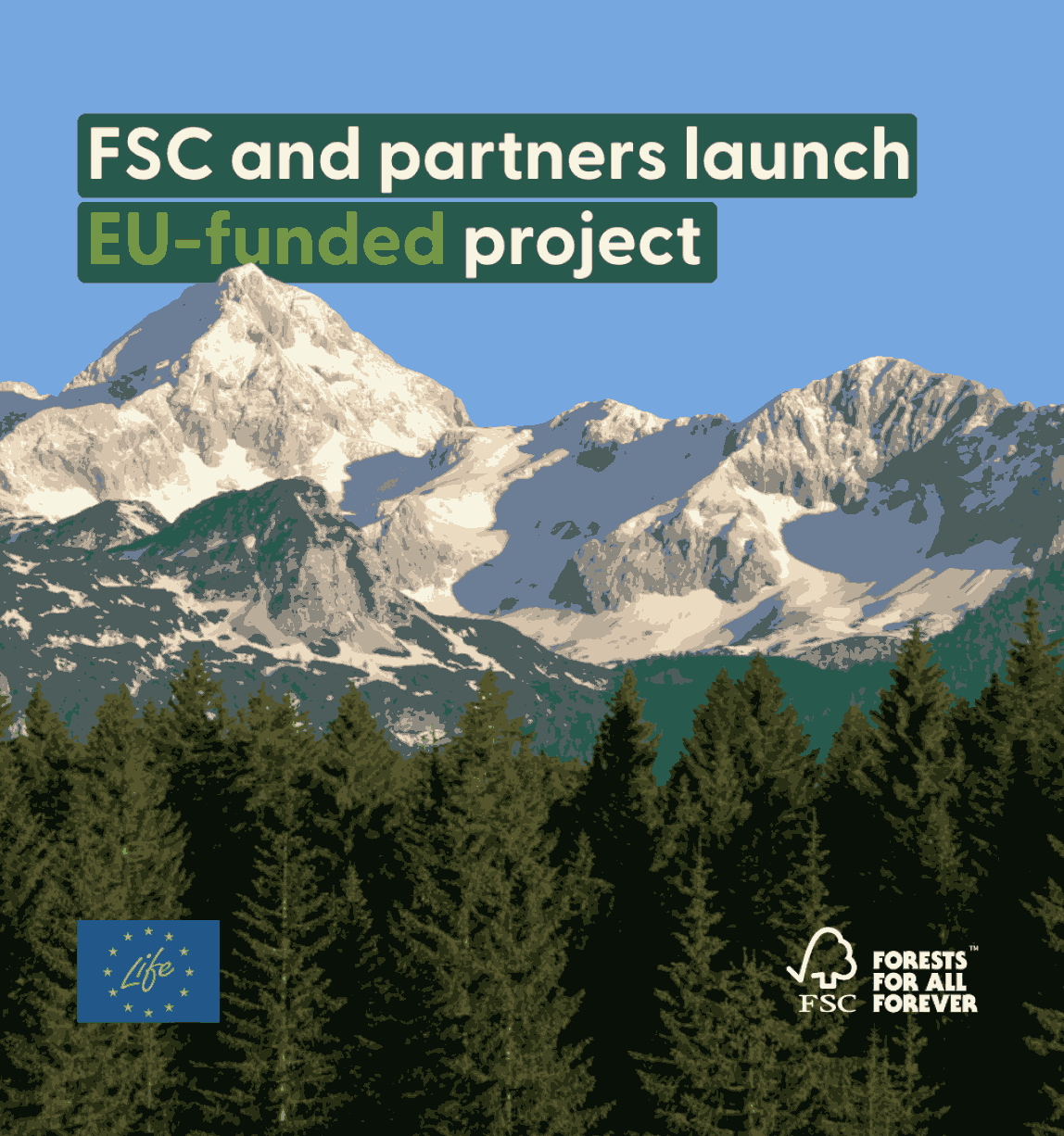
Enviro News Asia, Geneva — The Forest Stewardship Council (FSC), together with a consortium of European partners, has launched a €6.7 million project supported by the European Union’s LIFE Programme to strengthen circularity in forest-based value chains and promote more efficient, responsible use of fiber-based materials across Europe.
The FSC EU LIFE FIBRA project has secured €4 million in funding from the EU LIFE Programme, with additional contributions from project partners. The initiative aims to expand circular economy practices within the forestry sector by building on FSC’s internationally recognized certification system and supporting businesses in adapting to evolving sustainability and regulatory requirements.
The project will explore ways to enhance FSC’s existing recycling framework while promoting circular business models such as product reuse, repair, and take-back systems. It will also examine the potential integration of agricultural residues from certified sources into FSC-certified supply chains and support companies and public procurement authorities in making more sustainable material choices.
FSC Director General Subhra Bhattacharjee said the initiative reflects the organization’s commitment to evolving alongside changing market demands.
“As the way we use materials changes, FSC is evolving with it. This project will define our role in a future market, from the way materials are sourced to the way they are kept in circulation over time,” Bhattacharjee said.
Growing demand for renewable materials across Europe has encouraged industries including packaging, construction, and furniture manufacturing to shift from fossil-based resources toward forest-based fibers as part of efforts to reduce greenhouse gas emissions. However, FSC noted that relying solely on virgin forest resources is not a sustainable long-term solution.
The organization also highlighted that businesses are facing increasingly stringent European Union sustainability regulations covering resource efficiency, circularity, and supply chain traceability. The FIBRA project is intended to help companies comply with these evolving requirements while strengthening responsible forest stewardship.
The project will develop and pilot practical tools, guidance, and verification mechanisms across four strategic areas: integrating circular business models into FSC Chain of Custody certification, increasing the use of recycled materials through market guidance and public procurement support, assessing the inclusion of alternative fiber sources such as certified agricultural residues, and improving fiber traceability through enhanced digital systems and cascading-use approaches.
Loa Dalgaard Worm, Global Lead of the FSC Circularity Hub, said the funding enables FSC to expand work that has been under development for several years.
“This funding allows us to scale work that we have been laying the groundwork for over the past three years. We want to develop solutions that respond to market demand while delivering tangible environmental benefits without compromising FSC’s core mission of recognizing the true value of forests for nature, society, and the economy,” Worm said.
The FSC EU LIFE FIBRA project will be implemented across Denmark, Sweden, Finland, Germany, Austria, the Netherlands, Italy, and France through collaboration among organizations representing industry, academia, and civil society.
Project partners include FSC International and its national offices in participating countries, Aarhus University, the University of Southern Denmark, Circle Economy, ECOS, the World Business Council for Sustainable Development (WBCSD), and the Ellen MacArthur Foundation.
The initiative is expected to strengthen Europe’s transition toward a circular bioeconomy by improving resource efficiency, reducing waste, supporting responsible forest management, and expanding sustainable market opportunities for forest-based products. (*)