Enviro News Asia, Jakarta — The Indonesian government will expand its People’s School (Sekolah Rakyat) program from 166 to 182 locations this year as part of efforts to increase educational access for children from low-income and extremely poor families.
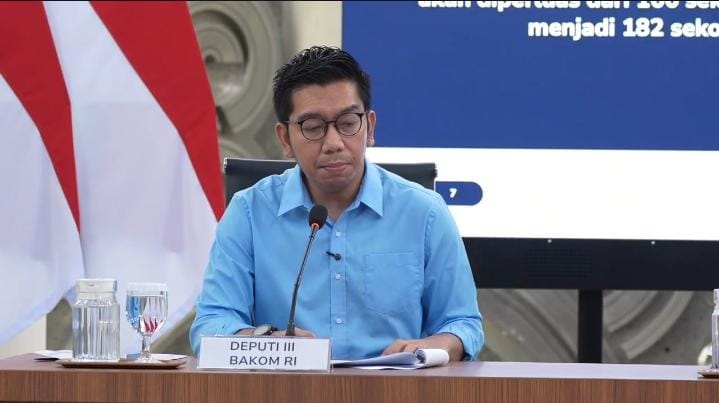
The expansion includes 93 permanent People’s Schools ready for operation, 81 existing pilot schools, and 85 new pilot schools, according to Deputy for Partnerships and Media Relations at the Government Communication Agency (Bakom RI), Kurnia Ramadhana.
Kurnia said the expansion marks a gradual transition from pilot schools to permanent educational institutions designed to provide long-term and sustainable learning opportunities.
He said the additional schools are expected to accommodate more students from disadvantaged households. Based on data from the Ministry of Social Affairs as of July 17, 2026, the 166 pilot People’s Schools operating in 141 regencies and cities across 34 provinces enrolled 14,776 students during the 2025/2026 academic year.
The government projects enrollment to increase to 28,568 students in the 2026/2027 academic year following the expansion. The total includes 6,305 elementary school students, 11,186 junior high school students, and 11,077 senior high school students.
Kurnia said the combined enrollment target for all People’s Schools this year is expected to reach 43,344 students across elementary, junior high, and senior high school levels.
He added that the government will continue expanding the boarding school program annually to help break the cycle of intergenerational poverty by providing educational opportunities for children from poor and extremely poor families.
The government plans to establish an additional 100 to 200 People’s School sites each year between 2027 and 2028. By 2029, it aims to operate 500 schools across all 38 provinces and 416 regencies and cities.
Kurnia said the government expects the program to improve access to education while easing the financial burden on vulnerable families. He added that authorities will continue monitoring the program’s medium- and long-term impacts to ensure it contributes to reducing intergenerational poverty. (*)