Enviro News Asia, Washington, DC — Discussions on Indo-Pacific security are increasingly extending beyond military competition and geopolitical rivalries to include economic resilience, technological development and cooperation that can directly benefit communities. These themes shaped a roundtable discussion involving Indonesian, Australian and Singaporean diplomats and members of the United States Congress in Washington, DC, on November 17, 2026.
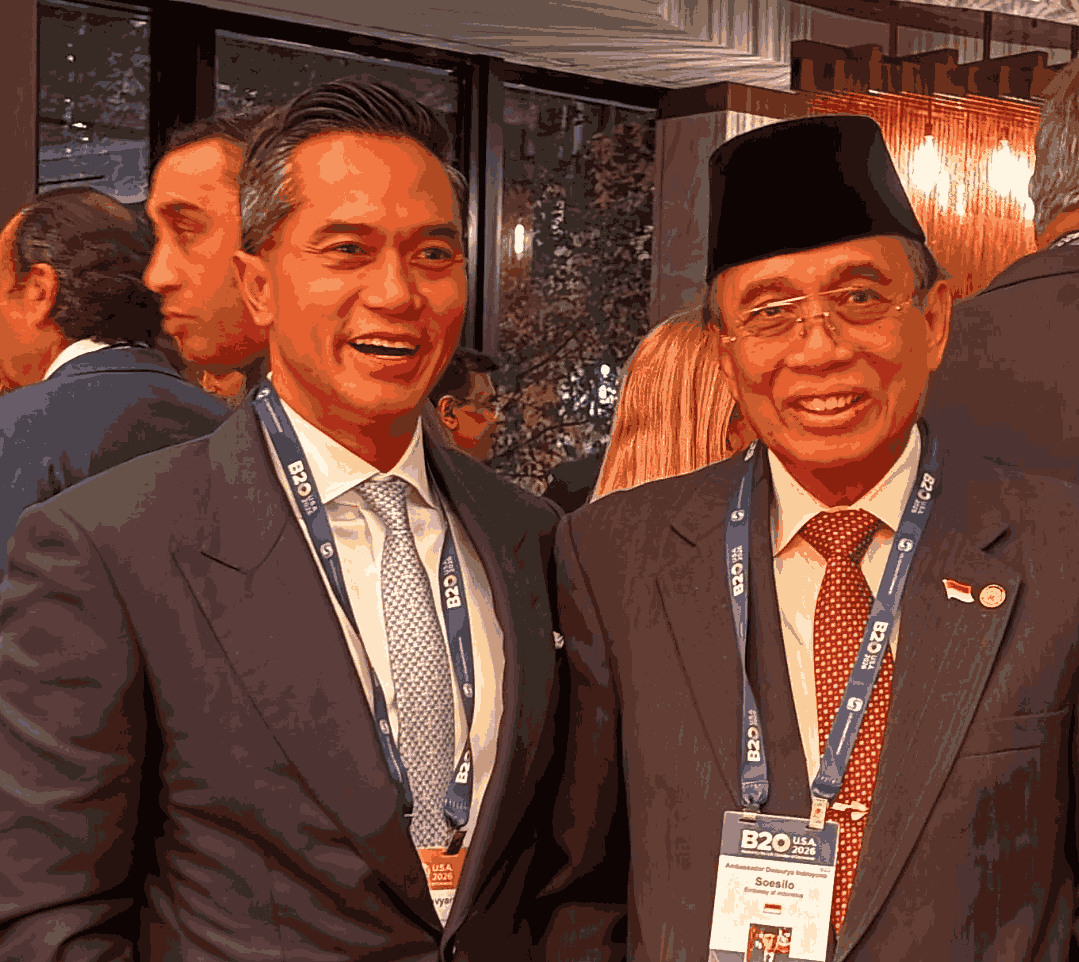
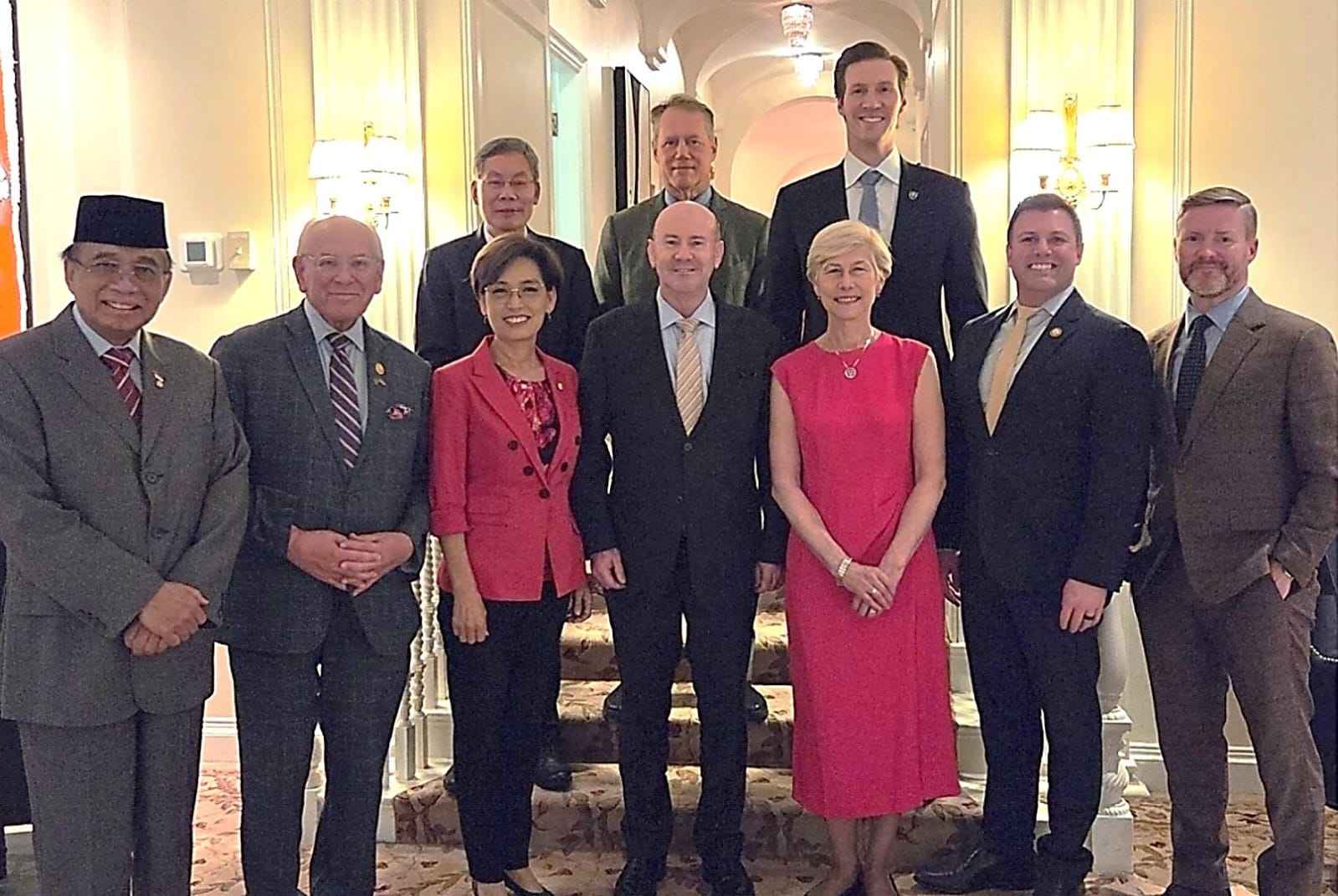
The meeting, titled “Indo-Pacific Security Perspectives”, was held at the residence of Australian Ambassador to the United States Greg Moriarty. It was attended by Indonesian Ambassador Indroyono Soesilo, Singaporean Ambassador Lui Tuck Yew and members of the US House of Representatives from both the Republican and Democratic parties.
The US lawmakers included Young Kim of California, Deborah Ross of North Carolina, Ed Case of Hawaii, Laura Friedman of California, Pat Harrigan of North Carolina and Paul Tonko of New York.
Southeast Asia’s strategic importance featured prominently in the discussion. The region is not merely a geographical link between the Indian and Pacific oceans but also a major centre for trade, energy, natural resources and technological development.
With a population approaching 700 million and the world’s fourth-largest economy as a regional bloc, ASEAN represents a substantial market and a long-term economic partner. However, its strategic value extends beyond consumer demand to its abundant natural resources and potential role in global industrial supply chains.
The discussion highlighted tin resources in Indonesia, Malaysia and Thailand, nickel reserves stretching from Indonesia to the Philippines, and the region’s copper potential. These critical minerals, including associated rare earth elements, are important for producing permanent magnets used in semiconductors, artificial intelligence technologies and defence industries.
Southeast Asia, therefore, should be viewed not only as a market for international products but also as a partner in industrial development and supply-chain resilience.
The region’s maritime routes are another major strategic asset. The Strait of Malacca, which runs between Sumatra and the Malay Peninsula and connects shipping traffic to Singapore, is among the world’s busiest sea lanes.
More than 102,500 vessels transited the strait in 2025, up from approximately 94,300 the previous year. Their cargoes included crude oil, liquefied natural gas (LNG), coal, palm oil, iron ore and manufactured goods, making the waterway a vital connection between energy-producing regions and major industrial centres in East Asia.
The scale of energy shipments further underlines its global significance. During the first half of 2025, approximately 23.2 million barrels of oil per day passed through the Strait of Malacca, supplying major economies including China, Japan and South Korea.
Estimates compiled by shipping services company Clarksons indicate that around 75–80 per cent of China’s oil imports pass through the strait. The corresponding figures are approximately 80 per cent for Japan and 70 per cent for South Korea. Clarksons also recorded average LNG flows through the waterway of around 9.2 billion cubic feet per day.
Disruptions to shipping in the strait could force vessels to take longer routes, increase transportation costs and affect international supply chains. Indonesia, Malaysia and Singapore consequently play important roles in maintaining navigational safety and the uninterrupted movement of maritime traffic.
For the United States, cooperation with ASEAN countries is therefore closely connected to broader economic and security interests.
Beyond regional security and trade, Indonesian Ambassador Indroyono Soesilo also discussed practical research and innovation opportunities with US Representative Deborah Ross of North Carolina.
The discussions focused on developing cooperation between Indonesia and the Research Triangle, a research and technology hub built around three major universities: Duke University in Durham, the University of North Carolina at Chapel Hill and North Carolina State University in Raleigh.
The proximity of universities, laboratories and businesses has helped establish the Research Triangle as an ecosystem linking education, scientific research and technological development.
The two sides agreed to explore cooperation in three priority areas: agriculture, healthcare and family resilience following disasters.
In agriculture, potential collaboration with North Carolina State University would focus on improved seed research, agricultural sensors and data analysis to increase productivity.
In healthcare, cooperation with Duke University would explore diagnostic research, infectious diseases and vaccine development.
Meanwhile, discussions with the University of North Carolina at Chapel Hill would focus on research into family resilience and recovery following disasters.
The Washington meeting demonstrated how broader Indo-Pacific security discussions can be connected to practical initiatives that address people’s everyday needs. From maritime trade and energy security, the dialogue extended to agricultural innovation, healthcare research and disaster-resilient families.
The next challenge will be turning these shared interests into concrete partnerships. The value of diplomacy, the discussion underscored, lies not only in high-level meetings but also in delivering tangible benefits to Indonesian farmers, healthcare services and families. (*)