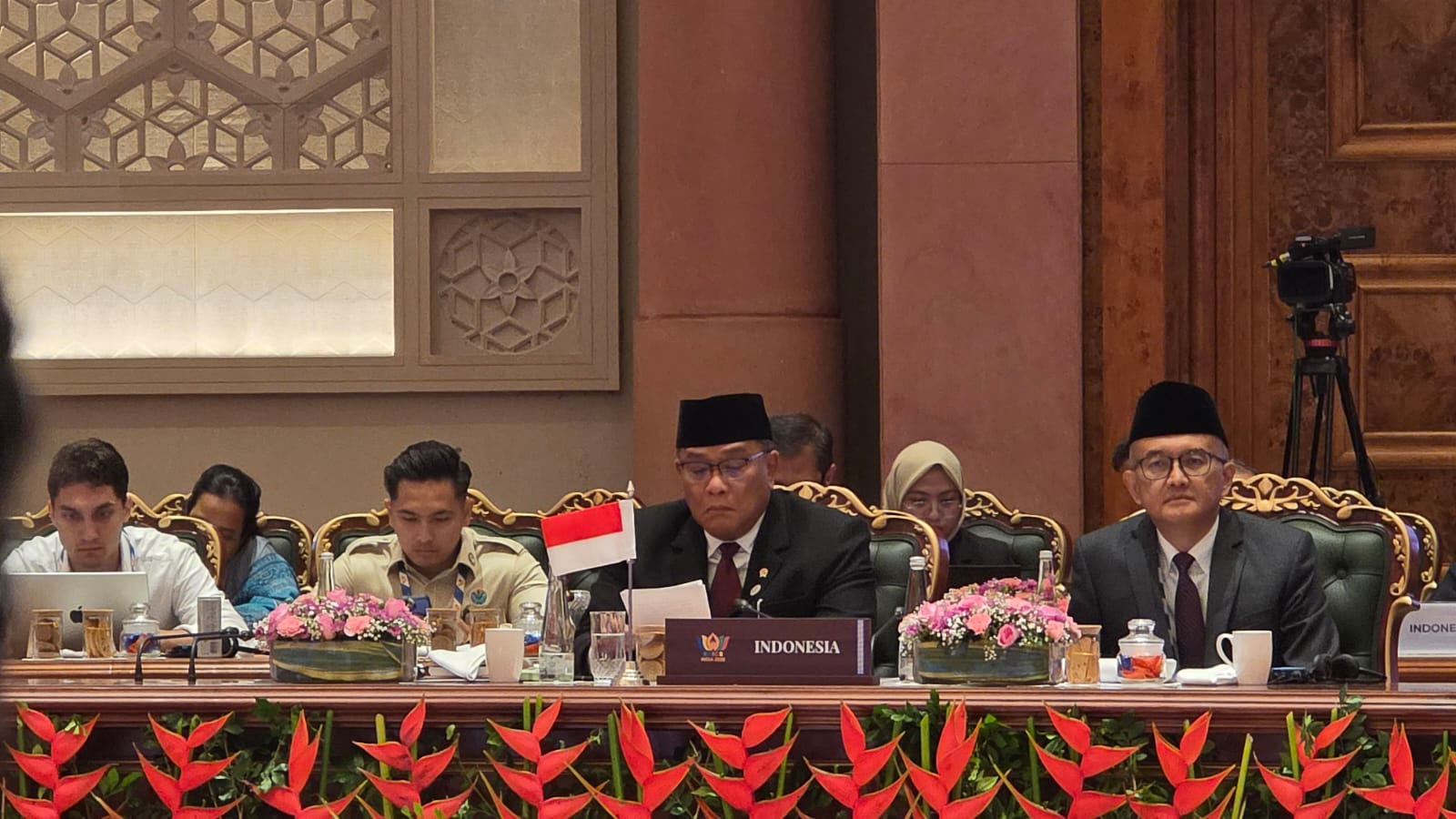
Enviro News Asia, New Delhi — Indonesia highlighted its community-based environmental management practices at the BRICS Senior Officials Meeting 2026 in New Delhi on August 17, emphasizing the importance of local participation in addressing climate change, land degradation, and biodiversity loss.
Represented by the Ministry of Environment and the Environmental Control Agency (KLH/BPLH), the Indonesian delegation stressed that BRICS provides an important platform for developing countries to strengthen cooperation and shape a more inclusive and equitable global environmental agenda.
The senior officials meeting formed part of the Environment Working Group (EWG) and Contact Group on Climate Change and Sustainable Development (CGCCSD). One of the key agendas was the finalization of the Joint Ministerial Statement and its annexes, which would serve as a foundation for collective commitments on environmental protection and climate action.
Ary Sudijanto, Deputy for Climate Change Control and Carbon Economic Value Governance at KLH/BPLH and head of the Indonesian delegation, expressed appreciation for India’s leadership as BRICS Chair in 2026 and welcomed progress in the technical discussions.
Indonesia emphasized that the global green transition must be inclusive and responsive to the needs of developing countries. According to Ary, challenges such as climate change, land degradation, and biodiversity loss require collective solutions that combine strong policies and reliable science with active participation from communities on the ground.
“For Indonesia, adaptation succeeds when strong policies and reliable science are combined with the active participation of local communities that are on the front lines of climate impacts,” Ary said during the meeting.
Indonesia presented several national initiatives as examples of community-based environmental management. These included the Climate Village Program (ProKlim), which has expanded to more than 12,000 locations across the country, as well as community-based waste management through Waste Banks and basic business and empowerment training programs.
Indonesia also highlighted its integrated approach to forest and peatland fire management through the combination of SiPongi technology and grassroots efforts by the Fire Care Community (Masyarakat Peduli Api/MPA). The initiatives demonstrate how technology, government policy, and community action can work together to address environmental risks.
The Indonesian delegation’s contribution also supported the completion of the Joint Ministerial Statement during the senior officials meeting. The document was prepared for formal adoption at the BRICS Environment Ministers Meeting on August 18, 2026.
Through its participation in BRICS 2026, Indonesia sought to strengthen international cooperation on environmental protection while sharing practical experiences from local communities. The country positioned community participation as an important component of effective climate adaptation, environmental management, and sustainable development.
Indonesia’s approach reflects its broader effort to ensure that international environmental cooperation translates into practical action at the local level. By combining policy, science, technology, and community-based initiatives, Indonesia aims to contribute to a more equitable and sustainable global environmental governance system. (*)