Enviro News Asia, Lampung — Indonesia’s Minister of Forestry Raja Juli Antoni emphasized the importance of involving local communities and the private sector in safeguarding Way Kambas National Park during an Eid gathering with village leaders surrounding the conservation area.
The event, attended by regional officials including Rahmat Mirzani Djausal, highlighted a new pilot project focused on sustainable financing mechanisms aimed at strengthening biodiversity protection while improving local livelihoods.
The minister introduced a blended finance approach combining public funding with private sector participation and green capital markets. The initiative includes biodiversity bonds, voluntary carbon markets, and the expansion of conservation-based ecotourism.
Way Kambas National Park, a critical habitat for endangered species such as the Sumatran elephant, Sumatran rhino, and Sumatran tiger, continues to face challenges including illegal hunting, habitat fragmentation, forest fires, and human-wildlife conflict.
To address long-standing funding gaps in Indonesia’s national parks, the government has established a task force on innovative financing and management, co-led by Mari Pangestu. The initiative aims to reduce dependence on state budgets and ensure sustainable ecosystem management.
As part of the program, local communities will be actively involved in reforestation efforts and forest protection, while also benefiting economically from carbon credit schemes and ecotourism activities.
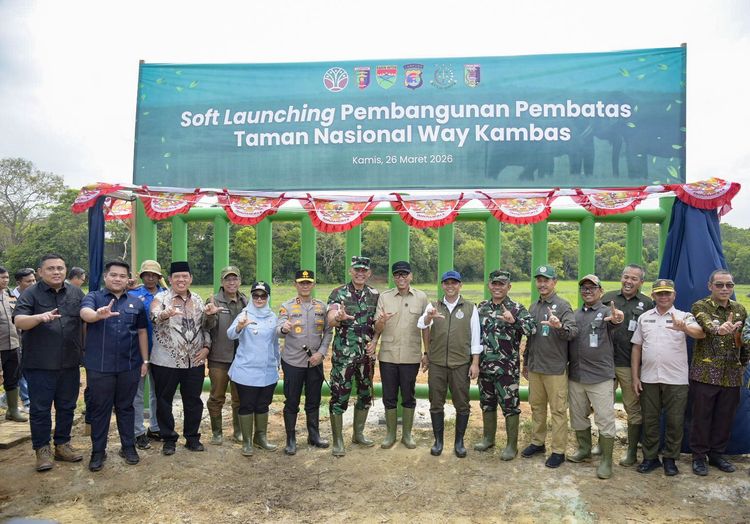
During the event, the minister also launched a barrier system designed to mitigate human-elephant conflict. The infrastructure, spanning approximately 138 kilometers, is expected to protect nearly one million residents living along the park’s borders.
The project reflects a broader policy shift toward integrating conservation with economic development, ensuring that environmental protection delivers tangible benefits to surrounding communities while preserving Indonesia’s critical biodiversity. (*)