Enviro News Asia, West Kalimantan — The Indonesian Ministry of Forestry reaffirmed its commitment to protecting and managing peatland and mangrove ecosystems as nature-based solutions for addressing climate change and achieving the Sustainable Development Goals (SDGs).
This message was delivered by the Expert Staff on Climate Change to the Minister of Forestry, Haruni Krisnawati, during the International Summer Course: Coastal Resilience and Carbon Sequestration held in Pontianak, West Kalimantan, on Thursday (July 24, 2025).
In her presentation, Haruni emphasized that peat and mangrove forests are “climate superpowers” because of their high carbon storage capacity, ability to regulate water systems, and critical role in preserving biodiversity and supporting local livelihoods.
“Conserving and restoring peat and mangrove ecosystems is not merely an environmental issue—it is a strategic development effort connected to food security, public health, clean water, green employment, and disaster risk reduction,” said Haruni.
She explained that Indonesia’s peatlands span around 13.4 million hectares and represent the world’s largest terrestrial carbon sink per unit area—storing roughly twice the amount of carbon per hectare compared to the global average of other forests.
Indonesia is also home to approximately 3.3 million hectares of mangrove forests, accounting for about 23 percent of the world’s total mangrove area.
These forests store significant blue carbon reserves and act as natural buffers that protect coastal areas from storms and erosion.
Haruni further highlighted that both ecosystems directly contribute to more than ten SDG targets, including poverty reduction (SDG 1), zero hunger (SDG 2), good health and well-being (SDG 3), quality education (SDG 4), gender equality (SDG 5), climate action (SDG 13), and the protection of marine and terrestrial ecosystems (SDG 14 and 15).
“Through social forestry programs, ecosystem restoration, and community-based management, we can strengthen women’s roles, create green jobs, and reduce social inequality,” she added.
Haruni also emphasized the importance of Indonesia’s national strategy known as FOLU Net Sink 2030, which aims to make the Forestry and Other Land Use (FOLU) sector a net carbon sink by the year 2030.
This strategy encompasses mangrove rehabilitation, peatland restoration, reducing deforestation, and establishing a strong governance framework for carbon economic value in the forestry sector.
“FOLU Net Sink is Indonesia’s concrete contribution to the global effort in combating climate change. Peat and mangrove ecosystems are central to this strategy,” she affirmed.
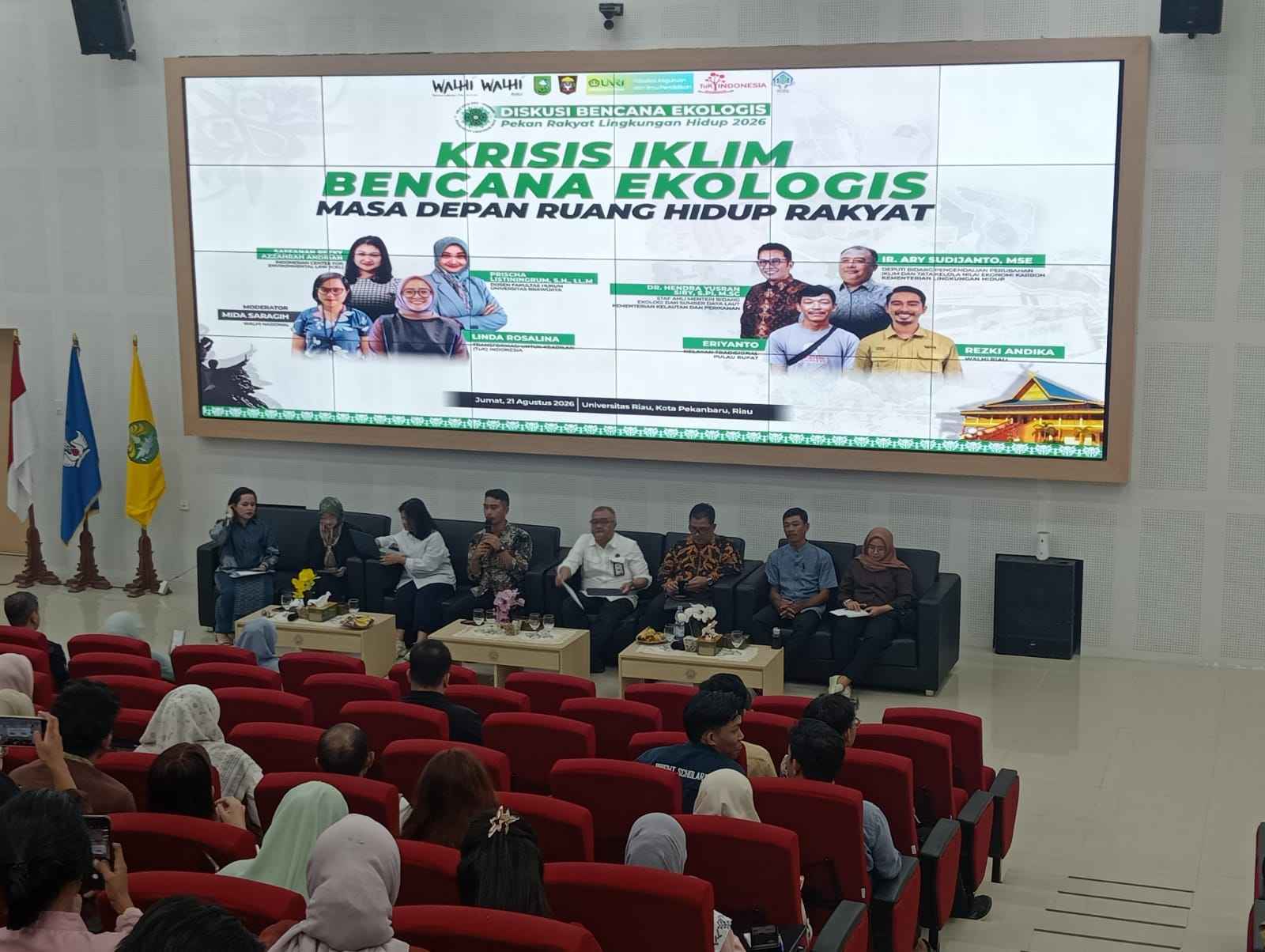
The event was attended by students, academics, researchers, environmental practitioners, and representatives from public and private institutions both domestically and internationally.
The Indonesian Ministry of Forestry used this platform to showcase its role as a strategic partner in promoting ecosystem-based climate solutions, fostering collaboration among stakeholders, and sharing knowledge on sustainable ecosystem management.
“We must regard peatlands and mangrove forests as the foundations for resilience, prosperity, and a sustainable future,” Haruni concluded. (*)