

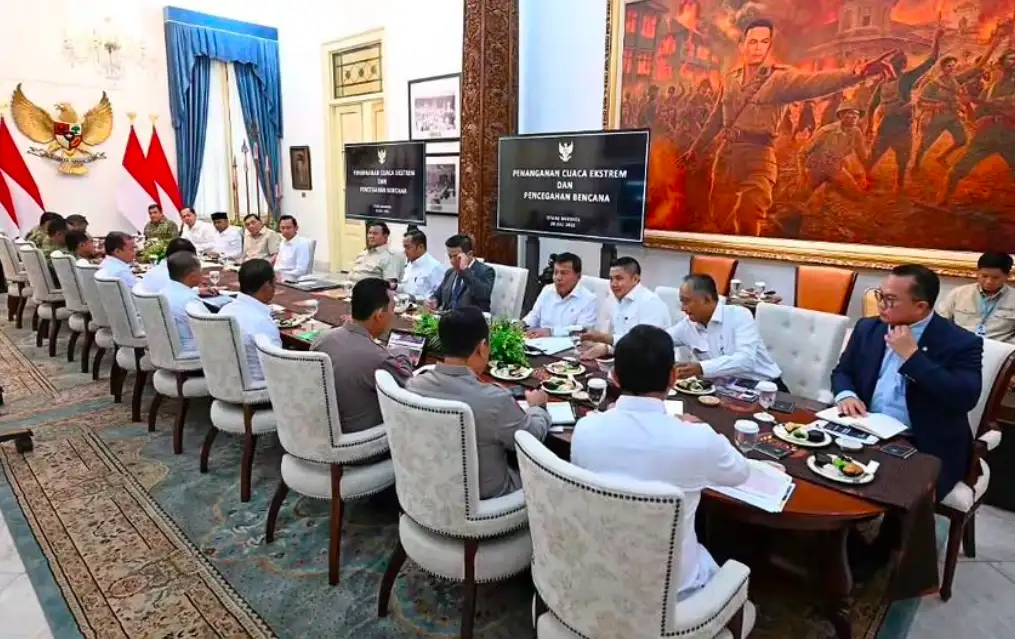
Enviro News Asia, Jakarta — Indonesian President Prabowo Subianto expressed interest in several water technologies developed by the National Research and Innovation Agency (BRIN) during a limited cabinet meeting on extreme weather response and disaster mitigation held at the Presidential Palace on Tuesday.
BRIN Chair Arif Satria presented 13 water-related technologies designed to strengthen Indonesia’s preparedness for climate-related challenges, particularly the anticipated impacts of El Niño on national water availability.
According to Arif, the meeting focused on the potential effects of El Niño, which could increase the risk of drought and intensify water shortages across the country. To address these challenges, BRIN has developed a portfolio of water technologies grouped into four major categories to support mitigation efforts and improve water security.
Among the technologies highlighted was BRIN’s latest weather modification system, which utilizes drones to disperse Dumikron, sodium chloride (NaCl) particles measuring 2–5 microns, making cloud-seeding operations more efficient than conventional methods.
“President Prabowo showed particular interest in the latest weather modification technology, which has the potential to strengthen Indonesia’s capacity to mitigate the impacts of extreme weather,” Arif said.
BRIN also showcased technologies for treating marginal water resources through biofiltration systems capable of processing brackish water, peat water, wastewater, and seawater. The agency has also developed desalination technology to produce clean water from saline sources.
Another innovation presented was Arsinum (Air Siap Minum), a water treatment system capable of converting various raw water sources into drinking water that meets national quality standards. The technology has already been deployed in disaster-affected and coastal areas, including Aceh Tamiang Regency and Central Tapanuli Regency, providing communities with reliable access to safe drinking water.
BRIN stated that these technologies are expected to strengthen Indonesia’s resilience to climate-induced water shortages while supporting disaster preparedness and sustainable water resource management through science and innovation. (*)