Enviro News Asia, Jakarta — The preservation of mangrove forests in Southeast Asia requires cross-border synergy that emphasizes science, local wisdom, community participation, and nature-based solutions.
In the face of shared challenges such as deforestation, coastal erosion, and climate change, a coordinated mangrove management strategy at the ASEAN level is considered a vital foundation for achieving sustainable and inclusive coastal ecosystem resilience.
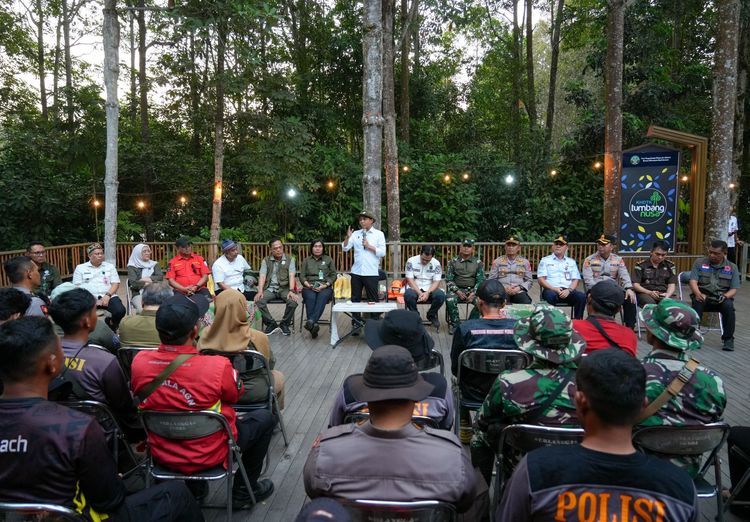
This message emerged during the Public Discussion on the Implementation Guidelines for the ASEAN Regional Strategy for Sustainable Mangrove Ecosystem Management 2024–2030, held in Jakarta on Wednesday, June 12, 2025.
The event served as a multi-stakeholder forum to develop practical implementation guidance for the strategy agreed upon by ASEAN member states through a collaborative and science-based approach.
Ristianto Pribadi, Director of Mangrove Rehabilitation at the Ministry of Forestry of the Republic of Indonesia, emphasized that the ASEAN strategy must be translated into tangible actions at the national and local levels.
“A robust strategy must be accompanied by clear and applicable implementation mechanisms. That is why we have gathered here today,” he said.
Ristianto noted that mangrove ecosystems in Southeast Asia are among the region’s most valuable coastal assets.
Mangrove forests not only protect shorelines from erosion and storms but also support fisheries, store significant amounts of carbon, and sustain the livelihoods of millions of people living in coastal and island communities.
To address threats to mangrove ecosystems, the ASEAN Mangrove Network (AMNET) was established as a platform for inter-country cooperation in strengthening mangrove conservation and rehabilitation.
Through the project “Mangrove Ecosystem Management in the ASEAN Region,” the network promotes the exchange of best practices, shared learning, and improved mangrove governance in each member state.
One of AMNET’s major milestones is the development of the ASEAN Regional Strategy for Sustainable Mangrove Ecosystem Management 2024–2030.
This strategy is science-driven, inclusive, and aligned with both national and regional priorities. It outlines a shared vision for adaptive, participatory, and innovative mangrove management.
Ristianto highlighted five key principles that should be detailed in the implementation guidelines:
First, the integration of science and local knowledge. Policies must be based on scientific data while also recognizing the value of traditional ecological knowledge in mangrove stewardship.
Second, community empowerment. “Local communities are not merely beneficiaries — they are the main actors in mangrove management. Their participation is critical to the success of conservation efforts,” he asserted.
Third, climate resilience through nature-based solutions. Mangroves are capable of sequestering carbon, buffering storm surges, and stabilizing coastlines. Their management must therefore be integrated with global goals such as the Paris Agreement, the Kunming-Montreal Global Biodiversity Framework, and the Sustainable Development Goals (SDGs).
Fourth, regional collaboration and policy coherence. Ristianto noted that issues such as habitat degradation and sea level rise transcend national boundaries. Therefore, policies must encourage cross-border knowledge exchange, joint monitoring, and harmonized regulations across the ASEAN region.
Fifth, innovation and financing. Effective mangrove management requires not only sound policy but also innovative approaches in financing, monitoring, and technology. Ristianto cited the potential of blue carbon markets and digital platforms as tools to enhance management effectiveness.
The public discussion was attended by representatives from the ASEAN Secretariat, ASEAN member states, international development organizations, academia, civil society organizations, and community leaders.
Ristianto expressed his appreciation to all parties involved in the development of the strategy, including the ASEAN Secretariat, the Mangrove Policy Lab (LPP Mangrove), academic institutions, civil society organizations, and international partners.
Ristianto expressed hope that this discussion would serve not only as a venue for sharing best practices but also as a catalyst for strengthening cross-border partnerships in addressing common challenges.
He urged all stakeholders to move from declarations of intent to measurable, concrete actions.
“With a spirit of collaboration, we can position the ASEAN region as a global model for successful sustainable mangrove management,” he concluded. (*)