Enviro News Asia, Banyuwangi — PT Bank Negara Indonesia (Persero) Tbk (BNI) reported positive progress in its mangrove rehabilitation initiatives as of the end of 2025, highlighting its commitment to restoring coastal ecosystems while strengthening local economic resilience.
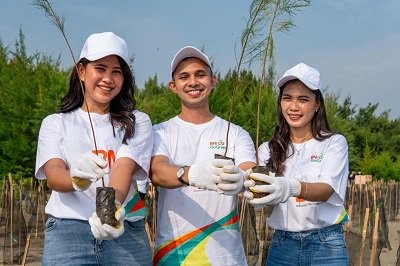
One of BNI’s flagship initiatives is the Mangrove Forest Regeneration Program in Pangpang Bay, Banyuwangi, East Java. The program aims to rehabilitate degraded mangrove areas and enhance the livelihoods of coastal communities affected by environmental degradation.
The mangrove rehabilitation initiative forms part of BNI’s Corporate Social and Environmental Responsibility (CSER) program under its sustainability pillar, particularly within the Inclusion and Resilience framework. The program targets coastal zones experiencing declining mangrove coverage due to shoreline erosion, land conversion for aquaculture, and illegal logging activities.
Implemented from August 2024 to August 2027, the program adopts an integrated approach encompassing mangrove nurseries, planting activities, and long-term maintenance. BNI Corporate Secretary Okki Rushartomo stated that the initiative is designed to generate lasting environmental and socio-economic benefits.
BNI applies the Creating Shared Value (CSV) concept in the program’s implementation, ensuring that ecological restoration aligns with community empowerment and corporate sustainability objectives. The initiative also supports Indonesia’s commitment to the Sustainable Development Goals (SDGs), particularly SDG 13 on climate action, SDG 14 on life below water, and SDG 15 on life on land.
Local participation plays a central role in the program. BNI collaborates with the Community Monitoring Group (Pokmaswas) Baret and actively involves women and coastal youth to ensure long-term stewardship of the rehabilitated mangrove areas.
From an environmental perspective, the mangrove regeneration in Pangpang Bay contributes to reducing coastal abrasion, improving water quality, and restoring habitats for marine and coastal species such as soft-shell crabs, sardines, and migratory birds. Mangroves also function as effective natural carbon sinks, supporting climate change mitigation efforts.
Beyond ecological restoration, BNI integrates economic empowerment through three main interventions: the development of mangrove-based educational tourism, strengthening mangrove nurseries as alternative income sources, and revitalizing supporting infrastructure to facilitate local economic activities.
To reinforce local capacity, BNI conducts training sessions and workshops on mangrove propagation, community-based conservation, and educational tourism management. These efforts aim to increase environmental awareness, strengthen social cohesion, and create new conservation-based business opportunities.
BNI reaffirmed its commitment to advancing sustainable practices that deliver tangible benefits for both the environment and society. The Banyuwangi mangrove rehabilitation program stands as part of the bank’s broader contribution to enhancing coastal ecosystem resilience and promoting sustainable local economic development. (*)