Enviro News Asia, New York, — The United Nations’ landmark international ocean treaty, formally known as the Biodiversity Beyond National Jurisdiction (BBNJ) Agreement, has officially entered into force, marking a major milestone in global ocean governance.
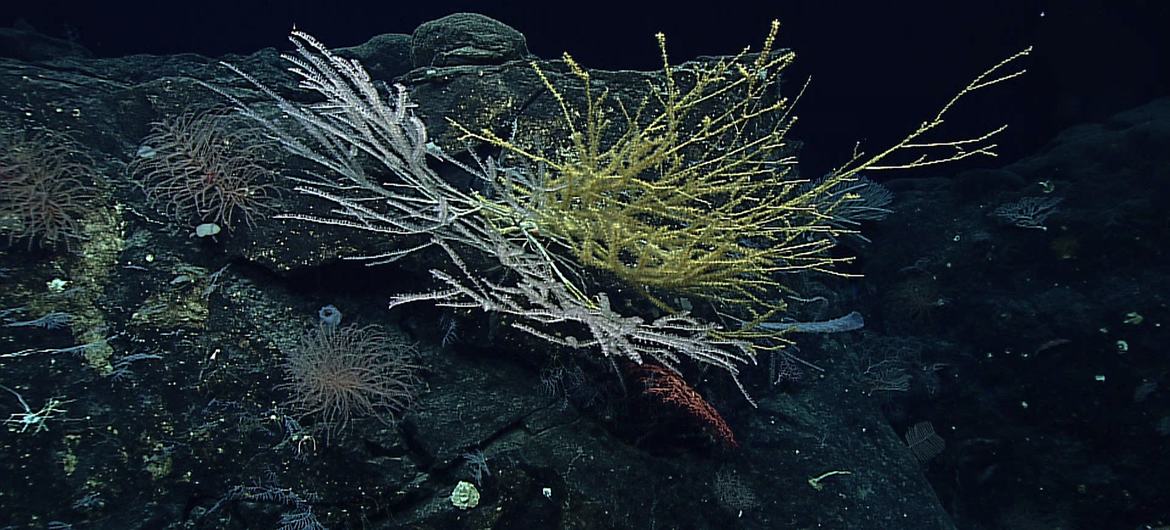
The legally binding agreement regulates activities in ocean areas beyond national jurisdiction, including the high seas and the international seabed. These areas account for more than two-thirds of the world’s ocean surface and represent over 90 percent of Earth’s living habitat by volume, given that most life on the planet exists underwater.
The BBNJ Agreement aims to ensure that international waters are managed sustainably and equitably for the benefit of all humanity. It also establishes the first legally binding framework for inclusive ocean governance, incorporating provisions on the participation of Indigenous Peoples and local communities, as well as commitments to gender balance.
The treaty is expected to play a significant role in addressing the global “triple planetary crisis” of climate change, biodiversity loss, and pollution once fully implemented.
Speaking to UN News, Tanzanian diplomat Mzee Ali Haji, who led Tanzania’s negotiation team during the BBNJ talks, described the agreement as a breakthrough in protecting international waters.
“There is now control over activities in the high seas. When pollution occurs, responsibility is clearly assigned,” he said.
The BBNJ Agreement builds upon the UN Convention on the Law of the Sea, which has served as the foundational legal framework for ocean governance since entering into force in 1994. The new treaty strengthens existing rules by providing more detailed mechanisms for biodiversity protection and aligning ocean governance with modern challenges, including climate change and the 2030 Agenda for Sustainable Development.
Following its entry into force, the treaty is now legally binding for the 81 countries that have ratified it to date. It became effective 120 days after receiving ratification from at least 60 states.
Several major economies, including China, Germany, Japan, France, and Brazil, are among the ratifying countries. However, other major economies, such as the United States, India, the United Kingdom, and Russia, have not yet completed ratification.
Despite this, Mr. Haji expressed optimism regarding the treaty’s future impact, emphasizing the importance of international cooperation.
“The protection of the high seas is the responsibility of all of us,” he said, noting that developing countries and small island states stand to benefit significantly from the agreement.
The treaty remains open for additional ratifications. According to its provisions, the first conference of parties to review implementation and compliance is scheduled to take place within one year of its entry into force. (*)