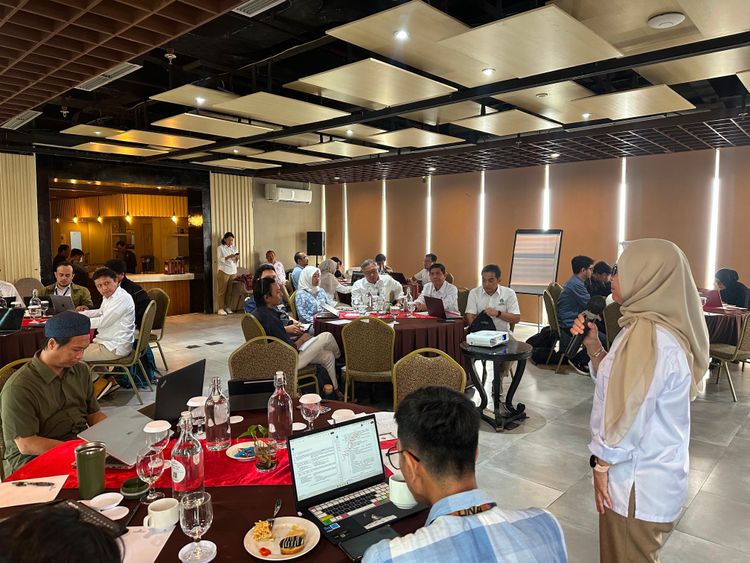
Enviro News Asia, Jakarta — Indonesia’s Ministry of Forestry has opened a dedicated consultation forum for civil society organizations to provide input on the planned revision of Ministerial Regulation No. 8/2021 on forest governance, management planning, and forest utilization in protected and production forests.
The consultation involved 14 civil society organizations that raised key governance issues, including access to information, independent monitoring, strengthening Forest Management Units (KPH), management of KHDPK areas, deforestation, and performance-based evaluation of Forest Utilization Business Licensing (PBPH).
The forum is part of a broader public consultation process on the revision of Regulation P.8, which has been conducted through nine sessions involving nearly 8,900 participants from central and local governments, communities, businesses, academics, civil society organizations, and forestry practitioners. The process has so far received 295 responses and recommendations.
Secretary of the Directorate General of Sustainable Forest Management Erwan Sudaryanto said the special forum was important to ensure that the regulatory revision incorporates field experience and independent perspectives.
“This forum is important for the Ministry of Forestry to receive input from civil society organizations. We hope their contributions can help improve the revision of P.8 and strengthen sustainable forest utilization,” Erwan said.
The revision is intended to strengthen policy implementation, improve governance effectiveness, respond to emerging challenges, and align forest management regulations with developments at the national and international levels.
Civil society organizations emphasized the importance of greater transparency and independent oversight. They called for improved access to forest-related data, stronger KPH governance, better management of KHDPK areas, closer monitoring of deforestation, and performance-based assessments for PBPH extensions.
WWF-Indonesia representative Diah Suradireja said certainty for businesses should be balanced with stronger forest governance, resolution of land-tenure conflicts, and reinforcement of KPH functions.
“KPH is expected to serve as a coordination platform for landscape management that integrates ecological, social, economic and spatial planning aspects,” Diah said.
Independent Forest Monitoring Fund (IFM Fund) Executive Director Deden Pramudiana also highlighted the need to strengthen access to data and information for independent monitors, including adequate financing to support independent monitoring activities.
The consultation forum included presentations on proposed regulatory changes, plenary discussions, group discussions and the formulation of recommendations. The outcomes will be consolidated and submitted to the Directorate General of Sustainable Forest Management as formal input for the revision process.
Team Leader of the Multistakeholder Forestry Programme Phase 5 (MFP5), Irfan Bahtiar, said the decision to provide a dedicated space for civil society organizations demonstrated the government’s commitment to improving transparency and forest governance.
The forum was facilitated by MFP5, a cooperation programme between the governments of Indonesia and the United Kingdom aimed at strengthening sustainable forest governance, policy implementation and international recognition of Indonesia’s forestry governance.
The 14 participating organizations were Auriga Nusantara, The Reform Initiative (TRI), Greenpeace Indonesia, MFP5, Independent Forest Monitoring Fund, Indonesia Center of Environmental Law (ICEL), Jaringan Pemantau Independen Kehutanan (JPIK), Kaoem Telapak, Madani Berkelanjutan, Perkumpulan HuMa, Satva Bumi, Working Group ICCAs Indonesia, WWF-Indonesia and KKI Warsi.
The consultation was held in Jakarta on August 24, 2026, in a hybrid format. The recommendations are expected to contribute to a more transparent, accountable and sustainable forest governance framework in Indonesia. (*)