

Enviro News Asia, Semarang — Central Java’s growing non-oil and gas exports are increasingly dependent on the province’s ability to reduce industrial emissions and meet stricter environmental requirements in international markets, according to the Institute for Essential Services Reform (IESR).
Data from Statistics Indonesia’s Central Java office showed that the province recorded US$4.31 billion in non-oil and gas exports between January and April 2026, representing a 16.14 percent increase from the same period last year.
Chemical products recorded the strongest growth, with export value increasing by US$132.27 million, or 140.22 percent, during the period.
The United States, Japan, and China remained the province’s largest export destinations. European markets also represented significant opportunities, with the Netherlands ranking fourth, Germany eighth, Belgium 11th, and Italy 15th among Central Java’s export destinations.
IESR said the growing role of international markets also exposes Central Java’s industries to increasingly stringent environmental and sustainability requirements, making industrial decarbonization an important component of long-term export competitiveness.
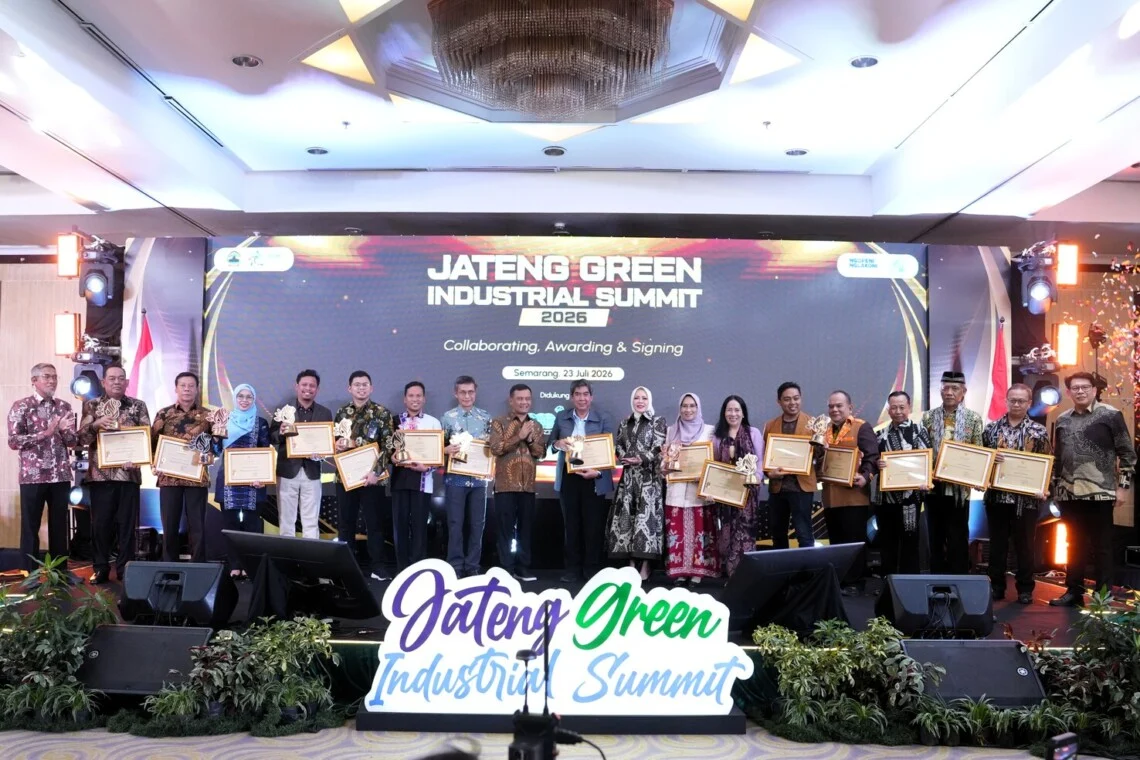
IESR CEO Fabby Tumiwa highlighted the issue during the Central Java Green Industrial Summit in Semarang on July 23, particularly in relation to the European Union Deforestation Regulation (EUDR).
From December 30, 2026, products covered by the regulation, including furniture, will need to demonstrate that their raw materials are not associated with deforestation after December 31, 2020. Companies will also need to provide supply-chain traceability and relevant land coordinates.
The requirements could pose challenges for furniture manufacturers and small and medium-sized enterprises in Jepara, where supply chains can involve multiple layers of suppliers.
Another major development is the European Union’s Carbon Border Adjustment Mechanism (CBAM), which entered its definitive phase on January 1, 2026. The mechanism currently covers sectors including cement, iron and steel, aluminium, fertilisers, electricity, and hydrogen.
Although textiles and furniture are not currently covered by CBAM, IESR said the policy direction demonstrates the growing importance of measuring and reducing the carbon footprint of exported products.
Pressure to decarbonize is also coming from multinational corporations and major manufacturers that have established emissions-reduction targets. As these companies strengthen their sustainability requirements, suppliers are expected to face greater scrutiny over their environmental performance.
IESR warned that industries that fail to adapt to these changing requirements could face increased risks to export contracts, market access, and future green investment opportunities.
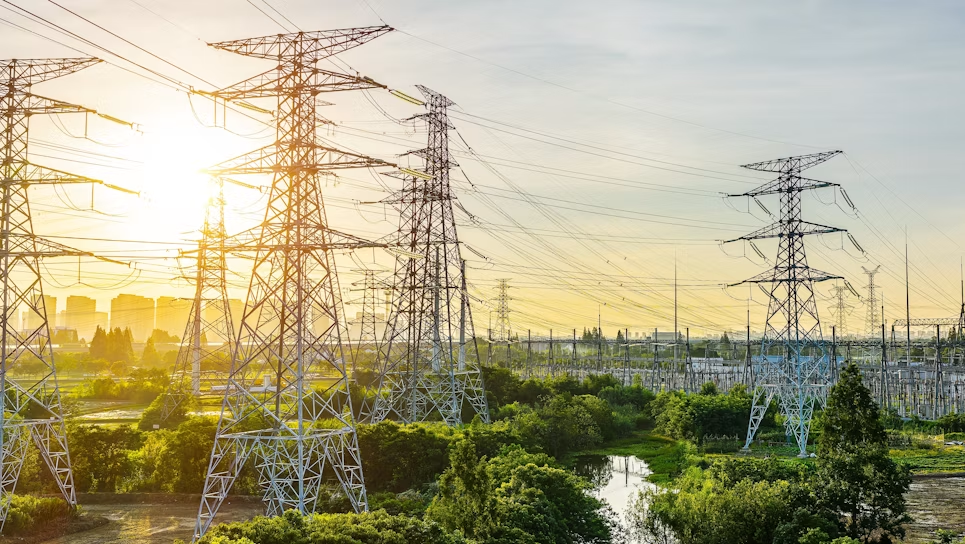
One of the key challenges is the carbon intensity of electricity used by industries. IESR estimates that the Java-Bali electricity system has an emissions factor of around 0.8 tonnes of CO2 per megawatt-hour, increasing the carbon footprint of products manufactured using grid electricity.
IESR said Central Java therefore needs an integrated green industrial ecosystem that combines industrial assessments, technical assistance, workforce capacity building, access to clean energy, and consistent government policies.
The organization has developed several initiatives to support the transition, including the Green Readiness Index, which allows industries to assess their sustainability performance and identify areas for improvement.
IESR is also developing an Industrial Assessment Center involving universities to support companies in implementing green industry principles while connecting academic education with industrial needs.
A green industry roadmap is also being developed as part of the Central Java Green Economy Roadmap to provide a framework for local governments and businesses to advance industrial decarbonization.
To encourage wider adoption of sustainable practices, IESR and the Central Java provincial government also recognized industries, local governments, and schools that have demonstrated progress in implementing green principles.
The initiatives highlight the growing connection between industrial sustainability and economic competitiveness. For Central Java, reducing emissions, improving energy efficiency, and increasing the use of renewable energy could become increasingly important not only for environmental performance but also for maintaining access to global markets. (*)