Enviro News Asia, Denpasar – Policy certainty and the availability of bankable projects are critical to accelerating solar energy investment in Indonesia, according to speakers at the second day of the Indonesia Solar Summit (ISS) 2026 held in Denpasar on July 15.
The summit, organized by the Institute for Essential Services Reform (IESR) in collaboration with the Coordinating Ministry for Economic Affairs, the Bali Provincial Government, and the National Energy Council (DEN), highlighted the strategic role of solar power in strengthening Indonesia’s energy security amid the global fossil fuel crisis and geopolitical uncertainty.
Sunandar, Assistant Deputy for Electricity and Geological Development at the Coordinating Ministry for Economic Affairs, said Indonesia must accelerate and expand solar energy deployment while ensuring that its benefits are widely shared by local communities. He stressed that successful solar development should encompass not only the construction of power plants but also community empowerment throughout the development process.
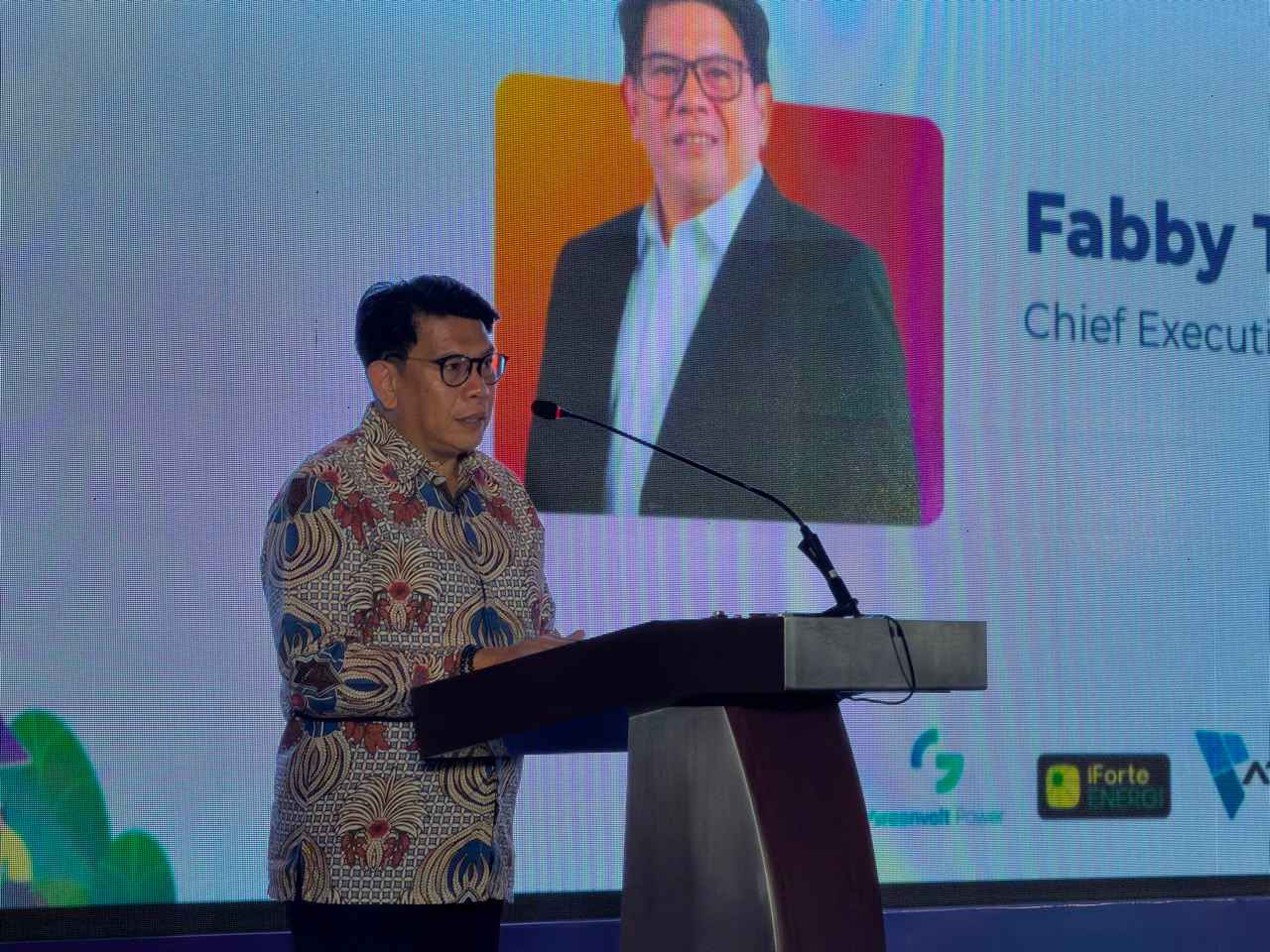
IESR Chief Executive Officer Fabby Tumiwa said investors require more than abundant renewable energy resources before committing capital. They seek predictable policies, manageable investment risks, bankable projects, and sustainable long-term returns. He noted that Indonesia’s primary challenge is no longer demonstrating its vast solar potential but converting that potential into investment-ready projects.
Fabby added that expanding solar generation must be accompanied by investments in transmission infrastructure, grid interconnection, digitalization, and energy storage systems to ensure the electricity network can efficiently absorb and distribute renewable power.
According to IESR, three priority areas should be strengthened to accelerate solar deployment in Indonesia. The first is establishing policy certainty and long-term deployment targets supported by a transparent project pipeline that provides investors with clear information on project schedules, locations, and annual capacity additions.
The second priority is increasing the number of financially viable projects while expanding access to attractive financing instruments, including concessional loans and blended finance. The third involves improving procurement processes through transparent contracts, balanced risk-sharing arrangements, and clear electricity purchasing mechanisms, including curtailment provisions.
During the summit, IESR also presented its latest study, The Technological and Economic Potential of Developing Floating Solar Power Plants in the Indonesian Archipelago, which identified floating solar photovoltaic (FPV) systems as a promising solution for accelerating renewable energy deployment while reducing competition for land.
The study estimates that Indonesia has a financially viable floating solar potential of 77.8 gigawatts (GW) across 179 locations, consisting of 42.5 GW of inland floating solar projects at 143 sites and 35.3 GW of nearshore floating solar projects at 36 locations. The assessment was based on equity internal rate of return (EIRR), weighted average cost of capital (WACC), and electricity pricing assumptions under Presidential Regulation No. 112/2022.
Fabby said floating solar technology could play a significant role in supporting Indonesia’s 100 GW solar power development target by supplying clean electricity to industrial estates, special economic zones, regional power systems, and replacing aging fossil fuel power plants.
To accelerate deployment, IESR recommended integrating potential floating solar sites into national energy planning, land-use plans, and marine spatial planning. The organization also called for simplifying water resource permits for inland floating solar projects and clarifying marine spatial and navigation permits for nearshore developments to reduce regulatory barriers.
IESR further advocated the adoption of competitive reverse auctions for floating solar projects. Under this mechanism, the government would prepare preliminary feasibility studies before developers compete on pricing, technology, and implementation capability, helping to secure lower electricity tariffs while accelerating project delivery.
The Indonesia Solar Summit has been organized annually by IESR since 2022. The fifth edition of the event was held in partnership with the Coordinating Ministry for Economic Affairs, the National Energy Council, and the Bali Provincial Government, with support from Climate Group RE100, iForte Energy, and Greenvolt Power Indonesia. (*)