

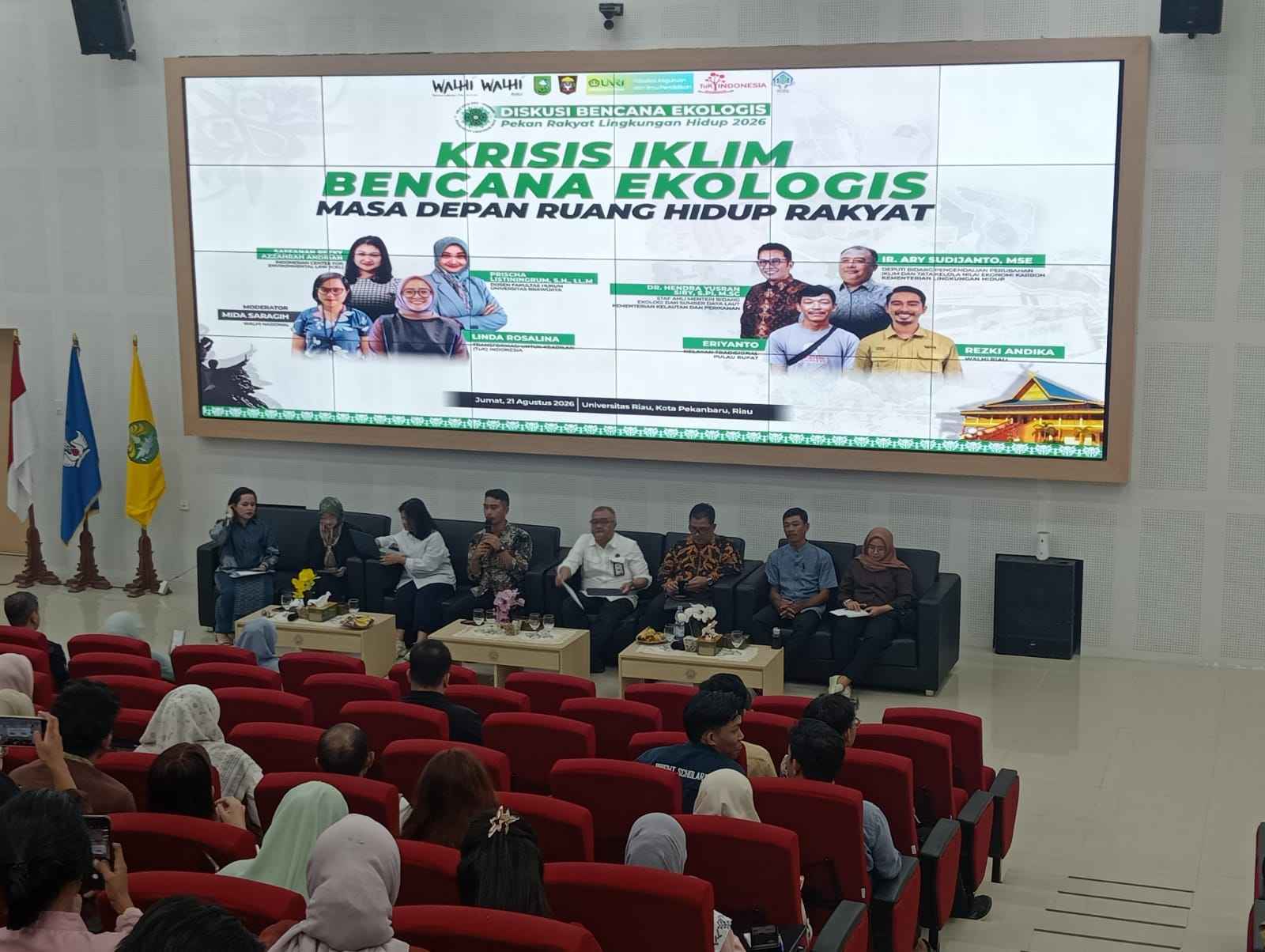
Enviro News Asia, Pekanbaru — The Ministry of Environment/Environmental Control Agency (KLH/BPLH) has called for stronger cross-sector collaboration amid growing global ecological threats. The commitment was highlighted during the 2026 Environmental People’s Week Public Discussion at the University of Riau on Friday (August 21, 2026), which brought together government representatives, academics, legal practitioners, civil society organizations, and coastal communities to formulate practical measures to protect people’s living spaces.
Themed “Climate Crisis: Ecological Disasters and the Future of People’s Living Spaces,” the discussion examined critical issues ranging from the escalation of hydrometeorological disasters and the vulnerability of rural and coastal communities to the need for meaningful public participation in national climate policy. Participants also highlighted the urgency of strengthening the legal framework for climate change and aligning national responses with global environmental standards.
Climate Change as a Risk Multiplier
Deputy for Climate Change Control and Governance of Carbon Economic Value Implementation at KLH/BPLH, Ary Sudijanto, emphasized that climate change has become a systemic threat that intensifies existing vulnerabilities.
“Climate change is a risk multiplier. It increases existing risks and deepens the vulnerability of communities,” Ary said.
He stressed that addressing the impacts of the climate crisis requires coordinated policies grounded in environmental justice. Stronger governance and national climate regulations are considered essential to protecting vulnerable communities while safeguarding long-term public livelihoods.
Coastal Communities Face Growing Risks
The discussion also highlighted the experiences of coastal communities directly affected by environmental changes. Eriyanto, a fisherman from Rupat Island, Riau, described how coastal erosion has gradually damaged settlements, while increasingly unpredictable extreme weather has affected the daily catches and livelihoods of local fishermen.
His account underscored the importance of ensuring that climate mitigation policies are not developed solely at the policy level but are also grounded in the realities and needs of communities on the ground.
The Public Discussion formed part of the 2026 Environmental People’s Week, which was launched under the theme “Movement to Restore Indonesia for Ecological Justice.” Through closer cooperation among the government, academics, civil society organizations, and local communities, KLH/BPLH aims to strengthen national resilience while advancing a greener and more equitable future for Indonesia. (*)