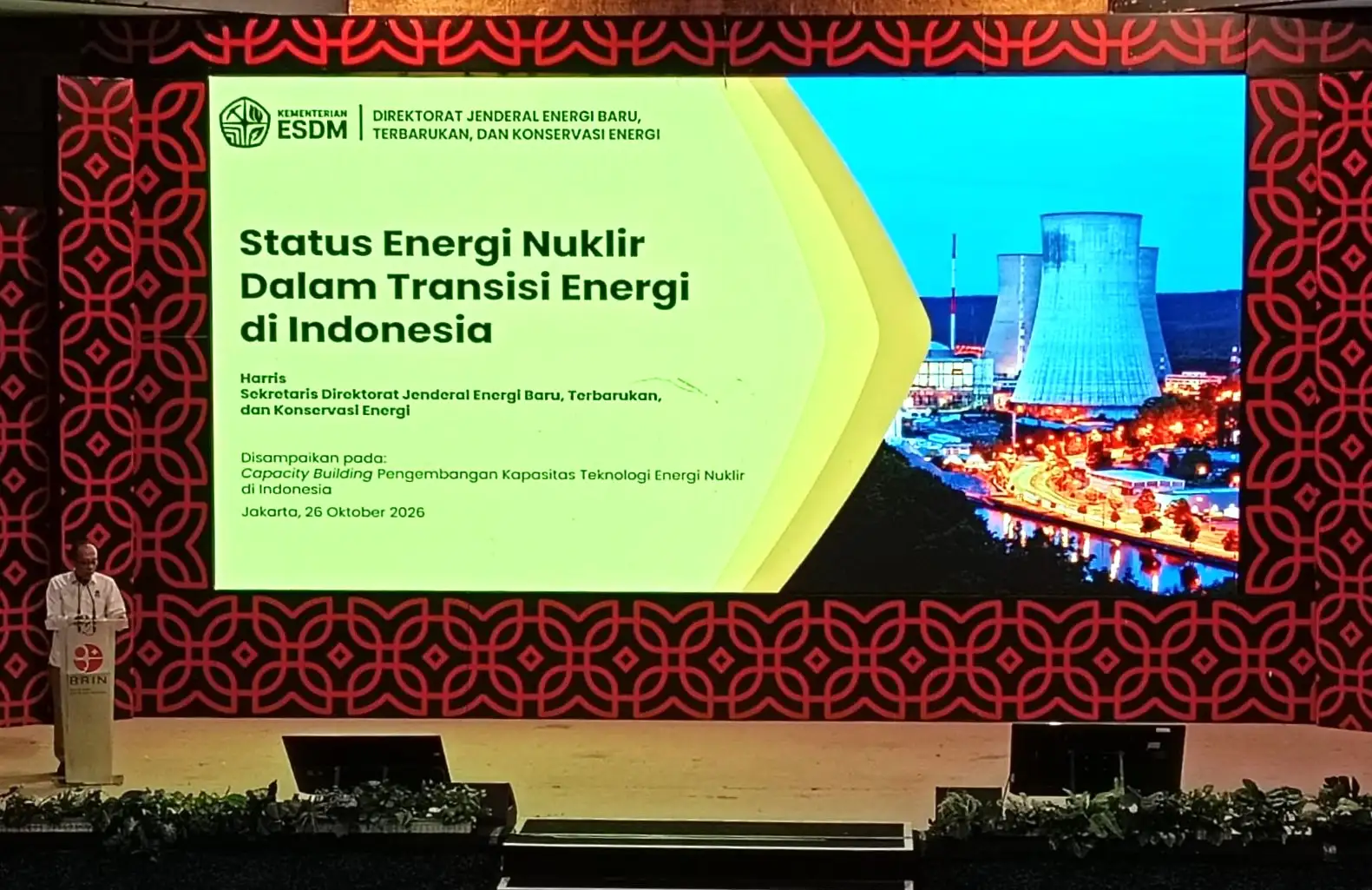


Enviro News Asia, Yogyakarta — Indonesia is strengthening preparations to develop nuclear power plants (PLTN) as part of its strategy to improve energy security, diversify electricity generation and support its target of achieving net zero emissions by 2060.
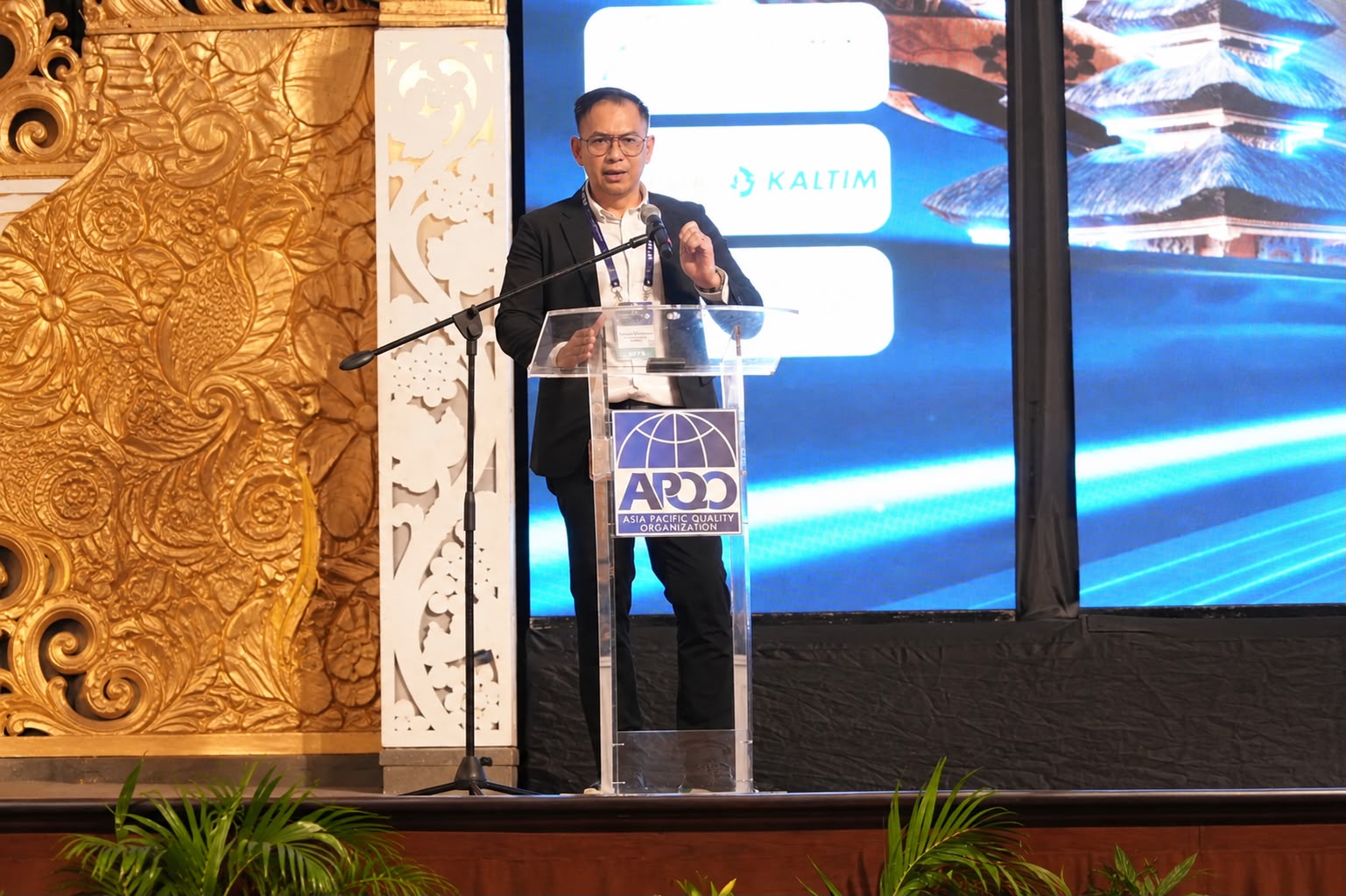
The preparations were discussed at the National Symposium on Nuclear Power Plant Development, held at Universitas Gadjah Mada (UGM) in Yogyakarta on September 7–8, 2026. The forum brought together government institutions, research organizations, universities, state-owned enterprises and other stakeholders to align policies, regulations, site readiness, technology development and human resources.
Director General of New, Renewable Energy and Energy Conservation at the Ministry of Energy and Mineral Resources, Eniya Listiani Dewi, said the ministry has prepared a presidential regulation concerning nuclear power plant development readiness. The regulation covers nuclear programs, installations and operations and is awaiting approval.
Eniya said Indonesia’s net-zero target requires reliable new and renewable energy sources while maintaining the security and reliability of both electricity and non-electricity energy supplies.
She estimated that nuclear power could contribute up to 35 gigawatts to Indonesia’s energy system by 2060. In the next decade, the country is expected to require between 500 megawatts and 1 gigawatt of nuclear capacity for islands that need large and reliable power supplies.
To support the preparation, the government has established six working groups covering different aspects of nuclear power development. Eniya also highlighted the need to develop highly skilled personnel, estimating that a 1-gigawatt nuclear facility could require around 400–700 qualified workers, in addition to expertise in public communication and social engineering to build community acceptance.
PT PLN (Persero) Director of Technology, Sustainability and Engineering Edwin Nugraha Putra emphasized the importance of strong research collaboration in developing the country’s nuclear power sector.
The symposium also highlighted that nuclear development involves more than engineering and technical considerations. UGM Vice Rector for Planning, Assets and Information Systems Arief Setiawan Budi Nugroho said social considerations must be integrated into the development process through cooperation across academic disciplines.
Deputy Head of the National Research and Innovation Agency (BRIN) Amarulla Octavian said BRIN is ready to support nuclear power development through research, technology and expertise covering technical as well as socioeconomic aspects.
BRIN currently operates three research reactors that support Indonesia’s nuclear technology capabilities: the 30-megawatt G.A. Siwabessy Multipurpose Reactor in Serpong, Banten; the 2-megawatt Triga 2000 reactor in Bandung, West Java; and the 250-kilowatt Kartini reactor in Yogyakarta.
Site selection and safety assessments are also being prepared. Head of the Geological Agency at the Ministry of Energy and Mineral Resources Lana Saria said 28 locations have undergone site investigations, with one assessment conducted by a third party.
The sites must comply with regulations and safety requirements, including assessments of volcanic hazards, earthquakes, liquefaction, tsunamis, landslides, coastal abrasion and groundwater availability.
Nuclear power is being considered as one option to reduce dependence on fossil fuels while providing a stable electricity supply.
From the regulatory side, Deputy for Nuclear Safety Assessment at the Nuclear Energy Regulatory Agency (BAPETEN) Haendra Subekti said the agency would oversee regulations, inspections, prevention measures and licensing.
BAPETEN will also coordinate with local governments, universities and other stakeholders to ensure that nuclear power regulations are properly developed, implemented and supervised.
The Yogyakarta symposium is expected to help establish a credible and measurable roadmap for Indonesia’s nuclear power development, while ensuring that safety, social acceptance, research capacity and international standards remain central to the country’s pursuit of cleaner and more secure energy. (*)