

Enviro News Asia, Bungo — Bujang Raba landscape in Bungo Regency, Jambi, has become the first social forestry landscape in Indonesia to enter the carbon trading market, following years of community-led forest protection and the issuance of approval for 238,281 tons of carbon units.
The Bujang Raba landscape covers approximately 7,292 hectares within the Bukit Panjang Rantau Bayur protected forest and is managed by communities through the Social Forestry program. It consists of five village forests: Lubuk Beringin, Laman Panjang, Buat, Sungai Telang and Senamat Ulu.
The area is managed and protected by 1,183 households with assistance from the Indonesian Conservation Community (KKI) Warsi. The carbon issuance approval covers approximately 6,634 hectares and amounts to 238,281 tons of carbon dioxide equivalent (tCO2e).
The development of Bujang Raba’s carbon project has taken several years. Carbon trading activities in the area were suspended in 2021 while awaiting a specific regulatory framework.
Following the issuance of Presidential Regulation No. 110 of 2025 and Forestry Minister Regulation No. 6 of 2026, Bujang Raba received approval for the issuance of Non-SPE carbon units. Forestry Minister Raja Juli Antoni handed over the approval during the launch of the Indonesia Forestry Carbon Hub in Jakarta on July 6, 2026.
The project documentation is currently being processed through the Carbon Unit Registry System (SRUK).
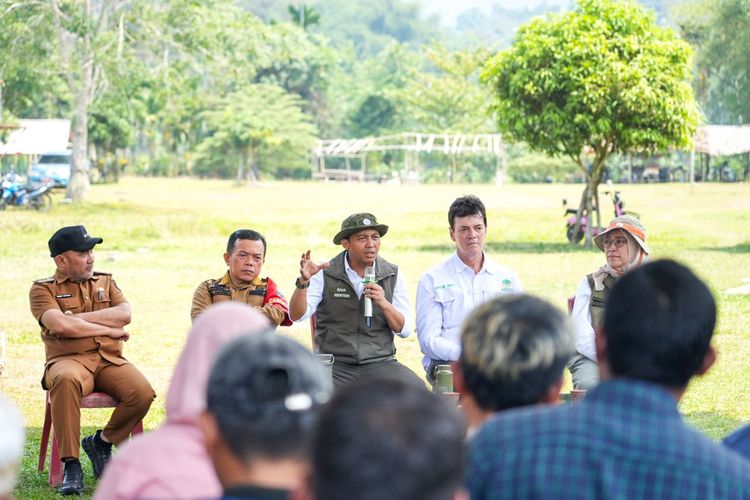
Raja Juli visited the Bujang Raba Landscape Carbon Project at the Rio Lubuk Beringin Traditional Hall on September 28. He said the landscape demonstrated how community forest protection could generate economic opportunities while maintaining forest cover.
“The community, with assistance from Warsi, has shown extraordinary awareness in protecting its village, not simply as a short-term effort but with a long-term objective,” Raja Juli said.
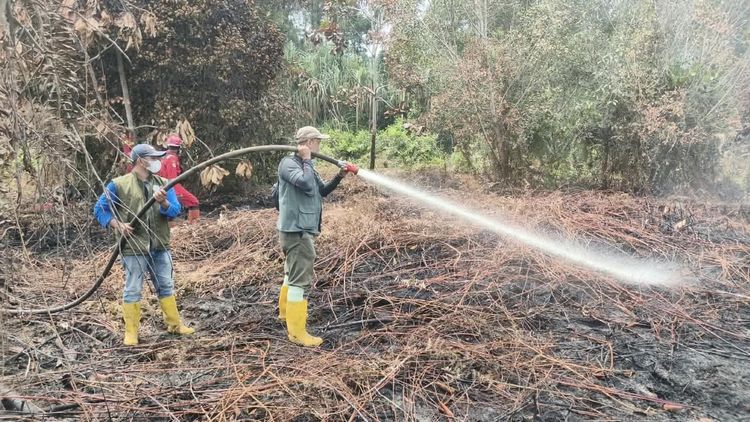
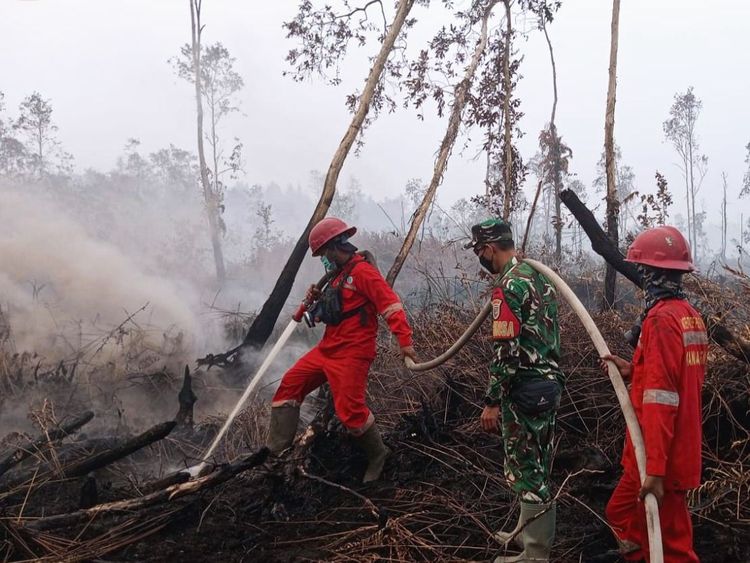
The minister said Bujang Raba had previously experienced forest fires and illegal logging before communities agreed to jointly protect the forest. He said the benefits could now be seen in clearer rivers, productive agricultural areas and tourism activities.
Raja Juli estimated that the carbon units could potentially generate around Rp30 billion if fully sold. He said the potential revenue could be reinvested in environmental management, including tree planting and river protection.
“We protect the forest, the rice fields benefit, agricultural production improves, tourism develops, and then we receive an additional benefit from carbon,” he said.
The Forestry Ministry also plans to provide firefighting equipment to the five village forests in Bujang Raba as part of efforts to strengthen forest and land fire preparedness.
Changing the Value of Forest Protection
Raja Juli said the Forestry Ministry aims to change the way forests are valued, shifting the focus from extracting timber toward planting and protecting forests while ensuring communities receive economic benefits from conservation.
“If cutting down trees provides benefits and protecting forests also provides benefits, then protecting forests becomes the better option,” he said, adding that communities should receive tangible benefits from their forest stewardship.
The minister also emphasized the importance of community participation and civil society organizations in social forestry management. He said the government has limitations in terms of authority and funding, making collaboration with local, national and international civil society organizations important.
“If regulations make it difficult for community partners to work, we will change them. The objective is community welfare, sustainable nature and healthy forests, while communities receive benefits from their work,” Raja Juli said.
Social Forestry as a Carbon Incentive
Director General of Social Forestry Catur Endah Prasetiani said the Bujang Raba Carbon Landscape Project was established through Forestry Minister Decree No. 551 of 2026 concerning approval for the issuance of Non-Certified Greenhouse Gas Emission Reduction Units (Non-SPE) under an international standard.
Forestry Minister Regulation No. 6 of 2026 allows Social Forestry approval holders to participate in carbon trading with partners or community facilitators.
Catur said the minister’s visit demonstrated the Forestry Ministry’s commitment to developing a carbon market with high integrity and equitable benefits.
“Social Forestry carbon trading is not the ultimate goal of Social Forestry management. It is an incentive for the good work carried out by approval holders,” Catur said.
She said carbon-related incentives could be used to strengthen landscape governance, community institutions and businesses while supporting community welfare and forest protection and restoration.
As of August 2026, Social Forestry management access had been distributed nationally across approximately 8.45 million hectares through 11,335 approval units involving 1.43 million households.
In Jambi, approximately 249,813 hectares had been allocated through 454 approvals involving 40,693 households.
During the Bujang Raba visit, the Directorate General of Social Forestry also handed over two new Social Forestry approvals under the Community Forestry scheme covering approximately 710 hectares for 84 households in Pauh District, Sarolangun Regency.
The approvals were granted to KTH Sungai Sanggul, covering approximately 142 hectares for 27 households, and KTH Telisak Jaya, covering approximately 568 hectares for 57 households.
Raja Juli also praised KKI Warsi for assisting communities in Bujang Raba and encouraged the organization to support the two newly approved community groups.
He said the government had provided extensive access to Social Forestry management but that community empowerment still needed to be strengthened. He also expressed support for expanding the number of community facilitators in Jambi and said he was prepared to recommend pathways for accessing international funding.
The Bujang Raba project illustrates how Social Forestry can combine community-based forest management with potential carbon-market incentives while maintaining forest protection as a central objective. (*)