Enviro News Asia, Jakarta — Indonesia is strengthening climate preparedness and international research cooperation amid concerns that a Super El Nino in 2026–2027 could contribute to longer dry seasons and extreme heat in parts of the country.
Senior researcher Erma Yulihastin of the National Research and Innovation Agency’s (BRIN) Center for Climate and Atmospheric Research said the potential impacts of the 2026–2027 El Nino across the Indonesian Maritime Continent were showing increasingly diverse spatial patterns.
She said the propagation of El Nino waves could shift the timing and duration of the dry season while increasing the risk of extreme heat, including conditions measured through the Wet Bulb Globe Temperature (WBGT) index.
Erma presented the findings during the international webinar “El-Nino 2026-2027: From Global Climate Signal to Local Action: Preparing Indonesia and the United States for an Unprecedented Climate Challenge” in Jakarta on September 29, 2026.
She said local conditions could produce significantly different impacts. Bogor, West Java, for example, continued to experience frequent rainfall due to local conditions and mountainous topography, while Lamongan, East Java, experienced a substantially longer dry period.
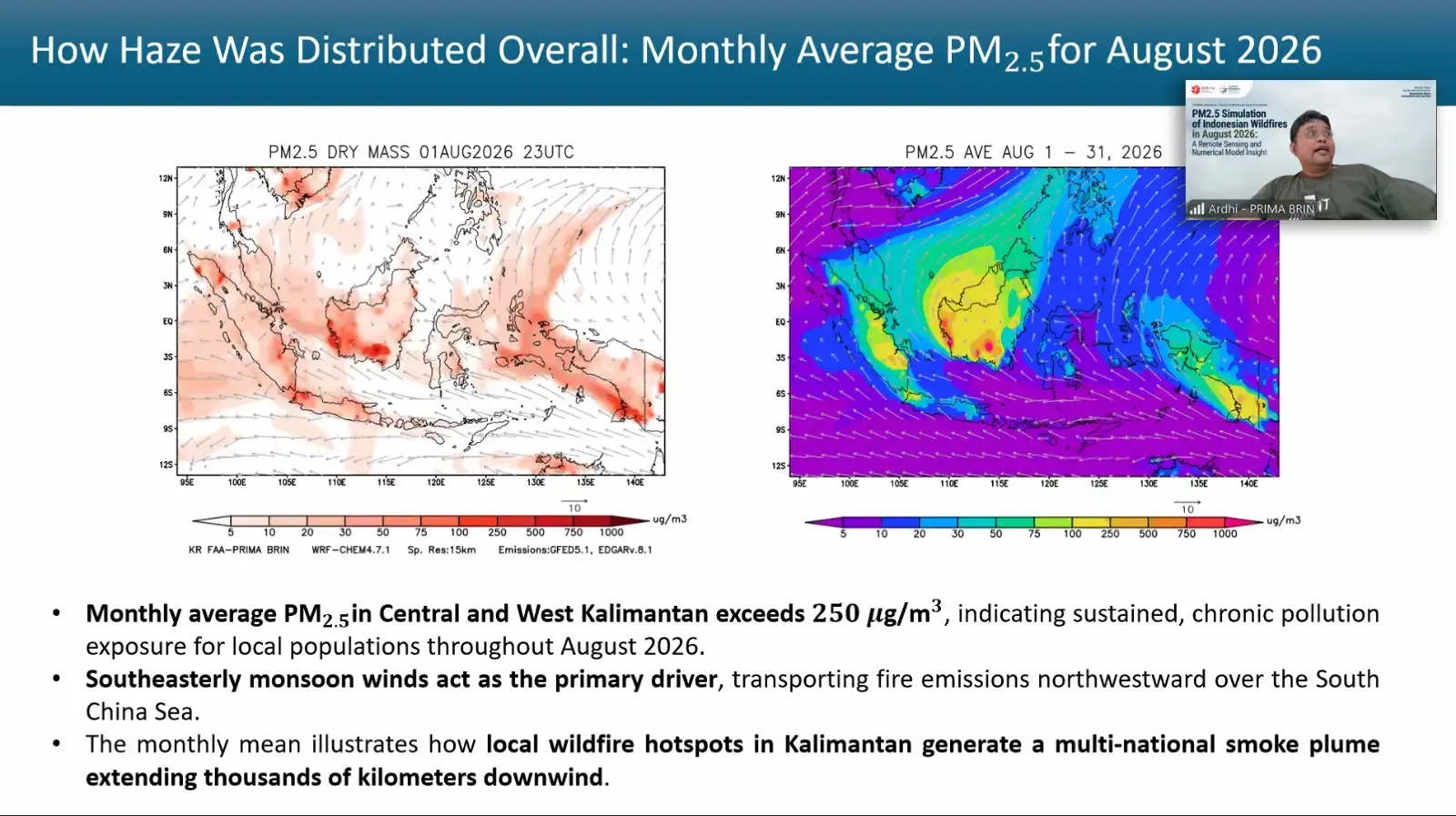
Her research team also examined potential risks to rice production and environmental heat stress. WBGT measurements indicated that parts of Kalimantan and Papua were highly vulnerable to heat stress and potentially increased forest-fire risks.
Based on simulations and analysis from 14 NASA NEX-GDDP climate models, Erma said the risk of El Nino-related drought could continue into the 2027–2028 period.
The projections highlight the need for longer-term preparedness among government institutions, communities and other stakeholders, she said.
Meanwhile, Mark Merrifield of Scripps Institution of Oceanography said sea-surface temperature anomalies in the equatorial Pacific had shown strong signals toward a Super El Nino phase that could persist into early 2027.
“For the October to December 2026 season, there is a 75% chance that this will become a historic event, exceeding the strength of previous El Nino records since the 1950s,” Mark said during the webinar.
He also described potential local impacts along the California coast, including larger waves, higher sea levels, extreme tides and heavy rainfall that could increase coastal flood risks.
Merrifield said experience from cross-regional research demonstrated the importance of adaptive observation systems, including for countries such as Indonesia that face diverse climate and geographic conditions.
Strengthening international cooperation is also being pursued as part of efforts to anticipate extreme El Nino impacts.
Indonesian Ambassador to the United States Dwisuryo Indroyono Soesilo emphasized the importance of cross-border cooperation in responding to extreme climate threats.
“Understanding El Nino will only be useful if that understanding is translated into better preparedness for governments, communities and individuals,” Dwisuryo said.
He also highlighted the potential role of BRIN’s Baruna Jaya research vessel in collaborative research to better understand climate dynamics and support efforts to protect communities.
Dwisuryo said cooperation between BRIN and Scripps Institution of Oceanography marked the beginning of longer-term research collaboration. The two sides are expected to follow up through detailed research proposals and joint resource mobilization to study the history and dynamics of El Nino more comprehensively. (*)