

Enviro News Asia, Jakarta — Indonesia recorded a sharp decline in forest and land fire hotspots on Oct. 19, but the Forestry Ministry has maintained ground and aerial operations amid continuing fire risks, persistent peatland burning and unhealthy air quality in several regions.
Data from the ministry’s SiPongi monitoring system showed 487 high-confidence hotspots nationwide as of 9 p.m. on Monday, down 617 from 1,104 a day earlier. Across six priority provinces, the number fell from 748 to 172.
South Sumatra recorded 64 hotspots, Central Kalimantan 49, South Kalimantan 40, West Kalimantan 12 and Jambi seven, while Riau reported none in the high-confidence category.
Despite the overall decline, hotspot numbers increased in South Sumatra and South Kalimantan, prompting authorities to maintain heightened vigilance and continue field operations.
The ministry stressed that satellite-detected hotspots indicate surface temperature anomalies and do not directly represent the number of fires or the total area burned. Data from NASA’s Terra and Aqua satellites, as well as SNPP and NOAA-20, must be verified on the ground to establish actual conditions.
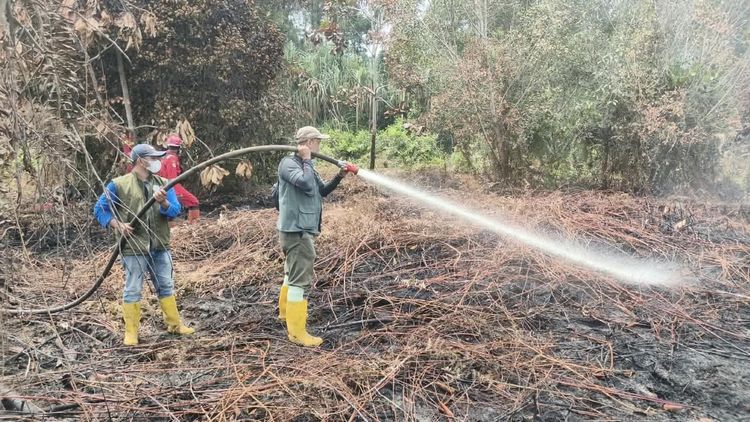
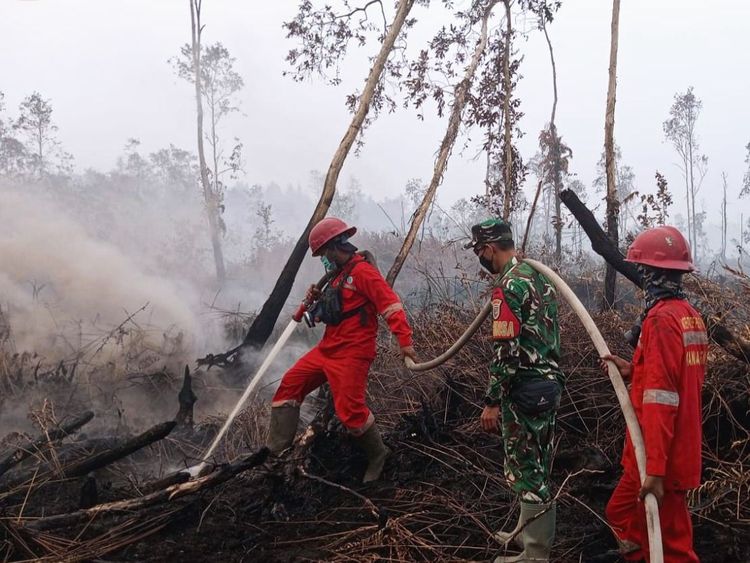
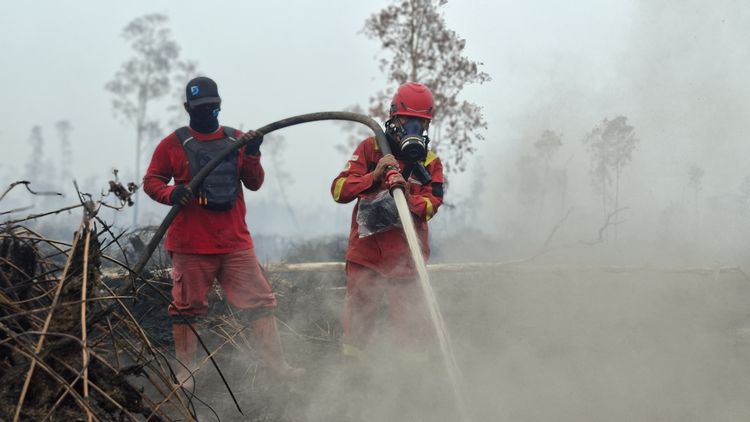
In South Sumatra, firefighters conducted operations in Muara Enim, Ogan Komering Ilir, Banyuasin and Musi Banyuasin. Some sites involved peatland fires burning beneath the surface, requiring continued suppression and water application. In Ogan Komering Ilir, Manggala Agni personnel worked alongside the military, company firefighting teams and local residents to contain fire fronts and prevent flames from spreading. Thick smoke and shifting strong winds complicated the response.
Central Kalimantan also continued firefighting operations in West Kotawaringin, Tanjung Puting National Park, Sukamara and South Barito, despite its hotspot count falling sharply. While some fires had been extinguished, surface and underground burning persisted at several peatland locations.
In South Kalimantan, crews responded to fires in Pelaihari Wildlife Reserve and locations across Tanah Laut and Banjarbaru. West Kalimantan teams continued field checks and suppression, including in Ketapang, where one fire had been brought under control. In Jambi, firefighters worked in Sarolangun, Batang Hari and East Tanjung Jabung, using firebreaks, direct suppression, mechanical equipment and water from canals to tackle remaining fires.
The government has kept 61 aircraft available for fire management, including 17 for patrols and weather modification operations and 44 for water bombing. Ground teams involving Manggala Agni, the National Disaster Mitigation Agency (BNPB), the military, police, the Meteorology, Climatology and Geophysics Agency (BMKG), regional authorities, communities, volunteers and businesses are conducting patrols, fire suppression, hotspot verification and cooling operations.
Peatlands require particular attention because embers can persist and spread underground even after visible flames disappear. Authorities are continuing to wet and cool affected areas to reduce the risk of fires reigniting.
Air pollution remains another concern. Although most parts of Indonesia recorded good to moderate air quality, some areas experienced unhealthy to very unhealthy conditions, with locally hazardous readings in parts of Kalimantan, Sumatra and Papua, according to the ministry’s PM2.5 monitoring.
The ministry warned that falling hotspot numbers do not necessarily mean air quality will recover immediately. Smoke, particularly from peat fires, can remain in the atmosphere and travel with prevailing atmospheric conditions after the number of detected hotspots declines.
Residents in areas affected by deteriorating air quality have been advised to limit outdoor activities and wear masks when going outside. Children, pregnant women, older people and those with respiratory conditions or chronic illnesses are considered particularly vulnerable.
The ministry also urged the public and businesses not to clear or open land by burning and to report smoke, fires or burning activities promptly so authorities can respond before fires spread. (*)