

Enviro News Asia, Jakarta — Indonesia is expanding community participation in forest and land fire prevention, mobilizing thousands of local fire volunteers, forest farmer groups, Indigenous communities and other residents alongside government firefighting teams as authorities intensify efforts to contain fires and protect vulnerable ecosystems.
The Forestry Ministry said on Wednesday, Oct. 21, that the initiative focuses on early detection, patrols, rapid reporting, firefighting equipment and coordination between communities and field personnel.
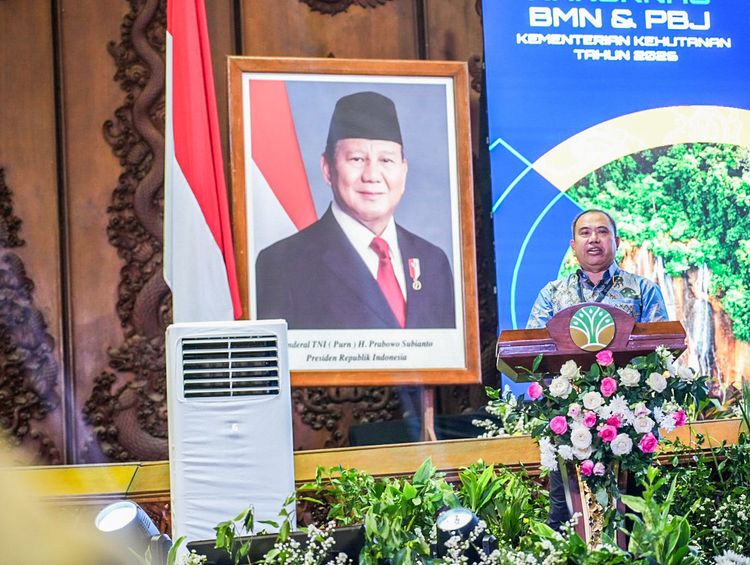
Deputy Forestry Minister Rohmat Marzuki said local residents played a crucial role because they understood conditions in their own areas and could identify fire threats early. He stressed that community involvement must be backed by government support, field guidance and safety measures.
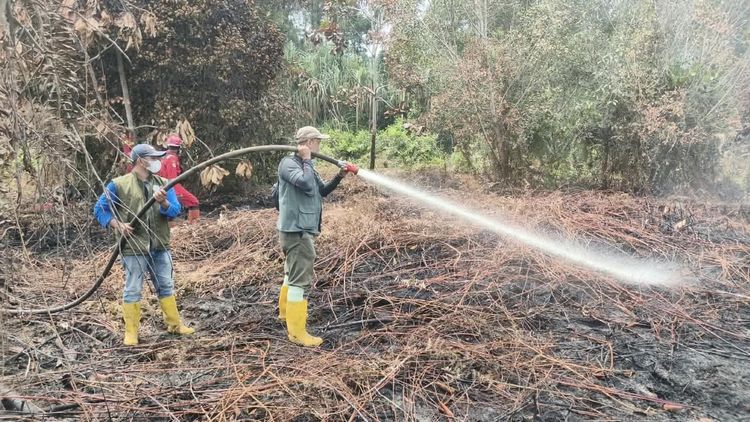
The ministry is working with 14,040 members of Community Fire Care groups, known as Masyarakat Peduli Api (MPA), across 34 provinces to extinguish fires, prevent their spread and protect forests and nearby communities.
Under a 2026 program to develop 500 sustainable MPA groups, 119 groups have been established, 61 are being formed and 320 villages have been designated as targets for subsequent development. Each group is designed to have 30 members, meaning the 119 established groups represent a potential membership of 3,570 people, against a total program target of 15,000.
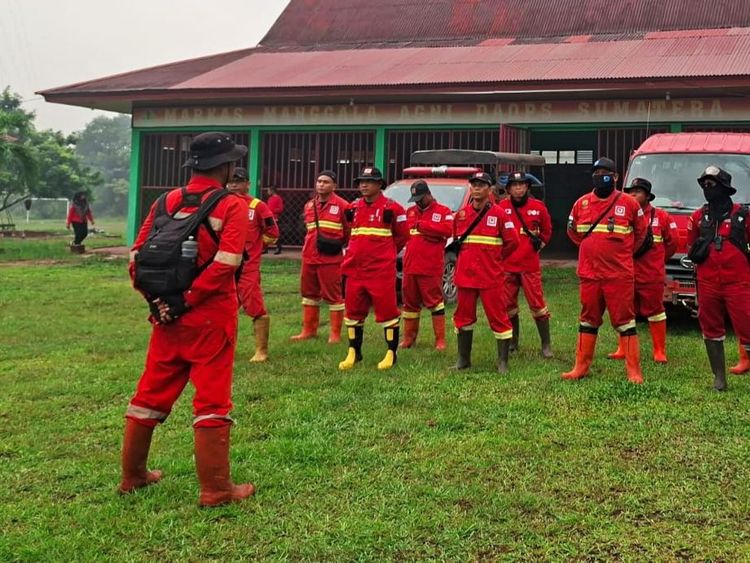
The ministry said the program would strengthen village-level patrols, promote land management without burning, improve early reporting and enable communities to respond safely to initial fire threats alongside Manggala Agni, the ministry’s firefighting force.
Rohmat said the groups needed proper training, equipment, communications systems and safety support to ensure members could recognize hazards and respond according to established procedures.
The ministry is also involving forest farmer groups and beneficiaries of social forestry programs. As of September 2026, social forestry initiatives covered 1.437 million households across 8.46 million hectares. Meanwhile, 93,859 households benefited from the designation of 177 customary forests covering 376,280 hectares.
The ministry said secure access to forest management and sustainable economic benefits could encourage communities to protect their surrounding areas from fires. Through community-based wildfire management, residents are being encouraged to monitor forests, prevent land burning and report fire threats promptly.
The approach also aims to protect crops, forest products and community livelihoods from fire damage.
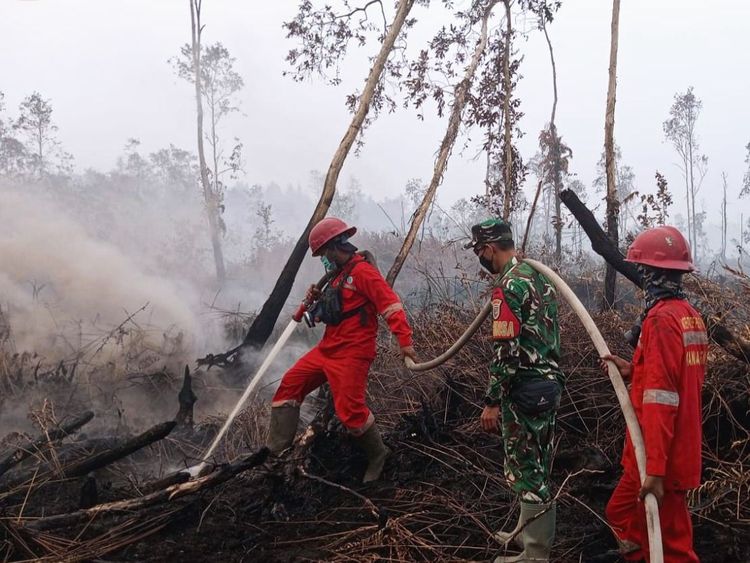
To reinforce field operations, the ministry has deployed 1,419 permanent Manggala Agni personnel across six priority provinces. It has also arranged operational support involving 1,000 forest police officers sent to Kalimantan, while 5,000 ministry civil servants remain on standby to assist as needed.
Working with the military, police, regional governments, regional disaster management agencies and local communities, firefighting teams are conducting hotspot verification, direct suppression, firebreak construction, wetting operations and searches for remaining embers.
On peatlands, crews continue cooling and wetting affected areas after visible flames disappear because underground fires can persist and reignite. The ministry is also supporting weather modification operations, including cloud seeding and dry ice techniques, in coordination with the Meteorology, Climatology and Geophysics Agency (BMKG), the National Disaster Mitigation Agency (BNPB) and the Indonesian military, depending on atmospheric conditions and aviation safety requirements.
The fires have also raised concerns about wildlife and habitat protection. According to the ministry’s national records updated through Oct. 8, authorities had handled 290 individual wild animals, including 96 orangutans and 78 proboscis monkeys. The figures include both live animals and those found dead.
Officials, veterinarians and conservation partners are continuing habitat monitoring and providing care based on the animals’ conditions. Residents have been advised not to attempt wildlife rescue themselves and to contact the relevant Natural Resources Conservation Agency (BKSDA) or national park authorities.
Alongside prevention and emergency response, the ministry has tightened oversight of companies holding Forest Utilization Business Permits, known as PBPH, including their obligations to prevent fires, maintain firefighting equipment, respond to incidents and restore affected areas.
As of Oct. 19, 32 companies had received administrative sanctions, while criminal proceedings were underway against 125 legal subjects, comprising companies and individuals, at different stages of the legal process based on available evidence.
Rohmat said the ministry understood public concerns over persistent haze and would continue strengthening firefighting operations, community participation, wildlife protection and enforcement against proven violations.
He added that protecting the safety of both residents and field personnel remained a priority in Indonesia’s ongoing efforts to control forest and land fires. (*)