

Enviro News Asia, Yogyakarta — Indonesia’s Forestry Ministry is working with universities to strengthen forest-fire prevention in concession areas, using data-driven risk models, peatland monitoring and tighter compliance measures as hotspots rise again ahead of the rainy season.
The ministry’s Directorate General of Sustainable Forest Management held a workshop in Yogyakarta on Thursday, Oct. 22, bringing together forest concession holders from seven priority provinces, with participants from other provinces joining online. Experts from the ministry’s law enforcement directorate, the University of Indonesia, Gadjah Mada University and IPB University discussed legal compliance, environmental, social and governance (ESG) practices, and integrated fire prevention.
Director General Laksmi Wijayanti said fire prevention efforts must remain intensive despite delays in the arrival of the rainy season. She urged concession holders and authorities to sustain operations through the end of the year.
Hotspots in concession areas peaked in August before declining, then rose again in October, including in provinces outside the seven priority areas. The ministry estimated that about three-quarters of hotspots were outside concessions, particularly in open-access areas bordering licensed forest concessions, while the remaining quarter—amounting to tens of thousands of detections—were within concessions.
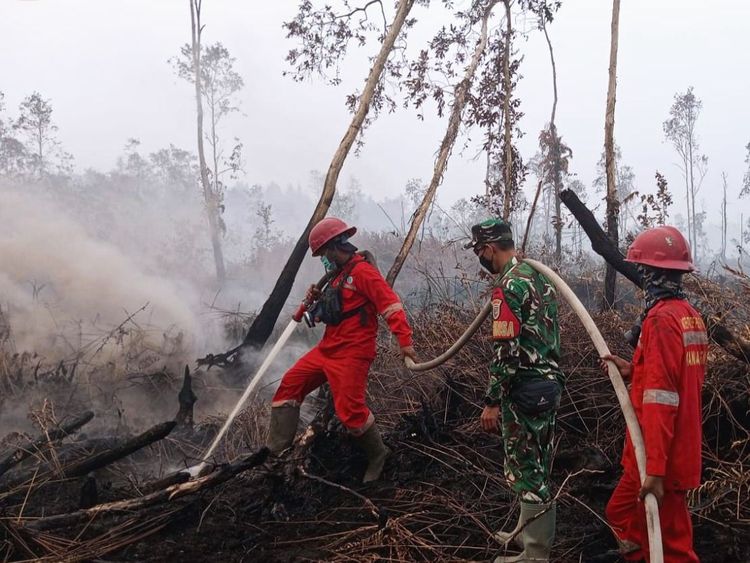
Because hotspot numbers have tended to increase toward weekends, the ministry has adopted a weekly prevention cycle, with patrols beginning on Thursdays and Fridays.
Under a directive dated Oct. 16, the ministry has temporarily suspended land-clearing activities in forest concession areas through a “shutdown and selective release” approach. The restriction is not permanent: activities may resume selectively in areas where complete data are available and risks have been assessed as manageable.
Laksmi said decisions would be based on evidence and risk mitigation rather than public image. The ministry is also monitoring how quickly concession holders respond to hotspot alerts, using a process of reporting, verification, action and follow-up reporting. Responses taking more than a week were considered too slow.
Companies operating on peatlands have also been instructed to provide detailed reports on every canal-blocking structure, including those that are damaged, non-functional or missing from the field.
At the workshop, Ardi Risman, a forestry law enforcement official responsible for oversight and administrative and civil sanctions, said administrative measures could be applied more quickly than criminal proceedings because they did not require a court verdict.
As of Oct. 19, 32 forest-use permit holders across seven provinces had received administrative sanctions. Nineteen had their permits suspended and were ordered to restore ecosystems, eight faced compulsory restoration measures, and five had their permits revoked. The total area burned was recorded at 12,926.74 hectares.
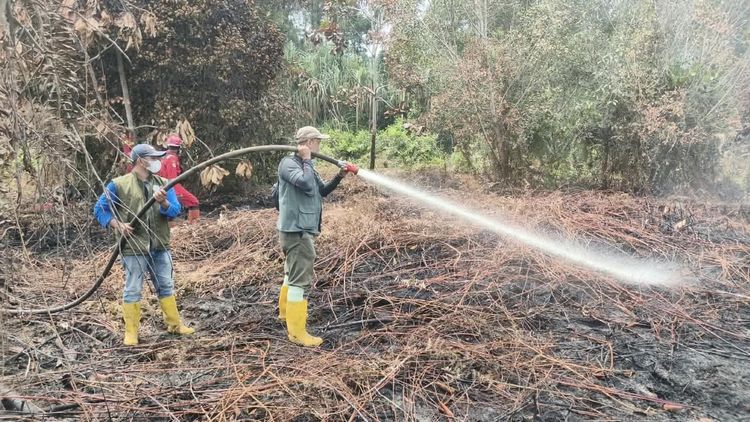
Compliance assessments focus on actual conditions in the field, including firefighting teams, equipment, water sources, peatland water management, early detection and response capabilities.
Researchers also presented technologies intended to improve prevention. Masita Dwi Mandini Manessa of the University of Indonesia’s geography department outlined a spatial modelling prototype for West Kalimantan that divides the region into 6,292 grids measuring five kilometres each, with 88 layers of data updated weekly.
The machine-learning model is designed to guide decisions before, during and after the fire season. Every Monday, it identifies locations requiring firefighting, monitoring or standby readiness across forest management units, regional offices and regencies. Tests using data from 2019 to 2025 showed the model performed 1.9 times better than the strongest simple baseline method, according to the presentation.
Yudi Setiawan of IPB University’s environmental research centre stressed that forest and land fires must be addressed at the landscape level because they cross concession boundaries. He also cautioned that hotspots indicate thermal anomalies, not the area burned or the cause of a fire.
On peatlands, fire risk rises sharply when the groundwater table falls more than 0.4 metres, he said, making thorough rewetting before the peak dry season essential, followed by revegetation. Monitoring efforts include groundwater sensors at 142 SIPALAGA stations, LiDAR-based canal mapping, and observations from Himawari and VIIRS satellites.
Dwiko Budi Permadi of Gadjah Mada University’s forestry faculty said effective fire management must address conditions before, during and after fires rather than focus solely on emergency suppression. He called for data-driven technical decisions, ethical leadership that considers local communities and future generations, and flexible strategies guided by clear objectives.
He also proposed expanding the conventional peatland restoration framework of rewetting, revegetation and revitalisation—the “3R” approach—to a “4R” model that adds fire-risk reduction. Success, he said, should be measured by reductions in fire risks and losses, rather than simply counting canal blocks, training sessions or patrols.
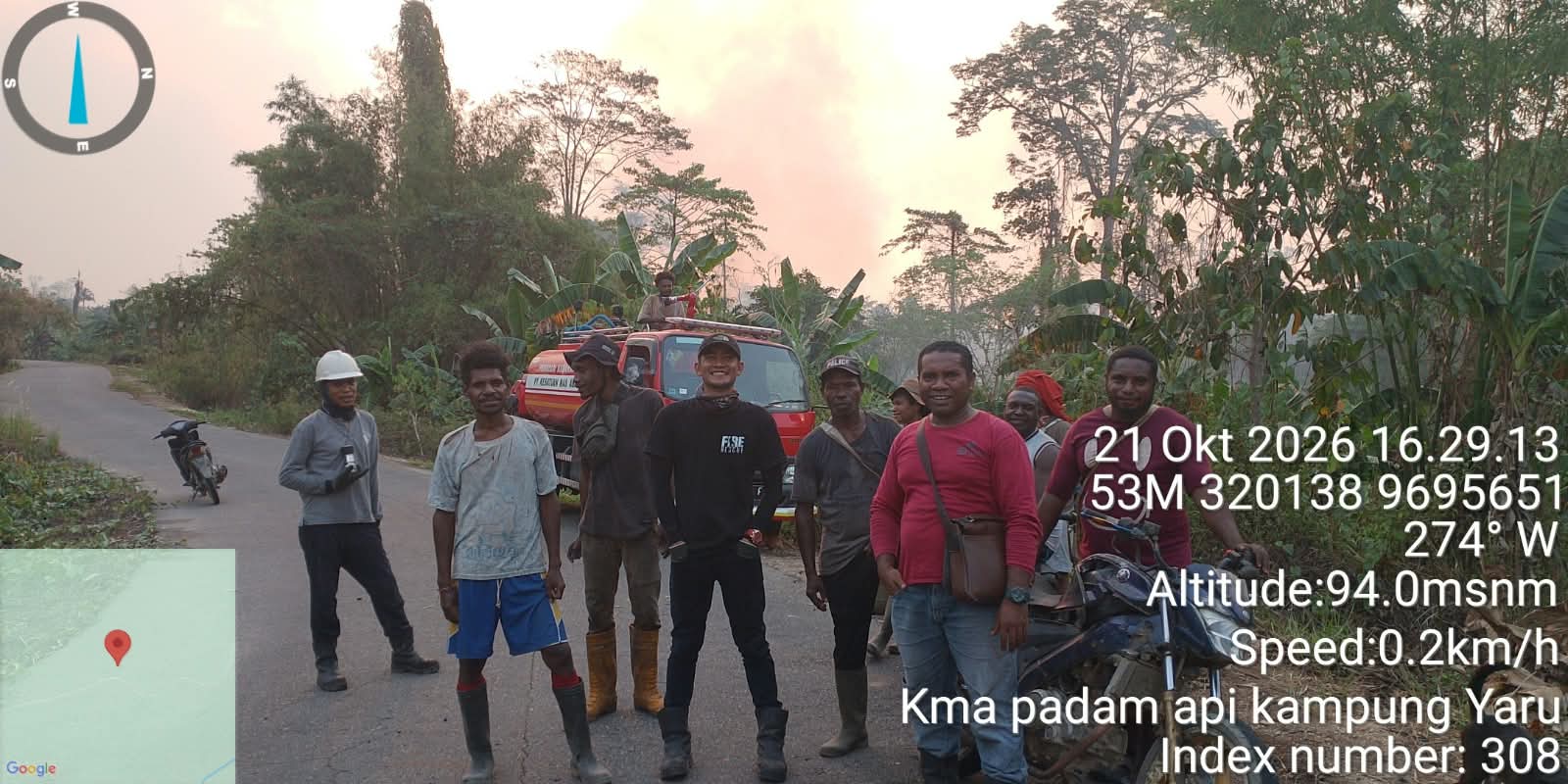
The ministry reported that prevention patrols had reached 1,777 fire-prone villages as of Oct. 19. Fire Care Community groups comprised 22,036 members across 37 provinces, while the ministry had conducted 87 weather modification sorties in five provinces in coordination with the National Disaster Mitigation Agency and the Meteorology, Climatology and Geophysics Agency.
The government has also established a fire-control supervisory task force, an operations war room and emergency standby posts in five provinces. All concession holders are required to submit reports through the Online Forest Fire Control Information System, known as SINKRON, which supports compliance assessments.
Laksmi welcomed concession holders that had provided assistance beyond their legal obligations, including water-bombing aircraft and logistical support. She also said the Forestry Law was undergoing revision and that incentives for businesses would be linked to performance.
The ministry urged authorities, companies and communities to maintain coordinated prevention and response efforts until the rainy season arrives. (*)