

Enviro News Asia, Jakarta — Climate-related losses in Jakarta’s coastal communities extend beyond damaged homes and lost income, with households also facing mounting debt, health problems, psychological stress and declining quality of life, according to research by Indonesia’s National Research and Innovation Agency (BRIN).
The findings highlight how residents can reach the limits of their ability to adapt to environmental risks even as they continue spending money to protect their homes and livelihoods.
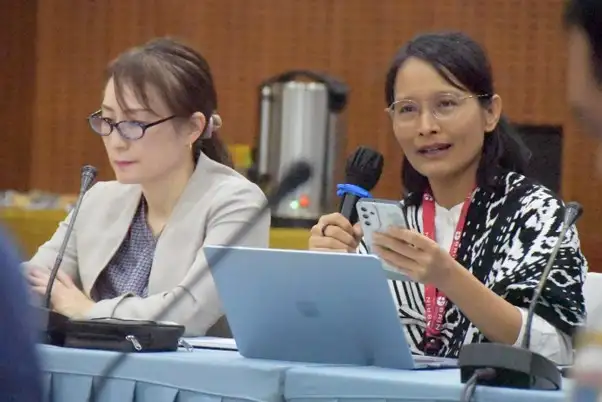
Gusti Ayu Ketut Surtiari, a researcher at BRIN’s Population Research Center, presented the findings on Wednesday, Oct. 21, during a workshop in Jakarta validating research on climate-related loss and damage among vulnerable communities along the coasts of Jakarta and Tangerang.
Ayu said assessments of climate-related loss and damage needed to account for consequences that were difficult to quantify in monetary terms. While damage to buildings, roads, bridges and other infrastructure could be assessed relatively easily, the financial and personal costs of coping with environmental change often remained overlooked.
Researchers found that residents had spent money raising house floors and compacting land to reduce the impact of flooding. Average household expenditure on these measures reached about Rp10 million over five years, although costs varied between households.
When financial resources were insufficient, some residents borrowed money, sold assets or cut spending on daily necessities to maintain their homes.
“These losses cannot be assessed solely through physical damage,” the findings suggest. Spending on adaptation can drain resources that households need for other essentials and weaken their ability to cope with future risks.
The study also identified non-economic losses, including stress and changes in quality of life. Relocation did not necessarily resolve these problems, as some residents found that new housing arrangements were incompatible with their previous lifestyles and livelihoods, particularly those dependent on informal work.
The research, titled “Assessing Climate-Related Loss and Damage in Jakarta: Research Findings and Policy Implications,” began in 2025 through collaboration between BRIN, the Sasakawa Peace Foundation and the International Research Institute of Disaster Science at Japan’s Tohoku University.
Researchers initially conducted in-depth interviews with 80 informants and carried out field observations. The findings informed a household survey conducted in early 2026.
The study covered five locations: Muara Baru, Muara Angke, Marunda and Kamal Muara in Jakarta, as well as Tanjung Pasir in Tangerang. The sites were selected partly because they had experienced adaptation interventions, including seawall construction and the development of housing designed to better withstand environmental risks.
Despite these measures, flooding continued in some areas, prompting researchers to examine whether households retained sufficient resources to adapt or whether their losses had exceeded their coping capacity.
To assess this, the researchers applied the “limits of adaptation” framework, which examines the point at which individuals, households or communities can no longer adequately respond to risks with the resources available to them. The framework considers economic losses, the costs of coping with impacts and non-economic harm.
Yuichi Ono of Tohoku University’s disaster research institute stressed the importance of distinguishing land subsidence from sea-level rise caused by climate change when assessing coastal risks in Jakarta.
Land subsidence is a major factor in Jakarta’s coastal vulnerability, he said, while climate-driven sea-level rise remains important for understanding future risks.
Ono also called for more accurate loss data to ensure that impacts often excluded from conventional assessments are considered in policymaking. He said information on indirect costs, including health expenses and relocation, could strengthen cost-benefit analyses and help authorities set funding priorities.
He suggested using geographic information systems and other measurement tools to quantify losses more systematically in future research.
The researchers said improved measurement and coordination among central and local governments, universities, nongovernmental organizations and affected communities would help translate academic findings into practical policy.
The study underscores the need to assess climate-related damage from the perspective of people experiencing it directly, including the resources they exhaust, the changes to their quality of life and their diminishing capacity to withstand future environmental threats. (*)