

Enviro News Asia, Jakarta — Indonesia has intensified forest and land fire suppression across Sumatra and Kalimantan, deploying ground crews, aircraft and weather modification operations as hotspot numbers remain high in several priority provinces.
The Forestry Ministry recorded 1,336 high-confidence hotspots nationwide as of 9 p.m. on October 23, 2026, down 14 from 1,350 a day earlier. However, the combined total across six priority provinces increased from 1,078 to 1,103, highlighting continuing challenges in containing the fires.
Central Kalimantan recorded the highest number, with 785 hotspots, down from 874. West Kalimantan saw a sharp increase from 39 to 184, while Jambi rose from seven to 46. South Sumatra recorded 58 hotspots, South Kalimantan declined to 30, and Riau reported no high-confidence hotspots.
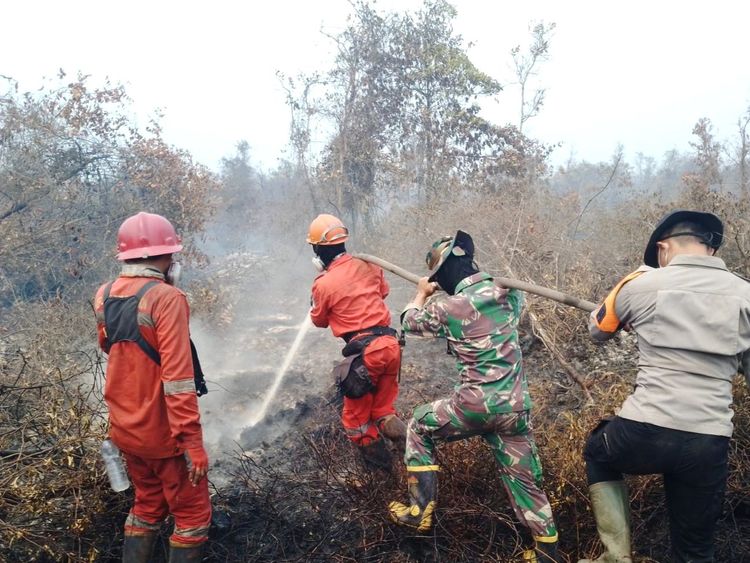
The ministry stressed that a decline in satellite-detected hotspots would not justify reducing field operations. Manggala Agni firefighting teams continue working alongside the Indonesian Military, National Police, National Disaster Mitigation Agency (BNPB), regional disaster agencies, community fire groups, businesses and other partners.
In South Sumatra, suppression operations have targeted Ogan Ilir, Banyuasin, Ogan Komering Ilir, Muara Enim and Musi Banyuasin. Fires have been extinguished in Ibul Besar 1 village in Ogan Ilir and Santan Sari village in Banyuasin, although operations continue at other locations, particularly on peatlands.
In Central Kalimantan, teams are still fighting fires in peatland areas of Tanjung Taruna village, Jabiren Raya district, Pulang Pisau regency. The operation has continued for several days. Crews are also conducting wetting, patrols and monitoring at the Tumbang Nusa Special Purpose Forest Area to prevent fires from reigniting and spreading.
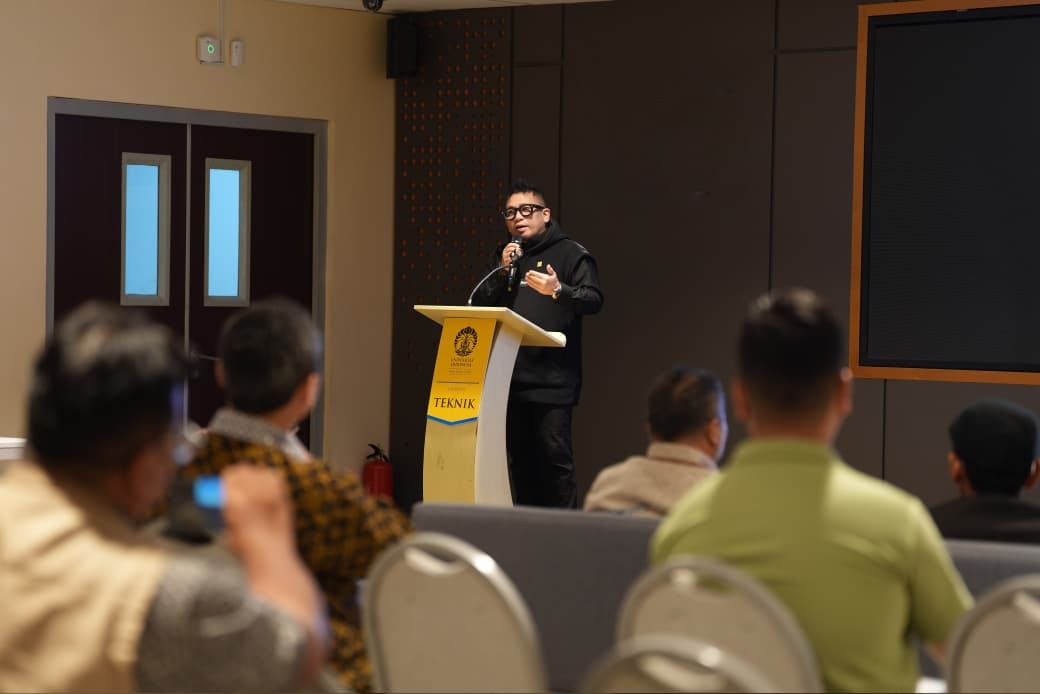
Forestry Minister Raja Juli Antoni led a coordination meeting in Ketapang, West Kalimantan, on October 23 with local authorities, the military, police, BNPB, the Meteorology, Climatology and Geophysics Agency (BMKG), regional disaster officials and ministry technical teams. He said the downward trend in hotspots should be used to accelerate suppression efforts rather than reduce vigilance.
The ministry has prepared 104 additional personnel for operations in Ketapang. Of these, 20 will be assigned to the Muara Kendawangan Nature Reserve and Seriam village, 44 to Pembedilan village, and 40 to an area under the forest utilisation business licence of PT Buana Megatama Jaya. Deployment is scheduled in stages from October 23 to 26, with each assignment lasting 14 days.
During his visit to Ketapang, Raja Juli also inspected the orangutan rehabilitation centre operated by the Indonesian Nature Rehabilitation Initiative Foundation (YIARI), including its animal health clinic and facilities for orangutans undergoing treatment.
The ministry reported that 51 orangutans had been rescued from fire-affected areas in Ketapang and North Kayong between August 6 and mid-October 2026. The rescue and rehabilitation effort involves the West Kalimantan Natural Resources Conservation Agency (BKSDA), YIARI, local governments, communities and conservation partners. Treatment includes health assessments, rehabilitation and preparation for release into safe habitats when conditions permit.
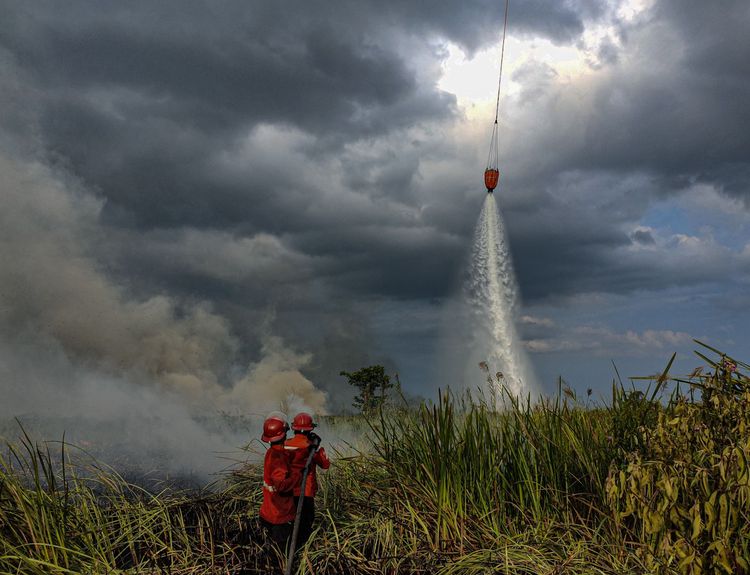
A total of 49 aircraft are supporting the wider firefighting response, including 32 for water bombing and 17 for aerial patrols and weather modification operations.
Weather modification efforts have been expanded with funding support from BNPB. On October 23, authorities delivered 3.3 tonnes of dry ice to South Sumatra, 8.4 tonnes to South Kalimantan and two tonnes to Lampung. Another five tonnes of sodium chloride (NaCl) were sent to South Kalimantan for cloud seeding.
Aircraft supporting the operation include an Indonesian Air Force C-130 Hercules operating from the South Sumatra command post and a CN-295 operating from the South Kalimantan post.
In South Sumatra, crews conducted nine weather modification sorties from posts in Palembang and Lampung: six using dry ice and three using NaCl. Authorities reported improved visibility around Palembang during several operational periods following the interventions.
Cloud seeding was also carried out near Way Kambas National Park in Lampung, an area affected by fires. Subsequent rainfall was observed in the park and in parts of West Lampung, Pringsewu and Pesawaran.
In Central Kalimantan, nine weather modification sorties were conducted using Casa-212, CN-295, Caravan and Pilatus aircraft. Seven sorties used dry ice and two used NaCl. Radar observations and rain gauges recorded rainfall in East Kotawaringin, West Kotawaringin and Lamandau regencies in Central Kalimantan, as well as Kotabaru in South Kalimantan.
BMKG forecast a significant increase in cloud formation potential on October 24. Authorities planned to use the conditions to expand cloud seeding with NaCl, deploying Hercules and CN-295 aircraft to encourage rainfall over targeted areas in Sumatra and Kalimantan.
The Forestry Ministry reiterated its warning against clearing or preparing land by burning. Residents who observe smoke, fires or burning activities were urged to report them promptly to enable an early response. (*)