

Enviro News Asia, Jakarta — Indonesia’s National Research and Innovation Agency (BRIN) has developed a pyrolysis technology that converts low-value plastic waste into an alternative fuel called Petasol, with laboratory tests showing a cetane number above the national minimum standard for diesel fuel.
The innovation, developed by Heru Susanto of BRIN’s Research Center for Sustainable Industrial and Manufacturing Systems, aims to address Indonesia’s growing plastic waste problem. The country generates an estimated 32 million to 40 million tonnes of plastic waste annually, much of it consisting of difficult-to-recycle materials such as plastic bags, styrofoam and household waste.
Much of this waste ends up in landfills or is disposed of through open burning, which releases hazardous emissions. Plastic can also take hundreds of years to decompose naturally.
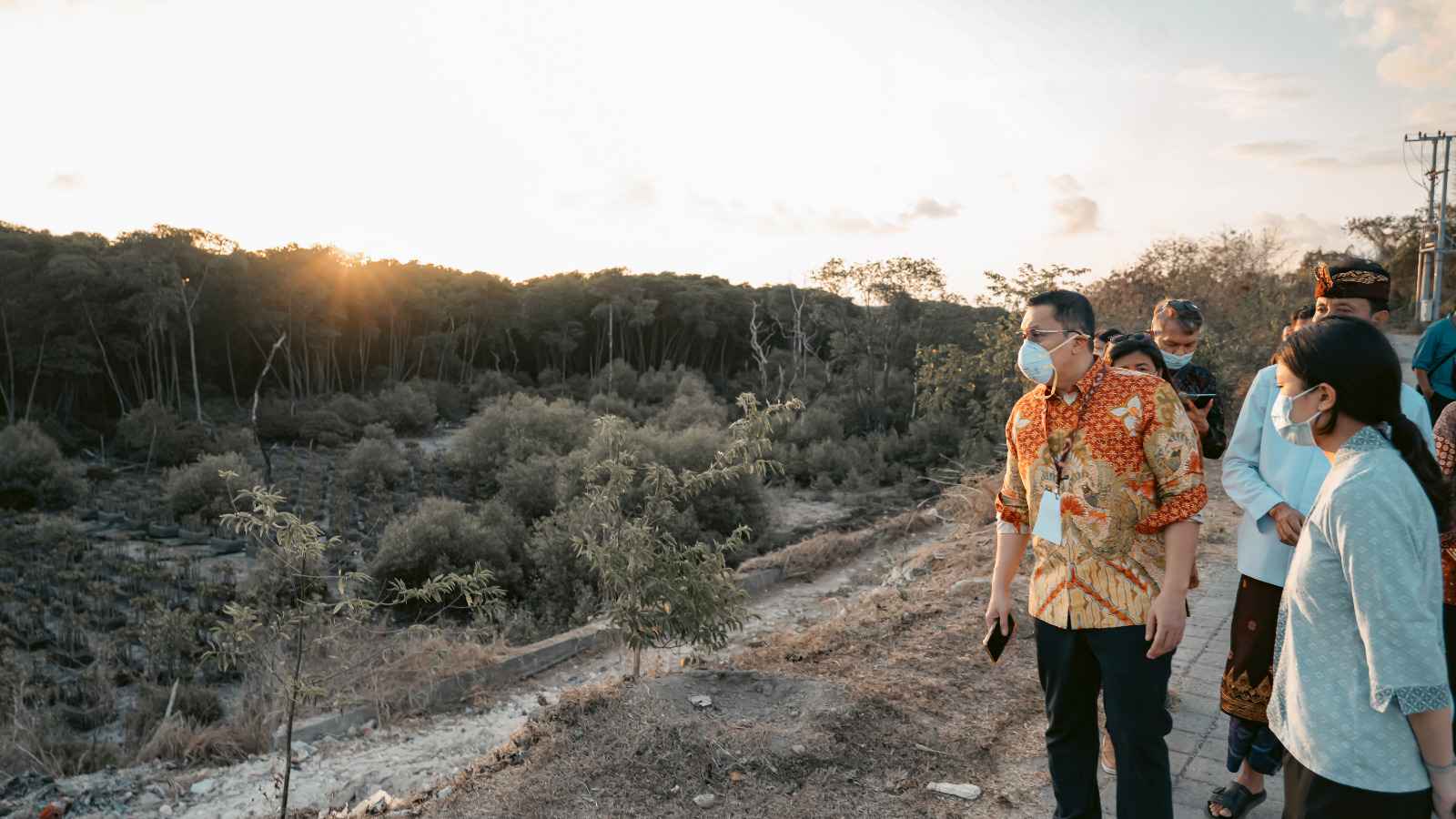
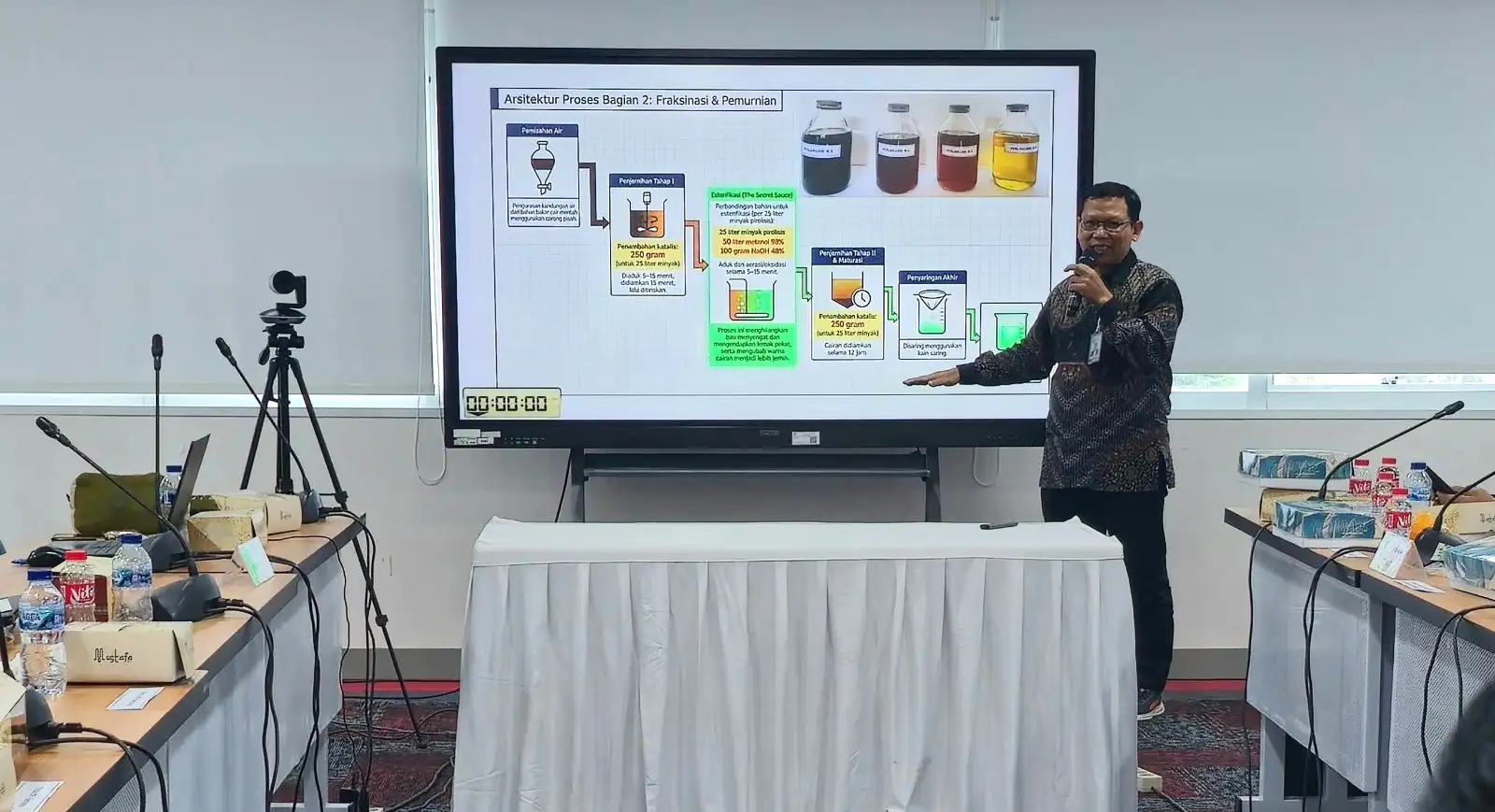
Heru explained the technology during a field verification visit on October 26 as part of the assessment of candidates for the 2026 Satyalancana Wira Karya state honour.
“We developed a method for processing plastic waste into an alternative fuel and named the product Petasol. The brand is registered, and the process has been patented to produce oil equivalent to diesel,” he said.
The pyrolysis machine was designed to address operational problems associated with conventional systems, including the risk of oil-flow blockages. Its stable reactor enables consistent daily operation, while the process does not require preliminary washing or shredding, allowing wet or dirty plastic waste to be processed directly.
The technology uses gradual heating at temperatures ranging from 200 to 350 degrees Celsius. Precise temperature control is intended to prevent gel-like deposits from forming and ensure that plastic vapour condenses efficiently into liquid oil.
According to Heru, each kilogram of plastic waste can produce an average of 0.8 to 1 litre of oil.
The crude oil then undergoes purification, esterification using a bentonite catalyst and filtration to remove water and strong odours. Laboratory testing found that Petasol had a cetane number of 54.2, exceeding Indonesia’s stated minimum diesel standard of 48. Its sulphur content was measured at 23.6 parts per million.
BRIN also reported that the technology could reduce exhaust emissions by up to 79% compared with open burning. The agency did not specify the full testing conditions or the emissions measured in the supplied report.
The development has involved cooperation with PT Bank Sampah Banjarnegara and the Banjarnegara regency government’s research and development planning agency, with support from Pertamina Foundation and PGN.
The initiative is intended to strengthen the circular economy by enabling community-based waste management groups, including waste banks and integrated waste-management facilities known as TPS 3R, to turn discarded plastics into products with commercial value.
Petasol has already been used to power agricultural machinery, generators and fishing boats, according to BRIN.
Heru said the technology should be expanded as a practical waste-management solution suited to Indonesia’s community-based systems, particularly waste banks and TPS 3R facilities.
The development offers a potential route for recovering value from plastics that are difficult to recycle mechanically. However, broader deployment will depend on appropriate operational controls, fuel-quality verification and assessment of environmental performance across the production and use cycle. (*)