

Enviro News Asia, Jakarta — Indonesia is seeking stronger international partnerships to conserve coral reefs across the Coral Triangle while safeguarding food security and the livelihoods of coastal communities.
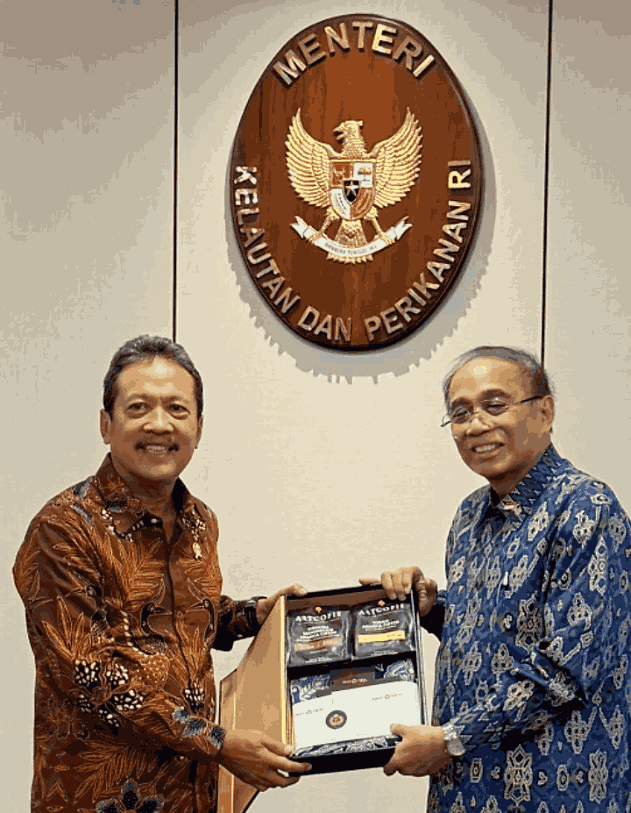
On October 23, 2026, Maritime Affairs and Fisheries Minister Sakti Wahyu Trenggono met with Indonesia’s Ambassador to the United States, Indroyono Soesilo, in Jakarta to discuss strengthening coral reef conservation. They agreed to convene stakeholders in Washington, D.C., in spring 2027, bringing together international financial institutions, conservation organisations and global philanthropists.
The proposed meeting is expected to involve the World Bank, International Union for Conservation of Nature (IUCN), World Wide Fund for Nature (WWF), The Nature Conservancy (TNC), World Resources Institute (WRI), Conservation International (CI) and the Global Environment Facility (GEF). The initiative aims to mobilise financing, scientific expertise and international cooperation to protect coral reefs while supporting food and nutrition security for coastal communities.
The Coral Triangle spans Indonesia, Malaysia, the Philippines, Papua New Guinea, the Solomon Islands and Timor-Leste. Covering approximately 6 million square kilometres of sea, the region contains around 75,000 square kilometres of coral reefs. Indonesia accounts for approximately 60,000 square kilometres, making it the largest coral reef area among the six countries.
Often described as the “Amazon of the Seas,” the Coral Triangle supports more than 3,000 reef fish species and approximately 76 per cent of the world’s coral species. More than 120 million people in the region depend directly on marine resources for food and livelihoods.
The region also supports a substantial blue economy encompassing fisheries, aquaculture, marine tourism and blue carbon. Annual economic values cited for the region include approximately US$3 billion from coral reef fisheries, US$1.5 billion from tuna fisheries and up to US$12 billion from nature-based tourism. Coral reefs also provide natural protection against waves and storms for an estimated 26 million coastal residents.
Indonesia has pursued coral reef rehabilitation and management through the Coral Reef Rehabilitation and Management Program (COREMAP) since 1998. The programme has supported reef restoration, marine conservation management and community empowerment.
The final phase, COREMAP-CTI, concluded in 2022 with US$47.38 million in World Bank financing, a US$10 million grant from the Global Environment Facility and US$5.74 million in Indonesian government support. The project’s total value exceeded US$62 million.
COREMAP strengthened decentralised coral reef management in priority areas through fisheries monitoring, ecosystem rehabilitation and greater participation by local communities.
Building on that programme, the government is implementing the US$210 million Oceans for Prosperity Program, known as LAUTRA. Managed by the Ministry of Marine Affairs and Fisheries in collaboration with the Ministry of National Development Planning (Bappenas), the programme aims to strengthen 20 marine protected areas across 11 provinces in eastern Indonesia, covering 8.3 million hectares.
LAUTRA has received a US$5 million grant from the PROBLUE Multi-Donor Trust Fund and US$7.3 million from the Canadian government through the Oceans Multi-Donor Trust Fund. It also seeks to strengthen blue-finance capacity, including through the Indonesia Climate Change Trust Fund.
The planned Washington meeting in spring 2027 is expected to provide a platform for expanding financial support, scientific collaboration and conservation partnerships across the Coral Triangle.
The initiative reflects Indonesia’s approach to treating coral reef protection not only as an environmental priority, but also as an investment in economic resilience, food security and international cooperation. By engaging financial institutions, conservation organisations and philanthropists, Indonesia aims to secure long-term benefits for marine ecosystems and the coastal communities that depend on them. (*)