

Enviro News Asia, Jakarta — Indonesia recorded a sharp increase in high-confidence fire hotspots, with 165 detected nationwide as of Nov. 7, prompting the Forestry Ministry to step up monitoring and firefighting, particularly in Central Kalimantan.
Data from the ministry’s SiPongi monitoring system showed that the total rose by 110 hotspots from 55 recorded a day earlier.
Across six priority provinces for forest and land fire control, hotspots increased from 14 to 17. Central Kalimantan recorded 13 hotspots, followed by South Sumatra with two, Jambi with one and South Kalimantan with one. West Kalimantan and Riau reported no high-confidence hotspots.
Central Kalimantan saw the most significant change, recording 13 hotspots after reporting none the previous day. Jambi’s count fell from nine to one, while South Sumatra’s declined from five to two.
The Forestry Ministry said it was strengthening patrols and ground checks to verify satellite-detected indications.
The ministry cautioned that hotspots represent surface temperature anomalies detected by NASA’s Terra and Aqua satellites, as well as SNPP and NOAA-20. They do not necessarily indicate confirmed fires or the extent of burned areas, and require field verification.
Peatland Fires Remain a Challenge
According to the ministry’s Forest Fire Control Command Post report for Nov. 7, firefighting operations continued in several locations in Central Kalimantan.
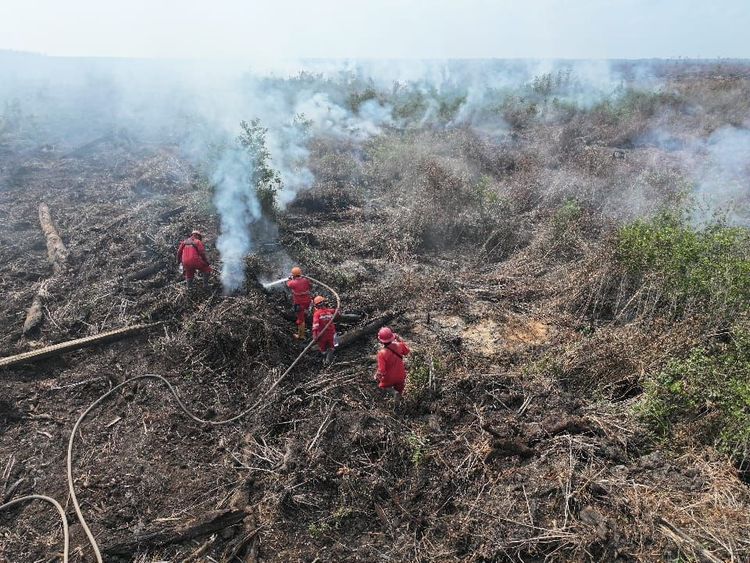
In Jabiren village, Pulang Pisau regency, surface and underground fires in peatland areas remained active, requiring further suppression efforts.
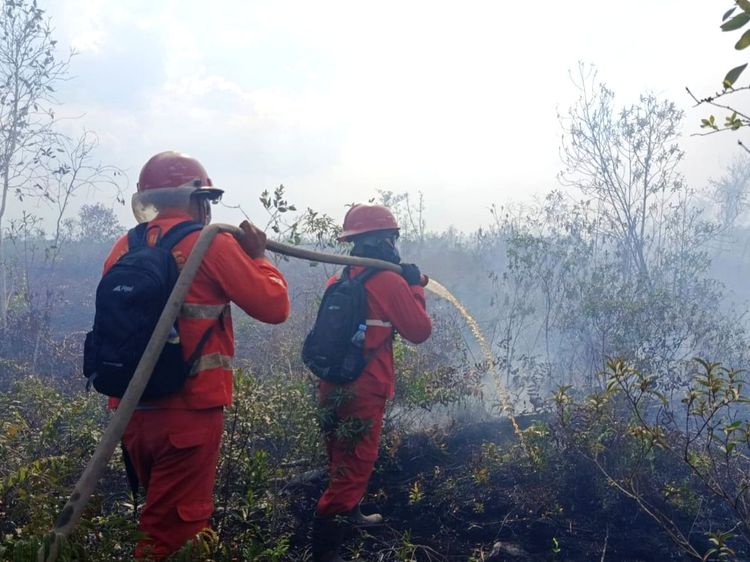
At Tanjung Taruna, also in Pulang Pisau, several locations had been soaked but required additional watering. Smoke was still rising from other areas, prompting Manggala Agni firefighting teams and supporting personnel to continue operations.
Firefighters were also tackling surface and underground fires in semi-peatland areas in Sikan village, North Barito regency. The fire had not been fully extinguished as of the latest report.
There were, however, improvements in Seruyan and East Kotawaringin regencies. Joint operations by Manggala Agni and the Regional Disaster Management Agency (BPBD) successfully extinguished fires in Pematang Panjang village, Seruyan, and Pasir Putih, East Kotawaringin, where crews also carried out cooling operations.
In South Sumatra, fires in Sungai Rambutan, Ogan Ilir regency, had been declared extinguished. However, underground peat fires in Sungai Bungin, Ogan Komering Ilir regency, still required further suppression.
The ministry stressed that changes in hotspot numbers must be assessed alongside field verification. Peatland fires can persist underground even after visible flames disappear, making continued monitoring and cooling essential to prevent reignition.
Multi-Agency Operations Continue
Manggala Agni teams are working with the National Disaster Mitigation Agency (BNPB), Indonesian Military (TNI), National Police, Meteorology, Climatology and Geophysics Agency (BMKG), regional disaster agencies, local governments, community fire groups, businesses and volunteers.
Their efforts include patrols, ground checks, firefighting, water spraying, searches for remaining embers, mop-up operations and cooling.
The Forestry Ministry said the increase to 165 national hotspots and the reappearance of hotspots in Central Kalimantan warranted continued high vigilance.
It said the priority was not merely to reduce hotspot figures but to ensure that fires and embers were fully extinguished, prevent renewed outbreaks, protect communities and safeguard forests and biodiversity.
The ministry urged residents and businesses not to clear or open land by burning. (*)