

Enviro News Asia, Antalya – Indonesia has stressed the need for stronger national action and international cooperation to accelerate efforts to halt and reverse deforestation and forest degradation by 2030.
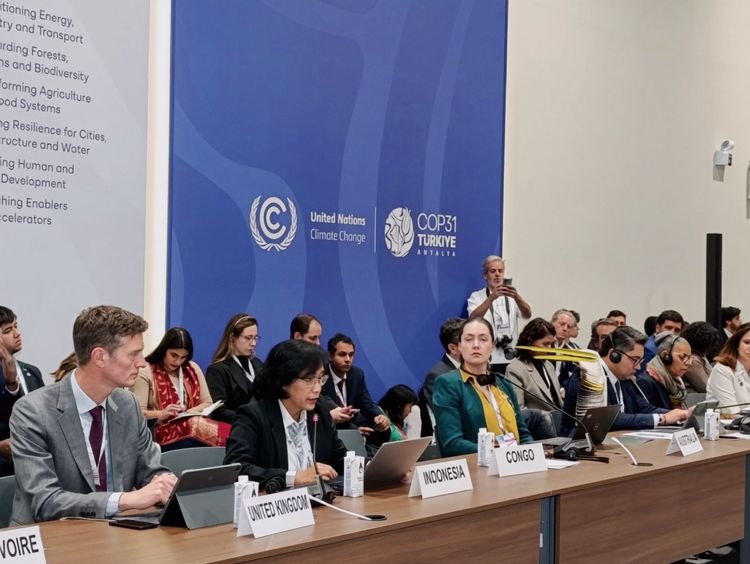
The call was made on Monday at the launch of the COP30 Presidency Roadmap on Enhancing Efforts towards Halting and Reversing Deforestation and Forest Degradation by 2030, held as part of the 31st UN Climate Change Conference (COP31 UNFCCC).
Indonesia, one of the tropical forest countries invited to share their views, was represented by Haruni Krisnawati, Senior Advisor to the Minister of Forestry for Climate Change. In her intervention, Haruni welcomed the roadmap and praised Brazil’s leadership in bringing countries and international partners together to strengthen forest protection.
Indonesia said the roadmap’s success should be judged by its ability to help countries strengthen national policies and address real challenges in implementation. Drawing on its experience managing tropical forests, it outlined three main priorities.
The first priority is protecting forests and restoring degraded ecosystems. Under its FOLU Net Sink 2030 program, the government continues to work to reduce deforestation and forest degradation, restore degraded forests and peatlands, improve sustainable forest management and increase forest carbon stocks.
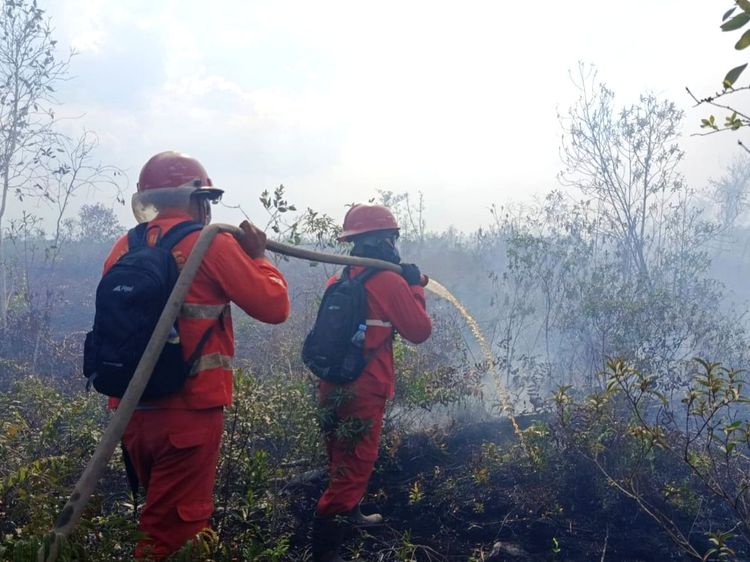
Preventing forest and land fires is also a key priority, particularly given growing climate-related risks. Indonesia said it was strengthening early warning systems, community-based prevention and rapid response, especially in fire-prone areas and peatland ecosystems.
The second priority is strengthening the economic viability of sustainable forest management. Indonesia is developing a multi-business forestry approach that broadens the use of forest potential beyond timber to include non-timber forest products, environmental services and other sustainable forestry businesses.
The government is also strengthening conservation financing by developing public service agency (BLU) mechanisms in several national parks. The mechanisms give greater flexibility in managing revenue to support conservation and area management. Both approaches are part of developing a forest-based bioeconomy while maintaining the forests’ ecological functions.
The third priority is strengthening the role of communities in forest management. Through its Social Forestry program, Indonesia has expanded community access to forest areas to more than 8.3 million hectares, benefiting about 1.4 million households. It is now focusing on strengthening the economic benefits of that access through technical assistance, financing, community enterprise development and better market access.
On international support, Indonesia called for more predictable and accessible funding, including through REDD+ results-based payments and other innovative financing instruments.
It said technology transfer and capacity building were also needed, particularly for forest fire prevention, ecosystem restoration, forest monitoring and transparent reporting. International partnerships, it said, should help open market opportunities for sustainable forest products, community-based enterprises and responsible private investment.
Indonesia also noted that pressure on forests does not come solely from the forestry sector, calling for stronger cross-sector coordination, including on land-use policy, economic activities and commodity supply chains.
It stressed that international cooperation must remain country-driven, respect each country’s circumstances and deliver fair benefits to local communities.
Closing its intervention, Indonesia said the roadmap should reinforce existing national strategies and commitments. Its added value, it said, lies in linking national priorities with international partnerships and funding sources to deliver tangible, measurable results.
The roadmap’s launch is part of efforts to follow up on the outcomes of the first Global Stocktake under the Paris Agreement, particularly in strengthening global cooperation to halt and reverse deforestation and forest degradation by 2030.
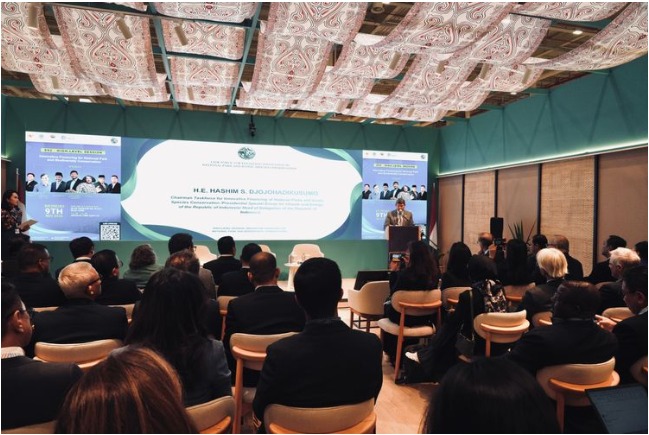
The event was attended by high-level figures, including COP30 President André Corrêa do Lago, UNFCCC Executive Secretary Simon Stiell and COP30 CEO Ana Toni. Representatives of international organizations, including UNEP, FAO and UNDP, as well as tropical forest countries, development partners, indigenous peoples and civil society groups, also took part. (**)