Enviro News Asia, Antalya — Countries pursuing forest conservation and efforts to halt and reverse deforestation by 2030 are exploring new sources of climate finance, including opportunities under Article 6 of the Paris Agreement. However, accessing these funds remains challenging, requiring stronger technical capacity, institutional coordination and reliable carbon accounting systems.
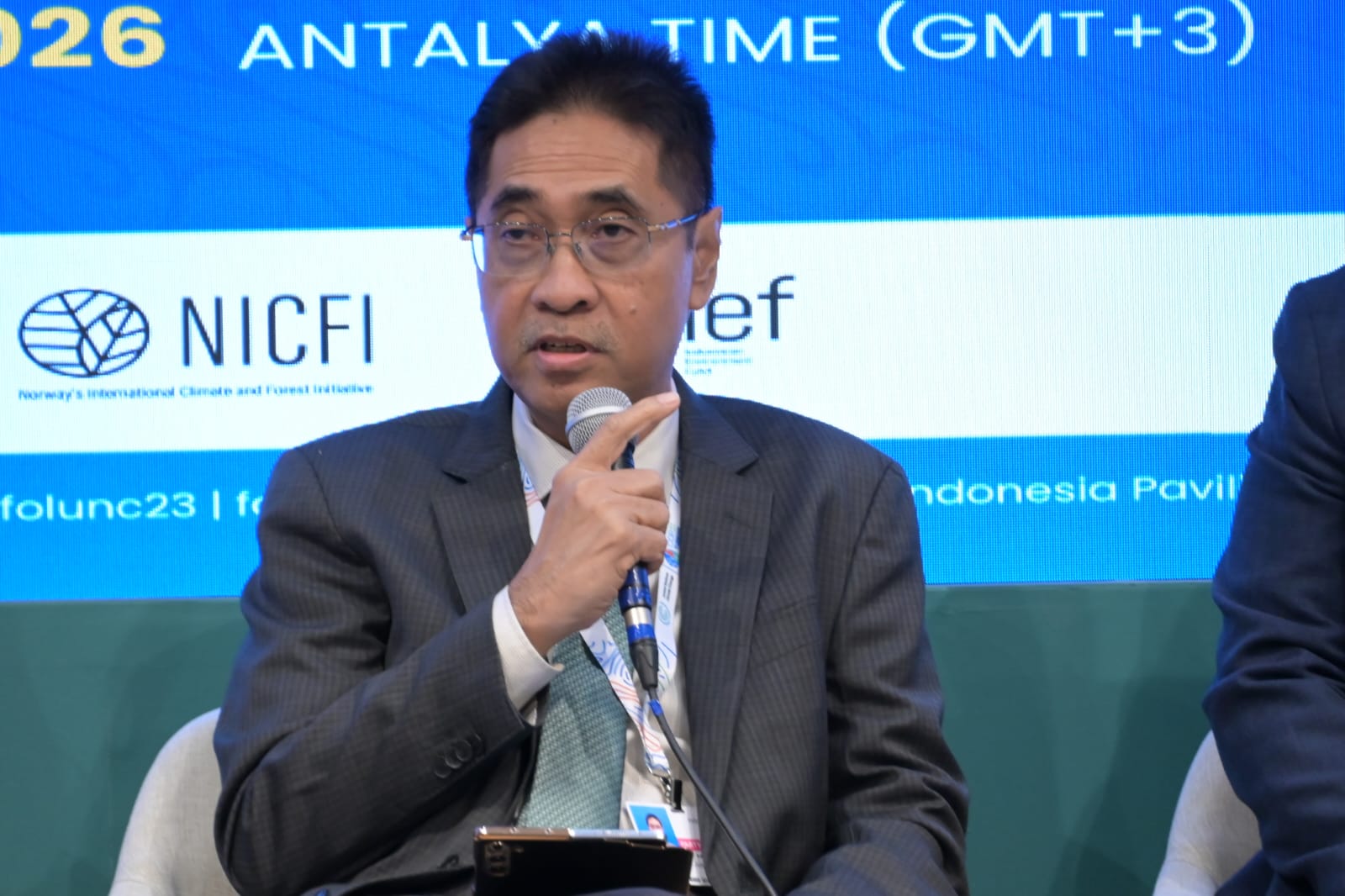
The issue was discussed at a side event during the 31st United Nations Climate Change Conference (COP31) in Antalya, Türkiye, on Nov. 16, 2026. Hosted by the United Nations Framework Convention on Climate Change (UNFCCC), the event, titled “REDD+ Community of Practice: Navigating the Evolving Carbon Market Landscape”, brought together country representatives and international partners to exchange experiences and identify ways to mobilise funding for REDD+ programmes.
The discussion featured representatives from Ghana, Nepal and Norway, alongside contributions from Brazil, the Green Climate Fund (GCF) and UN Climate Change.
Brazil presented progress under the COP30 Presidency Roadmap on halting and reversing deforestation and forest degradation by 2030. It emphasised the need for complementary financing mechanisms and stronger demand for verified REDD+ results to support forest protection.
The GCF outlined its permanent policy on REDD+ results-based payments and the funding opportunities available to countries seeking financial support for emissions reductions achieved through forest conservation.
Representatives from Ghana and Nepal shared their experiences in accessing different financing mechanisms, highlighting opportunities to mobilise public and private investment as well as the difficulties of meeting varying standards, technical requirements and institutional obligations.
Both countries also stressed the importance of ensuring fair distribution of benefits among stakeholders involved in forest protection.
Ghana highlighted its recent issuance of carbon credits under the Architecture for REDD+ Transactions (ART) TREES standard. However, the country also pointed to the substantial costs and institutional demands involved in complying with different financing frameworks.
Nepal, meanwhile, warned that securing funding for verified emissions reductions was not guaranteed. “Emission reduction does not automatically generate payment,” the country’s representative said, underscoring the need for more predictable demand for verified REDD+ results.
From the perspective of an international financing partner, Norway called for greater coordination among funding mechanisms and carbon market standards. It argued that countries should not have to establish separate systems for every financing source or market they seek to access.
The discussions also highlighted the importance of effective national coordination, alignment with nationally determined contributions (NDCs), and compliance with accounting and authorisation requirements when pursuing opportunities under Article 6 of the Paris Agreement.
The COP31 meeting built on the REDD+ Community of Practice, an initiative launched by UN Climate Change in 2025 to strengthen knowledge-sharing and cooperation among countries implementing REDD+ programmes and their partners.
Previous exchanges included regional meetings for Latin American and Caribbean countries in December 2025 and Asia-Pacific countries in October 2026, as well as the first REDD+ Global Summit in May 2026. These gatherings examined different financing pathways and identified the need for practical guidance, stronger national capacities and continued international collaboration.
The initiative also provides practical resources to support countries in implementing REDD+ strategies. Recent knowledge products include briefing papers on national REDD+ strategies and action plans, as well as safeguards information systems. A video has also been produced to showcase countries’ experiences in implementing REDD+ programmes.
UN Climate Change has further introduced an e-learning course on REDD+ measurement, reporting and verification (MRV). Through practical examples and case studies, the programme helps experts improve their understanding of forest reference levels, results reporting, technical assessments and technical analyses.
These resources are accessible through the UNFCCC REDD+ Web Platform, which serves as a knowledge-sharing hub for countries and their partners.
Looking ahead, UN Climate Change plans to expand the Community of Practice through additional knowledge products, regional exchanges and peer-learning activities. Priorities for 2027 include new resources on REDD+ and Article 6, alongside a regional meeting for African countries.
By connecting governments and partners and making practical knowledge more accessible, the initiative aims to help countries navigate evolving climate finance opportunities and strengthen REDD+ implementation in support of global climate goals. (*)