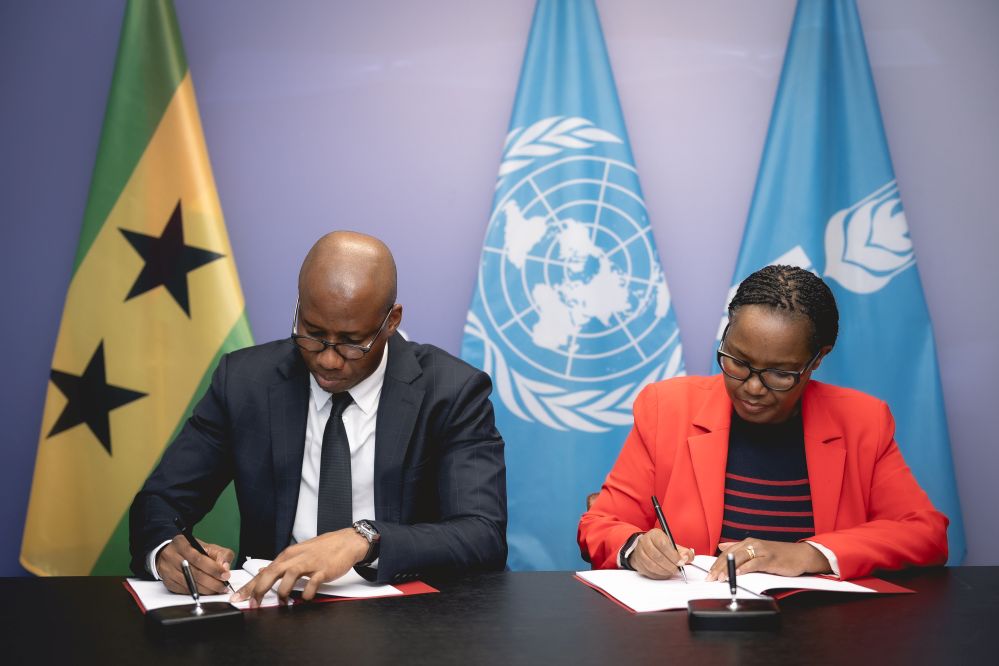
Enviro News Asia, Rome — The International Fund for Agricultural Development (IFAD) and the Government of the São Tomé and Príncipe have signed a EUR 4.6 million grant agreement to finance the Transition Towards Sustainable and Nutritious Food Systems (SIAS) project, aimed at accelerating the country’s shift to more productive, climate-resilient and sustainable food systems.
The agreement was signed on the sidelines of IFAD’s 49th Governing Council in Rome. The six-year project carries a total cost of more than EUR 15 million and is co-financed by the Adaptation Fund and the Global Environment Facility, alongside contributions from the government and participating households.
IFAD Vice-President Gérardine Mukeshimana stated that the partnership reflects IFAD’s long-standing commitment to rural transformation in São Tomé and Príncipe, emphasizing that joint investment will expand economic opportunities for farming communities and strengthen resilience to climate-related shocks.
The SIAS project is expected to reach approximately 5,500 rural households—around 22,000 people—across 69 communities on São Tomé Island and in the Autonomous Region of Príncipe. The initiative will rehabilitate irrigation systems, restore degraded soils and landscapes, expand agroforestry across 550 hectares, and strengthen producers’ organizations.
In addition to climate-resilient agriculture, the project will promote improved nutrition through education programmes and enhanced access to diversified and healthy food. Nearly 1,300 young people will benefit from targeted skills development, technical training and entrepreneurship incubation to improve employment prospects within the rural economy. Women will receive dedicated support through leadership training, improved access to productive resources, and tailored nutrition initiatives.
Since 1985, IFAD has financed eight rural development projects in São Tomé and Príncipe, mobilizing over US$86 million in total investments, including more than US$41 million contributed directly by IFAD. These programmes have supported nearly 35,000 rural households nationwide.
The new grant strengthens ongoing efforts to build resilient agricultural systems, enhance food security, and promote inclusive rural growth in the island nation. (*)