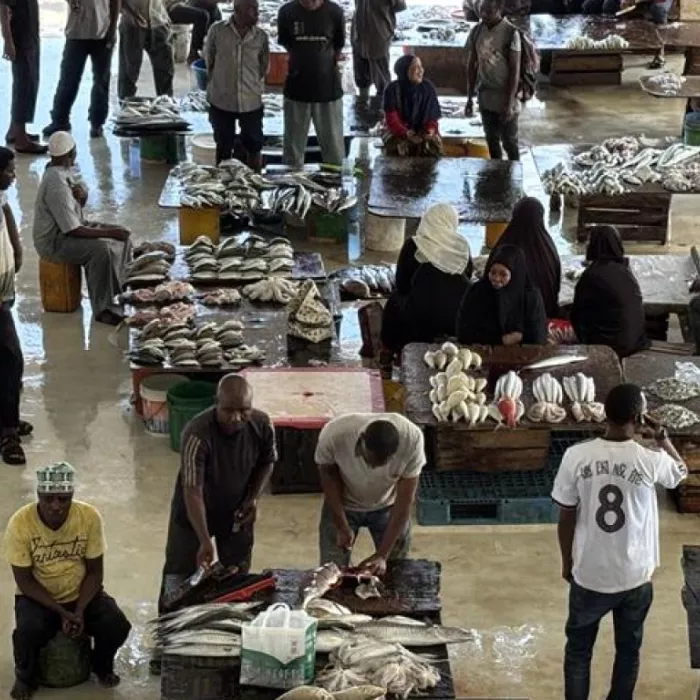
Enviro News Asia, Zanzibar — Efforts to improve fish processing in Zanzibar are highlighting a critical challenge: how to increase incomes and expand markets without reducing access to affordable, nutrient-rich food for local communities.
Anchovy, locally known as dagaa, plays a central role in the region’s fisheries, diets, and livelihoods. Rich in essential micronutrients, dagaa is widely consumed, particularly by low-income households, while also supporting regional trade and economic growth.
However, the dagaa value chain faces significant post-harvest losses. Studies show that losses can exceed 50 percent during certain periods due to poor handling, limited infrastructure, and seasonal fluctuations in fish supply. These challenges disproportionately affect small-scale actors, especially women processors and traders.
Traditional processing methods such as sun-drying, blanching, and frying are commonly used to preserve fish. While these techniques help extend shelf life, they often result in inconsistent quality and potential nutrient loss, particularly when fish are dried on the ground without protective covering.
Under the Better Diets and Nutrition Science Program, researchers from WorldFish and Michigan State University collected baseline data in 2025 to explore improved post-harvest technologies. The initiative aims to develop tools that reduce losses while preserving nutritional value and remaining accessible to local communities.
Preliminary findings indicate that approximately 56.5 percent of processed dagaa is exported, mainly to the Democratic Republic of Congo via Zambia, while 38.6 percent remains in domestic markets and 4.9 percent is used for animal feed. This highlights the importance of dagaa for both regional trade and local nutrition.
Experts warn, however, that improved processing could intensify trade-offs. Higher-quality products with longer shelf life may attract stronger export demand, potentially driving up prices and reducing availability for local consumers—especially vulnerable groups such as women, children, and low-income households.
The research also underscores the influence of market demand on processing practices, creating a feedback loop in which economic incentives shape how fish is processed and distributed, with direct implications for nutrition outcomes.
Follow-up research planned for 2026 will examine how improved processing technologies, market dynamics, and seasonal factors interact to affect food availability and affordability. The goal is to ensure that innovations in the fisheries sector deliver both economic benefits and improved public health nutrition without leaving local communities behind. (*)