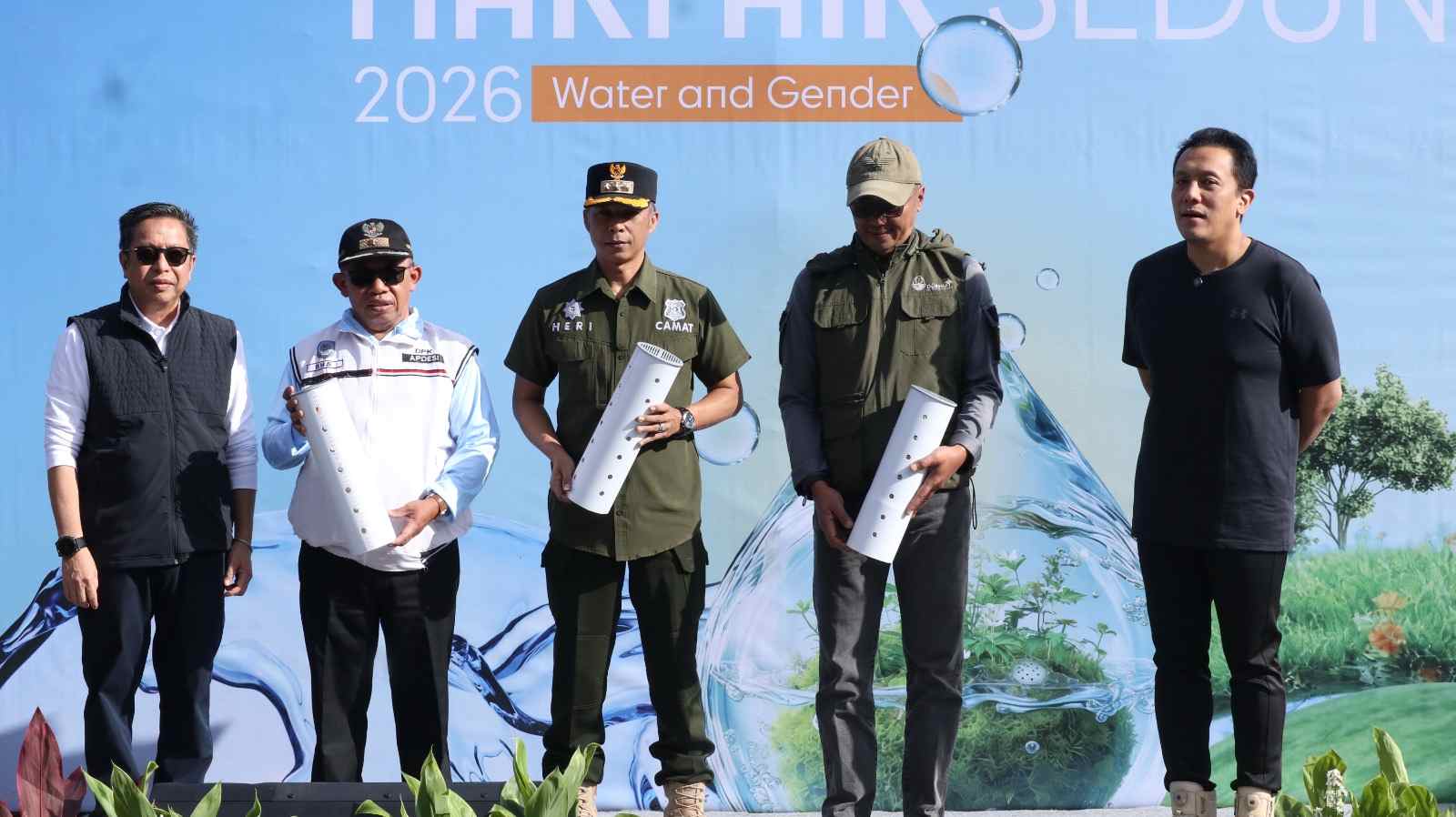
Enviro News Asia, Bogor — Diaz Hendropriyono urged communities to take part in flood prevention efforts across the Greater Jakarta area by distributing biopore units and installation tools to 10 villages in Cisarua District, Bogor, on April 5, 2026. The initiative was carried out during the commemoration of World Water Day organized by the Ministry of Environment under the theme “Water and Gender.”
The program involves the distribution of 50 biopore units to each village, aiming to reduce flood risks by improving water absorption into the soil. Diaz stated that the initiative is a practical step to strengthen community-based environmental management and address recurring flooding in the Jabodetabek region.
He explained that Cisarua District plays a critical role as part of the upstream area of the Ciliwung River basin, making water balance management essential. According to him, installing biopores in residential areas can help prevent surface water accumulation while supporting groundwater recharge.
Diaz encouraged households to adopt simple environmental practices by installing biopore pipes and planting trees. He emphasized that ideally every household should have at least one biopore unit to maintain water balance, reduce runoff, and minimize flood risks.
He also highlighted the importance of preserving clean water resources, noting that although water covers 71 percent of the Earth’s surface, only a small fraction is accessible for human use. He warned that improper waste disposal, especially in rivers and lakes, continues to reduce the availability of clean water.
In addition, Diaz pointed out that both water scarcity and excess water pose risks, stressing that proper water management is necessary to prevent flooding while ensuring sufficient supply. He reiterated that biopore installation is a simple yet effective solution to maintain equilibrium between water absorption and discharge.
The event also included the symbolic distribution of tree seedlings, three rubber boats, and biopore equipment. Participants continued the program by planting 1,500 trees and constructing infiltration wells at the Gunung Mas Agrotourism area in Bogor. (*)