

Enviro News Asia, Jakarta — Indonesia’s carbon market has received a significant boost following the issuance of Forestry Regulation No. 6/2026, which is widely seen as a key instrument to provide clarity and stability for businesses accelerating carbon projects.
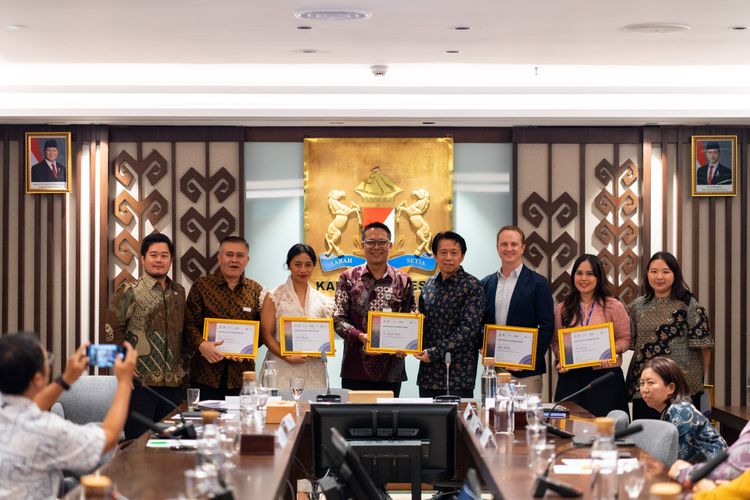
The regulation was discussed during a high-level forum titled “Decoding Permenhut 6/2026: Implications for Indonesia’s Carbon Market”, attended by stakeholders from government, Kadin Indonesia, and carbon project developers.
Senior Advisor to the Minister of Forestry, Edo Mahendra, stated that the regulation is built on three main principles: implementing Presidential Regulation No. 110/2025, ensuring the sustainability of carbon projects, and balancing environmental targets with economic growth.
He emphasized that Indonesia aims to position itself as a leading player in the global carbon market by strengthening credibility and meeting international standards.
Vice Chairwoman of Kadin Indonesia, Shinta Kamdani, highlighted that trust and coordination among stakeholders are critical for successful implementation, beyond regulatory frameworks alone.
Similarly, Dharsono Hartono described the regulation as a milestone in strengthening Indonesia’s carbon market architecture, noting its broader impact on regional and international market confidence.
The regulation introduces key provisions, including clear eligibility criteria for project developers, procedures for issuing forestry carbon credits, participation mechanisms in international markets such as corresponding adjustments, and safeguards for environmental and social integrity.
Industry players also underscored the need for further implementing regulations, particularly regarding project risk management and investment security, including the possibility of permit revocation.
Private sector enthusiasm is expected to drive increased green investment flows into Indonesia. Steven Marcelino expressed optimism that the regulation would attract greater investor interest, especially if supported by measurable targets and consistent policy frameworks.
The forum concluded with a shared understanding that sustained collaboration between government and industry is essential to building a credible, effective, and globally competitive domestic carbon market. (*)