

Enviro News Asia, Pekanbaru — The Indonesian government has placed Riau on full alert as the risk of forest and land fires intensifies ahead of the 2026 dry season.
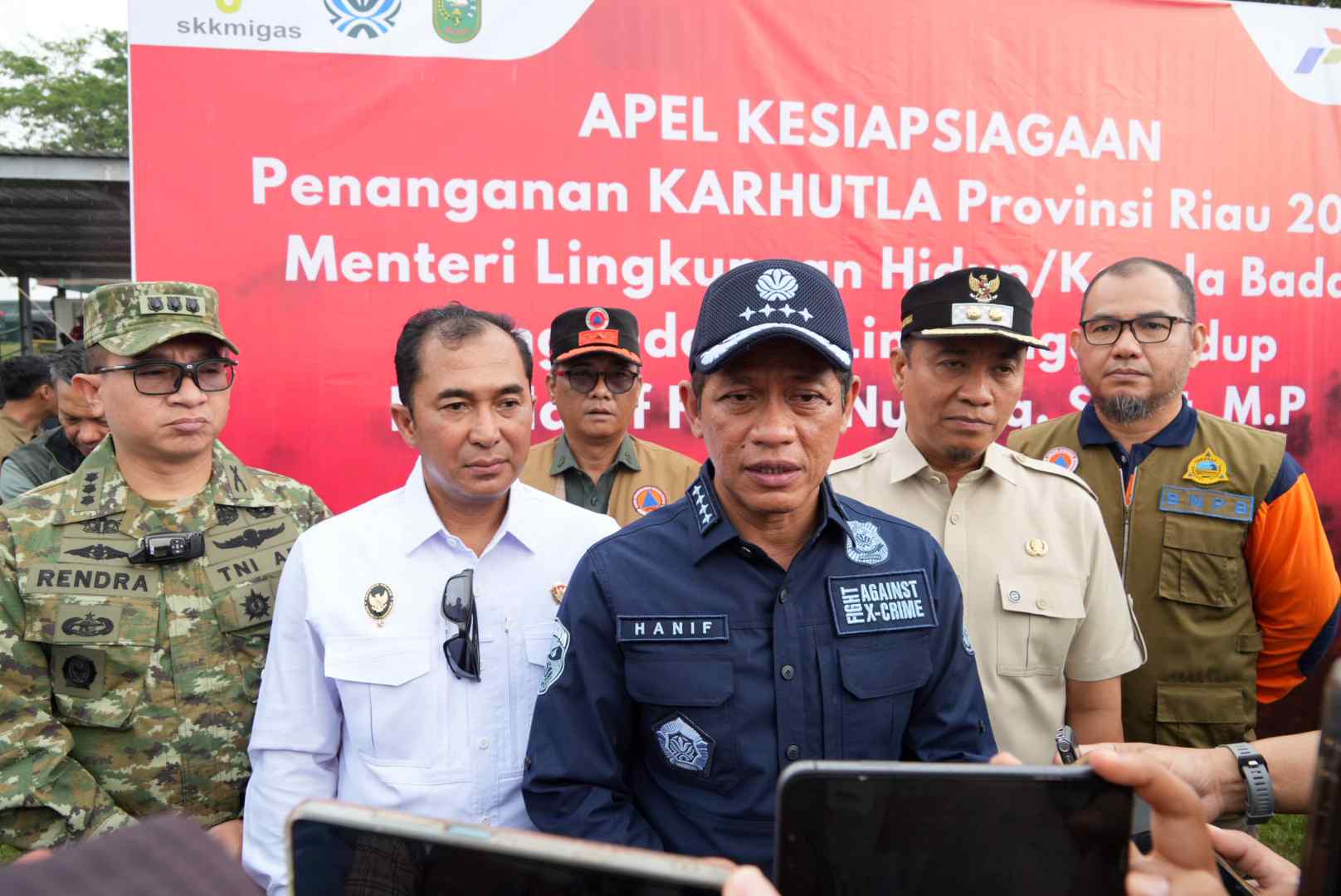
Minister of Environment and Head of the Environmental Control Agency, Hanif Faisol Nurofiq, emphasized the need for early detection and rapid response during a preparedness drill held at PT Pertamina Hulu Rokan operations area in Pekanbaru.
He stated that fire control efforts must prioritize immediate action once hotspots are detected, warning against delays that could allow fires to spread.
Data shows a significant increase in fire indicators across the province. As of April 23, 2026, a total of 840 hotspots were recorded, including 318 classified as high confidence—six times higher than the same period last year. Burned areas have also surged to more than 8,500 hectares, marking a twentyfold increase compared to 2025.
The rise coincides with projections from Badan Meteorologi, Klimatologi, dan Geofisika indicating a transition toward weak to moderate El Niño conditions, which are expected to prolong and intensify the dry season, particularly in Sumatra and Kalimantan.
Authorities highlighted the vulnerability of peatland ecosystems, where prolonged dryness significantly increases fire risks.
The government has called for coordinated action involving central and regional authorities, the military and police, disaster agencies, Manggala Agni units, local communities, and private sector actors. Measures include intensified patrols, strengthened monitoring in high-risk areas, and ensuring readiness of personnel and equipment.
Companies in the plantation and forestry sectors have also been urged to maintain fire prevention infrastructure, manage water systems in peatlands, and utilize early warning technologies.
General Manager of PHR Zona Rokan, Andre Wijanarko, stated that forest fires pose direct operational risks to national energy infrastructure, including reduced visibility, health hazards, and safety threats to surrounding communities.
The government reiterated its zero-tolerance policy toward land burning, warning that violations could result in strict legal action, including permit revocation.
With rising hotspot numbers and increasing climate risks, authorities stressed that stronger coordination and proactive measures are essential to prevent a recurrence of transboundary haze and its widespread impacts on public health, the environment, and the economy. (*)