Enviro News Asia, Jakarta — The Indonesian government has introduced a new regulatory framework aimed at strengthening the integrity and implementation of carbon trading in the forestry sector through the issuance of Ministerial Regulation No. 6 of 2026.
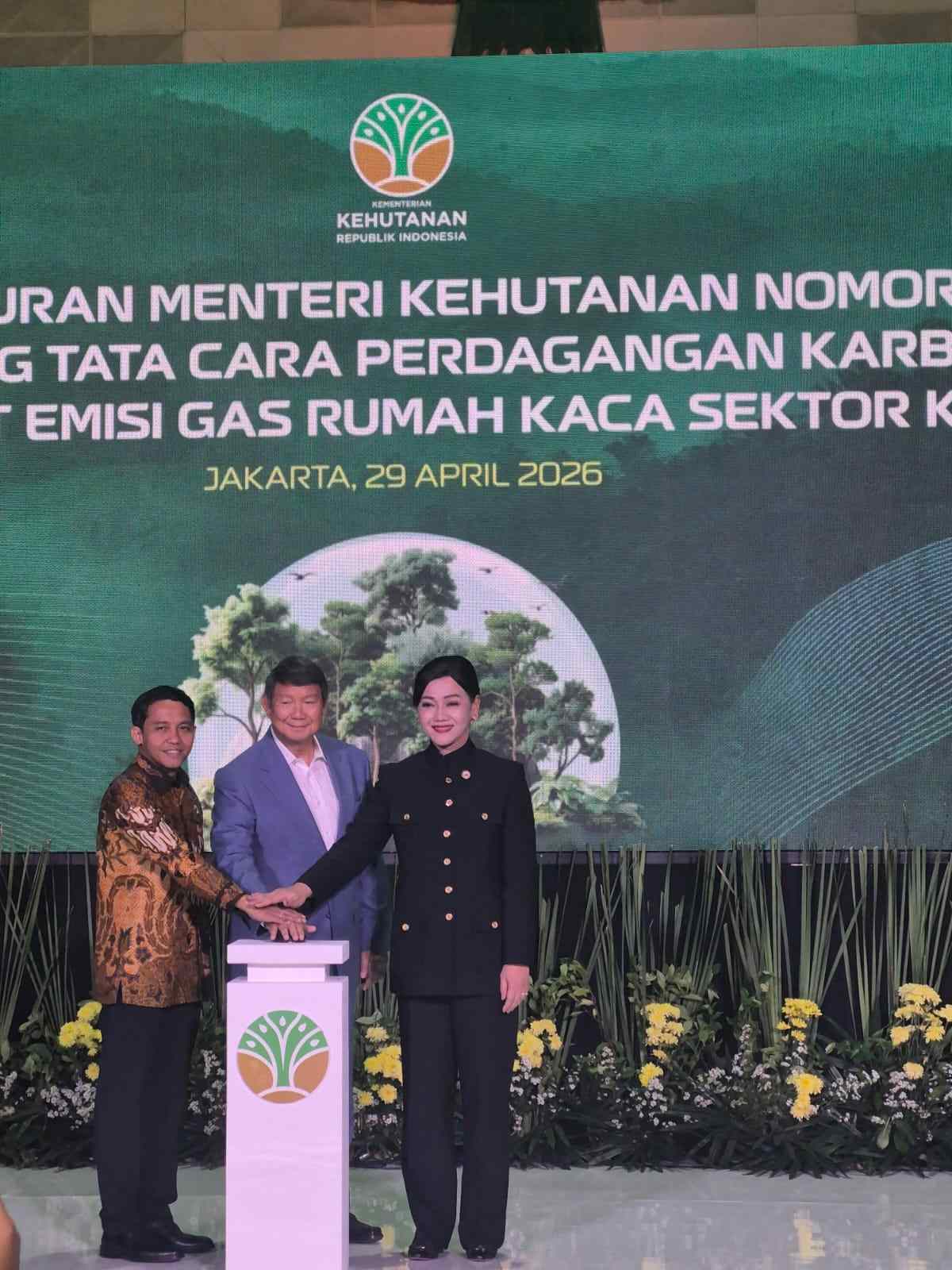
The regulation was officially socialized by the Ministry of Forestry of Indonesia during a hybrid event held in Jakarta on Wednesday (29/04). The policy establishes clear procedures for greenhouse gas (GHG) emission offset trading in the forestry sector, providing a structured and accountable mechanism for carbon market activities.
Minister of Forestry Raja Juli Antoni stated that the regulation is designed to ensure a transparent and systematic process in carbon trading. He emphasized that forest carbon units must be fully integrated, avoid double counting, and remain inclusive to build trust among stakeholders.
“The regulation provides clarity on the stages and mechanisms of carbon trading in the forestry sector, ensuring it operates in a systematic and accountable manner,” he said.
The policy also positions carbon trading as a strategic instrument to promote sustainable forest management, support national development goals, and enhance community welfare.
Presidential Special Envoy for Energy and Climate, Hashim Djojohadikusumo, highlighted Indonesia’s strong commitment to climate mitigation. These include rehabilitating 12 million hectares of degraded land, protecting 50 million hectares of forests, advancing 8.3 million hectares of social forestry, and recognizing 1.4 million hectares of customary forests.
He noted that achieving these targets requires robust financing mechanisms, with the new regulation expected to facilitate investment flows into climate action initiatives.
Meanwhile, Chairman of the Indonesian Forest Concessionaires Association, Soewarso, welcomed the regulation as a strategic step to strengthen the forestry carbon market. He emphasized that it opens opportunities to optimize forest concession areas through a multi-business forestry approach.
However, he also suggested simplifying the carbon trading process and accelerating the development of a national carbon market roadmap to enhance business participation and global competitiveness.
The government expects the regulation’s dissemination to improve stakeholders’ readiness and understanding, ensuring effective implementation on the ground. Ultimately, the initiative is aimed not only at generating economic benefits but also at contributing significantly to Indonesia’s emission reduction targets and the FOLU Net Sink 2030 agenda. (*)