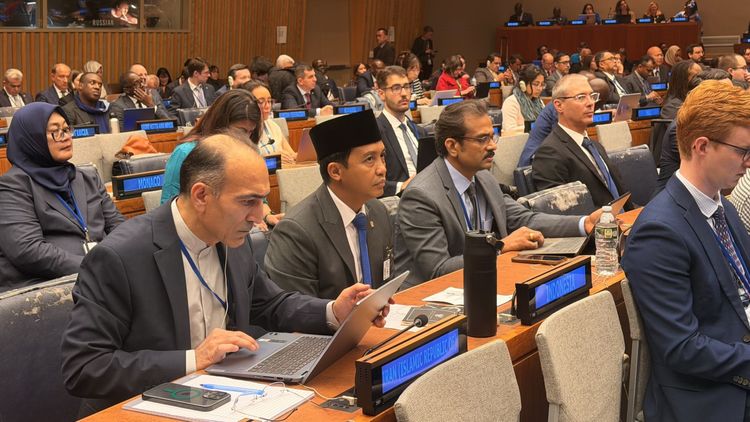
Enviro News Asia, New York — Indonesia’s Minister of Forestry, Raja Juli Antoni, reaffirmed the government’s commitment to inclusive and participatory forest governance during the 21st Session of the United Nations Forum on Forests (UNFF21) at the United Nations Headquarters in New York on Monday (11/5).
Representing the administration of President Prabowo Subianto, the Minister announced Indonesia’s target to recognize 1.4 million hectares of customary forests by 2029 while expanding the country’s Social Forestry program as part of broader efforts to strengthen environmental justice and community-based conservation.
Raja Juli Antoni emphasized that Indigenous communities play a crucial role in protecting forest ecosystems and should be recognized as key partners in sustainable forest management.
“We must ensure that forest governance is not only focused on physical protection, but also on social justice. Indigenous communities are the government’s frontline partners in safeguarding forests — the best forest guardians,” the Minister told delegates at UNFF21.
The initiative is aimed at strengthening the role of Indigenous peoples, women, and youth in creating sustainable livelihoods while preserving biodiversity and ecological balance. According to the Minister, empowering local communities remains essential to achieving long-term conservation goals.
To accelerate the target, the Ministry of Forestry has established an Inclusive Task Force involving civil society organizations and development partners. Organizations participating in the collaboration include Aliansi Masyarakat Adat Nusantara (AMAN), Badan Registrasi Wilayah Adat (BRWA), Perkumpulan HuMa, along with several environmental and Indigenous rights organizations. International partners such as Ford Foundation and United Nations Development Programme are also supporting the initiative.
The Minister explained that the government has prepared a detailed roadmap for achieving the 1.4 million-hectare target through 2029. The roadmap includes data synchronization under Indonesia’s One Map Policy, regulatory strengthening, and institutional capacity building for Indigenous communities at the local level.
In addition, the Ministry has finalized verification guidelines for customary forests to ensure that recognition processes are conducted systematically and transparently. The government is also assisting regional administrations in preparing legal frameworks for the recognition of Indigenous customary law communities across Indonesia.
Indonesia’s delegation at UNFF21 also included the country’s Permanent Representative to the United Nations in New York, the Director General of Sustainable Forest Management, and the Director General of Watershed Management and Forest Rehabilitation. (*)