Enviro News Asia, Tangerang — Ministry of Energy and Mineral Resources of Indonesia is intensifying efforts to attract investment in the upstream oil and gas sector by offering 118 potential oil and gas working areas (WK Migas) to domestic and international investors.
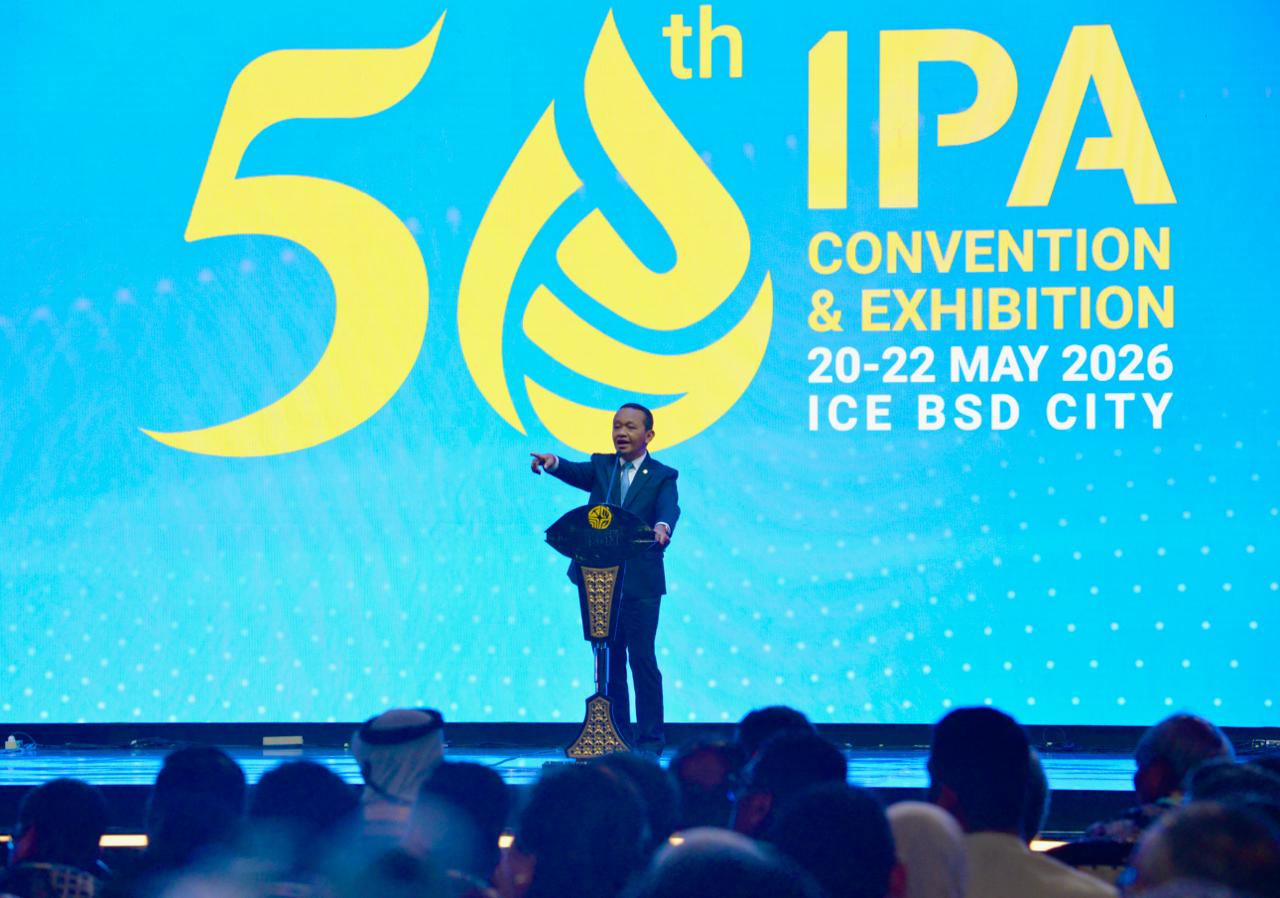
The initiative was announced by Bahlil Lahadalia during the opening of the Indonesia Petroleum Association Convention and Exhibition 2026 in Tangerang, Banten, on 20 May 2026.
The government aims to accelerate exploration and production activities to support Indonesia’s target of producing between 900,000 and 1 million barrels of oil per day by 2029 amid rising national energy demand and global geopolitical uncertainty.
“This is open to everyone. No backdoor negotiations are needed,” Bahlil stated. “What matters is that you have the technology, the capital, and the seriousness to manage these resources for the benefit of the nation.”
According to the ministry, the 118 potential oil and gas blocks consist of 43 areas currently under joint study, 50 prospective blocks available for data acquisition and further study, and 25 blocks that have already been signed.
Eight of the signed working areas originated from the 2025 auction process. The contracts were officially witnessed by Minister Bahlil during IPA Convex 2026.
The eight working areas include Gagah, Bintuni, Karunia, Drawa, Jalu, Southwest Andaman, Barong, and Nawasena, located across Sumatra, Papua, Java, Sulawesi, and the Andaman offshore region.
Collectively, the eight blocks are estimated to contain around 255 million barrels of oil and 13.79 trillion cubic feet (TCF) of gas resources.
The total firm commitment investment value for the blocks reached approximately USD 57.95 million, with an additional USD 3.15 million in signature bonuses.
Among the largest discoveries offered are the Southwest Andaman and Jalu offshore blocks, each estimated to hold around 3 TCF and 2.9 TCF of gas resources respectively.
The ministry stated that the strong investor response demonstrates continued confidence in Indonesia’s upstream oil and gas potential despite global market volatility.
Bahlil also emphasized the importance of involving regional businesses and local contractors in upstream oil and gas development projects.
“Regional entrepreneurs must be involved. Do not let all contractors come only from Jakarta. Local businesses should become masters in their own regions as long as they are professional,” he said.
The minister further urged SKK Migas and oil and gas contractors to accelerate licensing processes and strengthen collaboration to ensure projects can proceed efficiently and contribute to national energy security goals.
Indonesia is currently pushing multiple strategies to achieve energy self-sufficiency, including accelerating upstream investment, simplifying regulations, reactivating idle wells, and implementing Enhanced Oil Recovery (EOR) technology.
The government believes these measures are essential to maintaining long-term energy security while supporting economic growth and increasing state revenue from the energy sector. (*)