Enviro News Asia, Jayapura – The Indonesian Forest Entrepreneurs Association (APHI) has identified Papua and West Papua as having strategic potential to become one of Indonesia’s centers for forestry sector carbon trading development, following the issuance of Ministerial Regulation No. 6 of 2026 on Carbon Trading Procedures through Greenhouse Gas Emission Offsets in the Forestry Sector.
APHI Chairman Soewarso said the regulation marks an important milestone in forestry carbon trading development, providing business certainty for operators seeking to develop carbon environmental services as part of a sustainable Multi-Business Forestry (MUK) model.
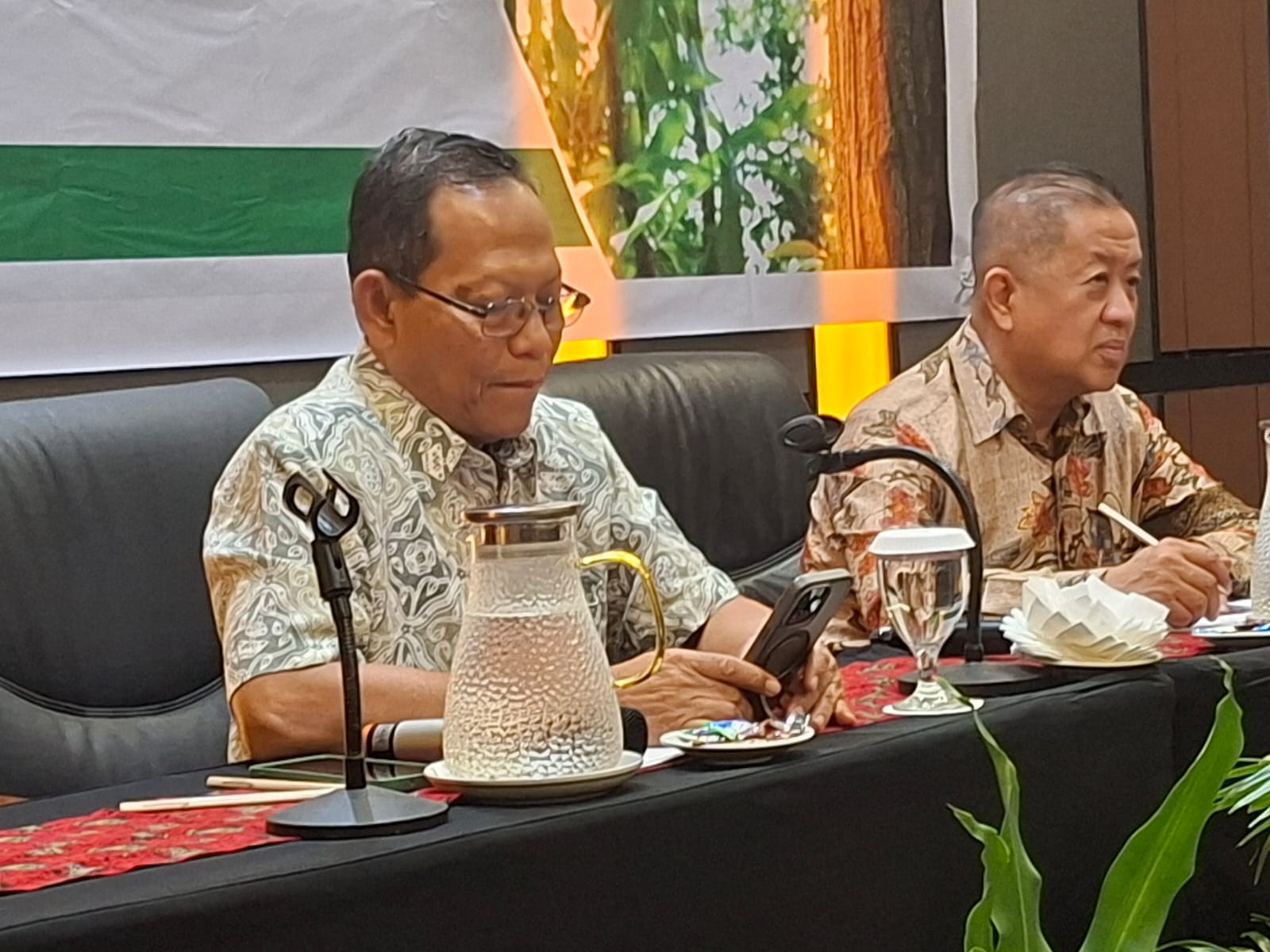
“The issuance of Ministerial Regulation No. 6 of 2026 is an acknowledgment that forests not only produce timber commodities but also carbon environmental services with real economic value. This regulation opens opportunities for forestry business actors to develop more sustainable and adaptive business models in line with the evolving global carbon market,” Soewarso said at the opening of a Focus Group Discussion on Carbon Environmental Services Development in PBPH Areas in Jayapura on Thursday (6/25/2026).
He said Papua was selected as the first location for the FGD because it holds one of the finest remaining natural forest landscapes in Indonesia, with carbon absorption and storage potential that constitutes a strategic national and global asset. The development of carbon environmental service businesses in Papua must generate economic benefits that go hand in hand with forest protection, improved community welfare, and regional development.
Soewarso expressed hope that the implementation of Ministerial Regulation No. 6 of 2026 would proceed simply, efficiently, and with business certainty for forest business permit (PBPH) holders, including the integration of Mitigation Action Plan Documents and Project Planning Documents into Multi-Business Forestry forest utilization work plans.
He added that successful carbon trading implementation also requires government support through simplified licensing processes, human resource capacity building, data and support system provision, and facilitation of carbon market access. APHI also identified several challenges still requiring collective attention, including the high cost of carbon project development, the need for credible methodologies and data, market and carbon price certainty, harmonizing conservation interests with the development of surrounding communities, and maintaining the competitiveness of Indonesia’s forestry sector in international carbon markets.
“APHI, as a government partner, is ready to oversee the implementation of carbon trading policy and continues to facilitate communication among business actors, government, and stakeholders so that carbon environmental service utilization can produce high-integrity, high-quality carbon credits while strengthening the forestry sector’s contribution to achieving Indonesia’s Nationally Determined Contribution targets,” Soewarso said.
Also speaking at the event, Fairatmos CEO and Founder Rizky Ambardi noted that Indonesia holds enormous opportunities in the development of nature-based solutions carbon markets, with potential carbon credits of around one gigatonne, making Indonesia the country with the largest such potential in Southeast Asia. He said the Voluntary Carbon Market is projected to continue growing in the coming years, with the Forestry and Land Use sector serving as one of the primary contributors to demand for high-quality carbon credits.
Papua and West Papua are considered to hold a competitive advantage given their still vast natural forest landscapes and potential for restoration and forest protection project development. Rizky said carbon project development in Papua requires methodology readiness, financing, and multi-party management to ensure projects meet national and international standards and produce high-integrity carbon credits.
The FGD, organized by APHI in collaboration with Fairatmos, was attended by APHI members from Papua, West Papua, and Southwest Papua, forming part of efforts to build the capacity of PBPH business actors in understanding carbon trading implementation following the issuance of Ministerial Regulation No. 6 of 2026 while strengthening sustainable Multi-Business Forestry development. (*)