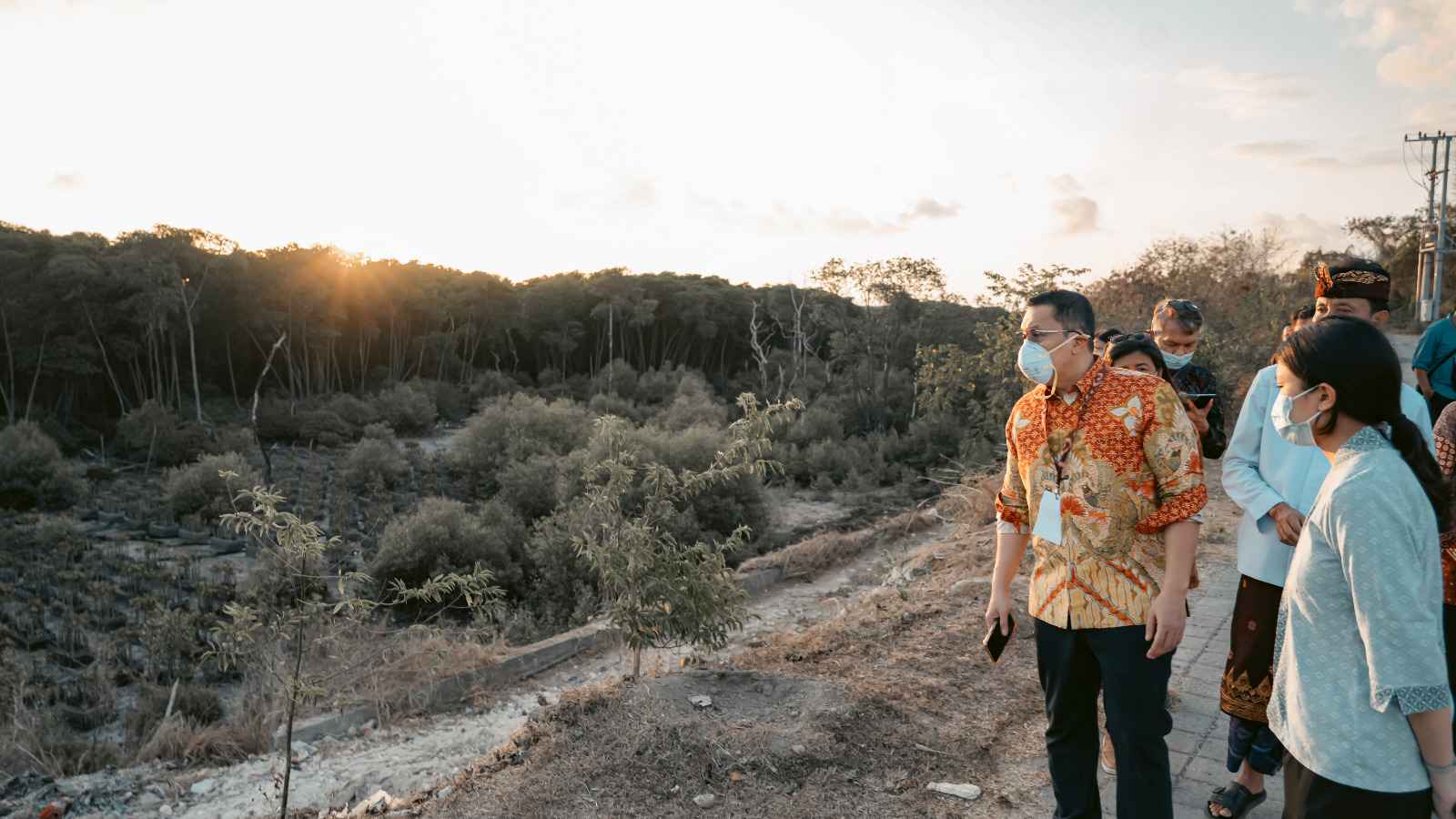


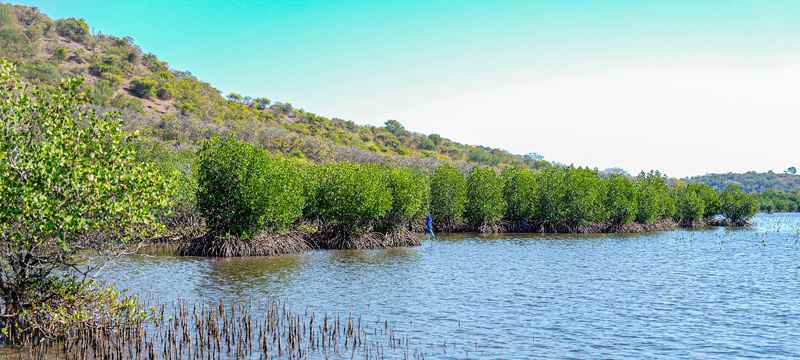
Enviro News Asia, Sumbawa – Indonesia The Ministry of Environment/Environmental Control Agency (KLH/BPLH) and PT Freeport Indonesia have launched a large-scale mangrove ecosystem restoration initiative in Labuhan Alas Village, Sumbawa Regency, West Nusa Tenggara. The multi-stakeholder collaboration is a concrete expression of the national “ecological repentance” movement, aimed at shielding coastal areas from the climate crisis, restoring the carrying capacity of nature, and opening new green economic opportunities for local community welfare.
Minister of Environment/Head of BPLH Moh. Jumhur Hidayat stressed that the initiative must be seen as far more than a tree-planting ceremony. In line with the true essence of repentance, the movement is a moment for all elements of the nation to honestly acknowledge past mistakes in exploiting nature, make genuine amends, and commit firmly to not repeating them.
“The mangrove planting movement must become a national movement. The government, the business world, civil society organizations, and all elements of the nation share a common responsibility to restore nature, particularly coastal ecosystems,” Minister Jumhur said.
Through the strategic vision of the ecological repentance movement announced for the 2026–2028 period, all elements of the nation are called upon to place the carrying capacity of the environment as the fundamental foundation of every national development policy. KLH/BPLH emphasized that accelerating national economic growth must no longer come at the expense of nature’s sustainability, but must proceed in harmony with environmental protection so that the benefits of economic development can be felt inclusively and sustainably by all.
Mangrove forests serve as green infrastructure and a reliable natural protective barrier against abrasion, high waves, and saltwater intrusion, while also providing productive habitat for high-value marine life that directly supports the daily livelihoods of traditional fishermen and local communities. Beyond their protective role, mangroves are globally recognized as highly effective blue carbon sinks, making their restoration a key pillar of Indonesia’s national strategy for addressing climate change impacts, while simultaneously opening green economic opportunities through sustainable fisheries, ecotourism, and micro-enterprises based on coastal environmental services.
As a continuation of the 2023 strategic agreement between the government and PT Freeport Indonesia (PTFI), the mangrove rehabilitation program outside the company’s operational area has shown significant progress. By mid-2026, collaboration in West Nusa Tenggara had rehabilitated 484 hectares of coastal area, comprising 445 hectares in Sumbawa and 39 hectares in East Lombok, with 1,500 local residents empowered through a labor-intensive scheme spanning seedling to maintenance stages, planting 1.5 million Rhizophora sp. mangrove seedlings.
“Through mangrove planting, PT Freeport Indonesia is working to support environmental protection, increase carbon absorption, and strengthen coastal community resilience. We hope this collaboration delivers sustainable benefits for the ecosystem and communities,” said PTFI President Director Tony Wenas.
Tony added that this supports the national mangrove restoration target of 2,000 hectares outside Papua, with 666 hectares already planted outside Papua and two million seedlings in the ground. In Papua’s Mimika Regency specifically, PTFI has planted around 5.5 million mangrove seedlings across more than 2,184 hectares.
The mangrove planting in Labuhan Alas Village is projected to serve as an ideal model for a national-scale multi-stakeholder collaboration scheme, reinforcing the message that protecting the environment is not only about restoring nature, but also about delivering real protection for coastal areas, alleviating poverty by improving welfare, and bequeathing a sustainable ecosystem for the nation’s future. (*)