Enviro News Asia, Manokwari — Indonesia’s Ministry of Forestry is strengthening the capacity of forestry professionals in managing non-timber forest products (NTFPs) to support sustainable forest management, increase product value and strengthen community-based forestry.
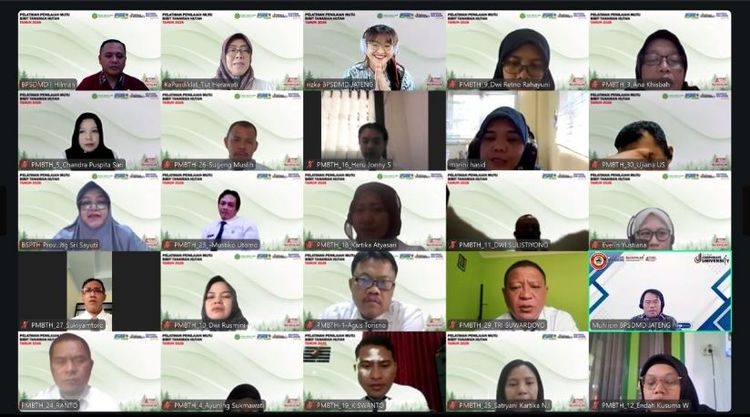
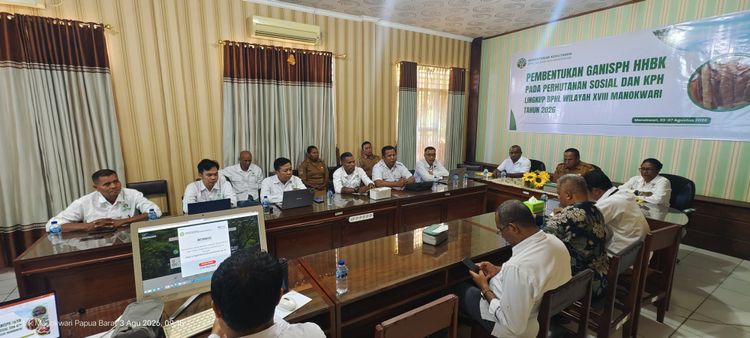
The ministry, through the Sustainable Forest Management Agency (BPHL) Region XVIII Manokwari, conducted a training program for Technical Personnel for Forest Management (GANISPH) specializing in NTFPs from August 3 to 5, followed by competency assessments on August 6–7.
Ten participants took part in the program, comprising six participants specializing in bark-based products and four in stem-based products. They came from Social Forestry groups and Forest Management Units (KPH) within the working area of BPHL Region XVIII Manokwari. The program was organized in collaboration with the Binamutu Environmental Forestry Professional Certification Institute (LSP).
Participants received training on technical competency standards for NTFP management before undergoing competency assessments as part of the professional certification process. The assessments were intended to ensure that participants meet national competency standards for GANISPH NTFP professionals.
Head of BPHL Region XVIII Manokwari Muchksin said strengthening technical expertise is an important foundation for improving forest governance while maximizing the economic potential of non-timber forest products.
He said competent technical personnel would help make forest management more professional, increase the added value of NTFP commodities, strengthen Social Forestry and Forest Management Units, and deliver tangible benefits to communities living around forest areas.
Muchksin added that improving human resource capacity is also a strategic step toward promoting the legal, efficient and sustainable utilization of NTFPs. Such efforts are expected to increase the forestry sector’s contribution to non-tax state revenue while strengthening local economies.
Forestry Minister Raja Juli Antoni has previously emphasized that future forest management must generate economic benefits without compromising ecological functions. One strategy promoted by the ministry is increasing the added value of forestry products through downstream processing, including NTFPs, supported by competent, innovative and competitive human resources.
At the opening of the program, Head of the Manokwari Social Forestry Agency Susan Trida Salosa emphasized that successful Social Forestry implementation requires competent technical personnel and strong inter-agency cooperation.
She said collaboration between the Social Forestry Agency and BPHL Region XVIII Manokwari is essential to strengthening forest governance in Papua and ensuring that Social Forestry policies are effectively implemented at the local level.
Head of the West Papua Provincial Forestry Agency Jimmy W. Susanto also welcomed the program, saying that strengthening the capacity of forestry professionals is essential to improving forest governance in the region.
He emphasized that sustainable forest management in West Papua requires strong collaboration among the central and regional governments, Forest Management Units, Indigenous communities and other stakeholders, supported by professional and competent technical personnel.
The competency assessment represented a key stage in ensuring that participants possess the technical capabilities required under GANISPH NTFP professional standards. Those who meet the requirements are expected to apply their knowledge and skills to support effective, accountable and sustainable NTFP management.
The Ministry of Forestry said continued investment in forestry human resources would contribute to improving NTFP governance, strengthening downstream processing and product value, supporting community empowerment through Social Forestry, and increasing the forestry sector’s contribution to national development and community welfare. (*)