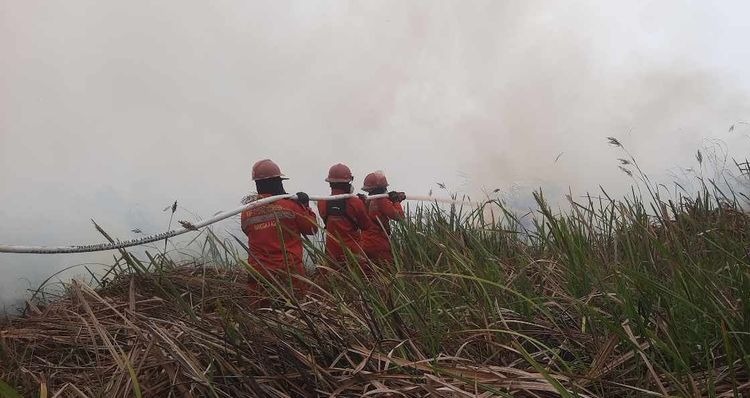
Enviro News Asia, Jambi — Prolonged dry conditions in Jambi Province are beginning to affect communities through water shortages and increasing risks of forest and land fires. In response, the Jambi chapter of the Indonesian Forestry Entrepreneurs Association (APHI) has distributed 4,000 liters of clean water to residents of Rawa Pudak Village, Kumpeh Ulu Subdistrict, Muaro Jambi Regency.
APHI Jambi deployed two water tankers to the village, with each vehicle carrying 2,000 liters of clean water. The supply was provided to help residents meet urgent household needs amid increasingly limited access to water.
APHI Jambi Chairman Taufik Qurochman said the emergency response reflected the association’s concern for communities affected by the water shortage during the dry season.
“We saw firsthand how serious the water crisis has become in the field, with residents having to compete for water to meet their daily basic needs. This is an initial response, and we will continue coordinating to monitor other affected areas,” Taufik said on September 15, 2026.
The clean water was allocated primarily for daily consumption, cooking and household sanitation. The assistance came as a number of residents’ wells had reportedly dried up.
Rawa Pudak community leader Mahmud said residents welcomed the arrival of the two water tankers and expressed appreciation for APHI Jambi’s rapid response.
He said the village was experiencing significant water shortages, with many household wells no longer providing sufficient water. As a result, residents immediately gathered when the water assistance arrived.
“The 4,000 liters of water from APHI Jambi have been a real help for residents who urgently need water for food and drinking. On behalf of the people of Rawa Pudak Village, we sincerely thank APHI Jambi for its concern,” Mahmud said.
APHI Jambi said it would continue preparing social assistance and supporting water-supply vehicles throughout the dry season. The association also plans to coordinate with relevant stakeholders to monitor other areas that may experience water shortages.
The initiative is part of efforts to help communities cope with the impacts of the dry season while strengthening cooperation between forestry businesses and communities in areas affected by environmental and humanitarian pressures. (*)